Is the Okavango Delta Safe?
The delta has dangerous animals, no fences and no quick way out. It is also one of the most carefully guided places you can travel in Africa.
Choose the activity only after checking its individual requirements. A guided tour does not replace medical advice, wildlife precautions or an operator suitability check. Explore Mokoro Day From Maun
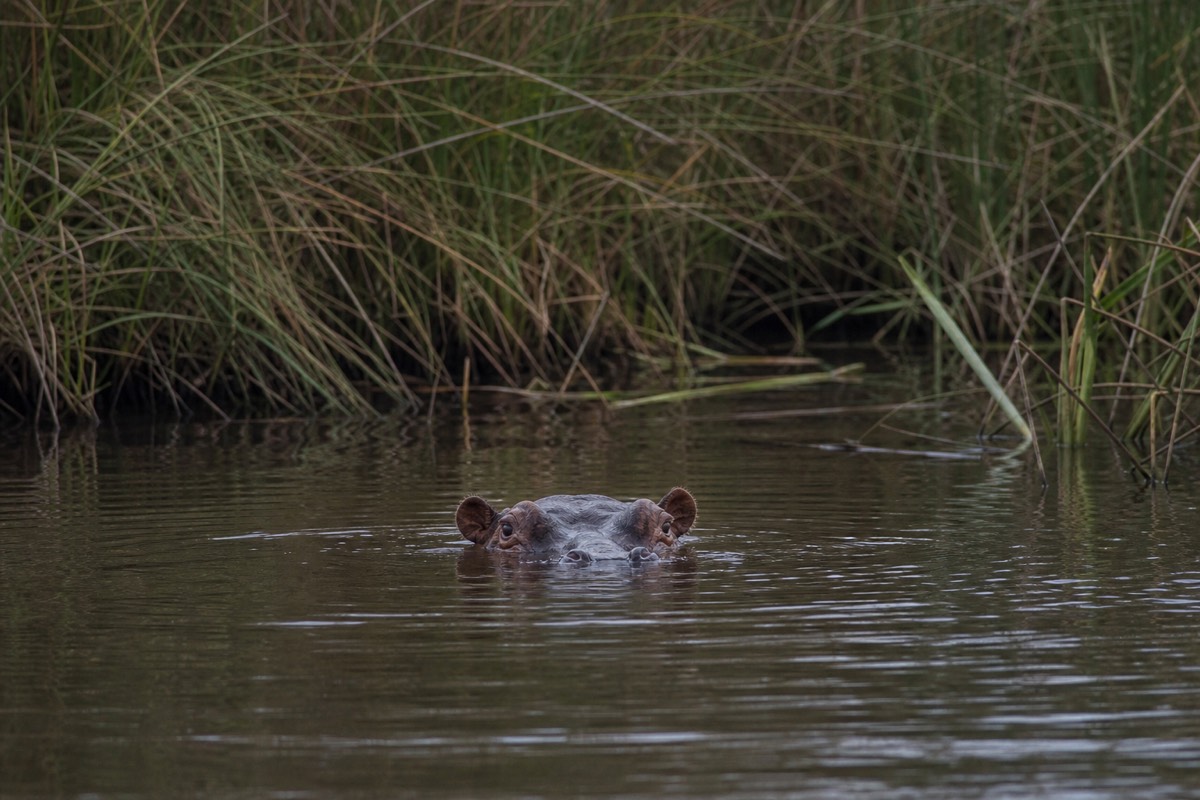
Two facts sit next to each other here and both are true. The Okavango Delta is a genuinely wild place: hippos in the channels you travel, lions moving between islands, camps with no fence around them. It is also one of the most tightly guided environments in African travel, where nobody walks in the bush without an armed licensed guide and nobody crosses camp alone after dark. The team at Okavango Delta Botswana Tours answers this question weekly, and the useful version of the answer is a list of specific risks and what is done about each one.
How dangerous is the Okavango Delta really?
The delta is wild in a way most safari destinations no longer are, with dangerous animals and no fences, and it is also a very well run place where visitors are guided at all times. Serious incidents are rare. The risks are known, seasonal in some cases, and managed by people who work in them daily.
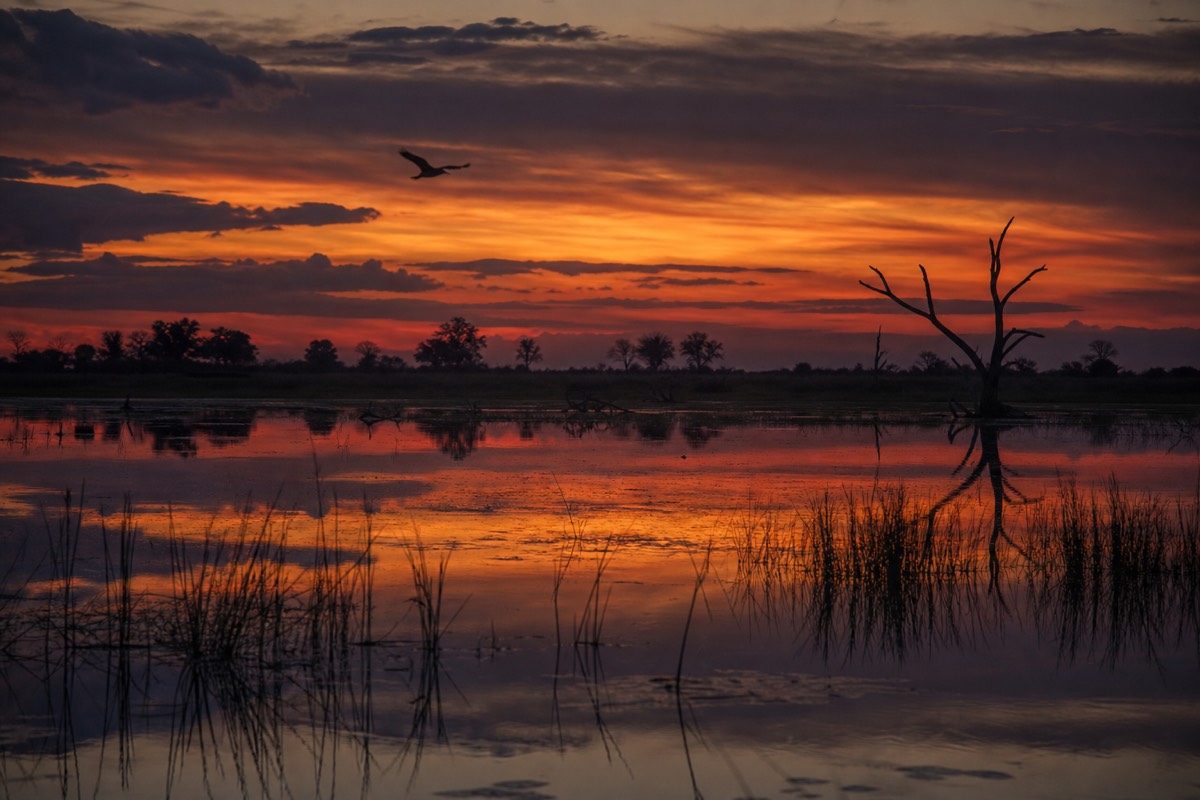
Almost every real risk falls into one of six categories, and none of them are mysterious. The table below is the version we give people who ask what they should actually worry about.
| Risk | When it applies | How it is managed | What you do |
|---|---|---|---|
| Hippos in the channels | Any mokoro or boat trip | The poler reads the water ahead and knows individual animals' ranges and preferred channels by hour | Stay seated and quiet, let the poler pick the route |
| Crocodiles | Banks and channel edges, year round | Guides keep distance and choose stopping points; swimming only where a guide approves it | Keep hands and feet inside the boat |
| Elephants and buffalo on foot | Walking safaris, and moving around camp | An armed, licensed guide leads every walk with a tracker, choosing routes around herds | Walk single file, follow instructions the moment they are given |
| Predators in camp | Unfenced camps after dark | Staff escort guests between the fire and their tents, and camps run set after-dark protocols | Never walk alone at night, use the torch or whistle your camp issues |
| Mosquitoes | Year round, peaking November to April | Repellent, covered evenings, prophylaxis prescribed before you travel | Apply DEET-based repellent from late afternoon through after dark |
| Remoteness itself | Any medical problem, anywhere in the delta | Radio contact from every camp, charter aircraft available in daylight hours | Travel with insurance that covers medical evacuation |
Treat that as a planning checklist rather than a promise: your camp and guide set the rules on the ground, and those rules take priority over anything written here.
Are hippos and crocodiles a real risk on a mokoro trip?
They share the same channels, and a mokoro trip is built around avoiding them rather than pretending otherwise. The poler stands in the stern, reads the water continuously, knows the territorial ranges of individual hippos and the channels they favour at different hours, and routes around them.
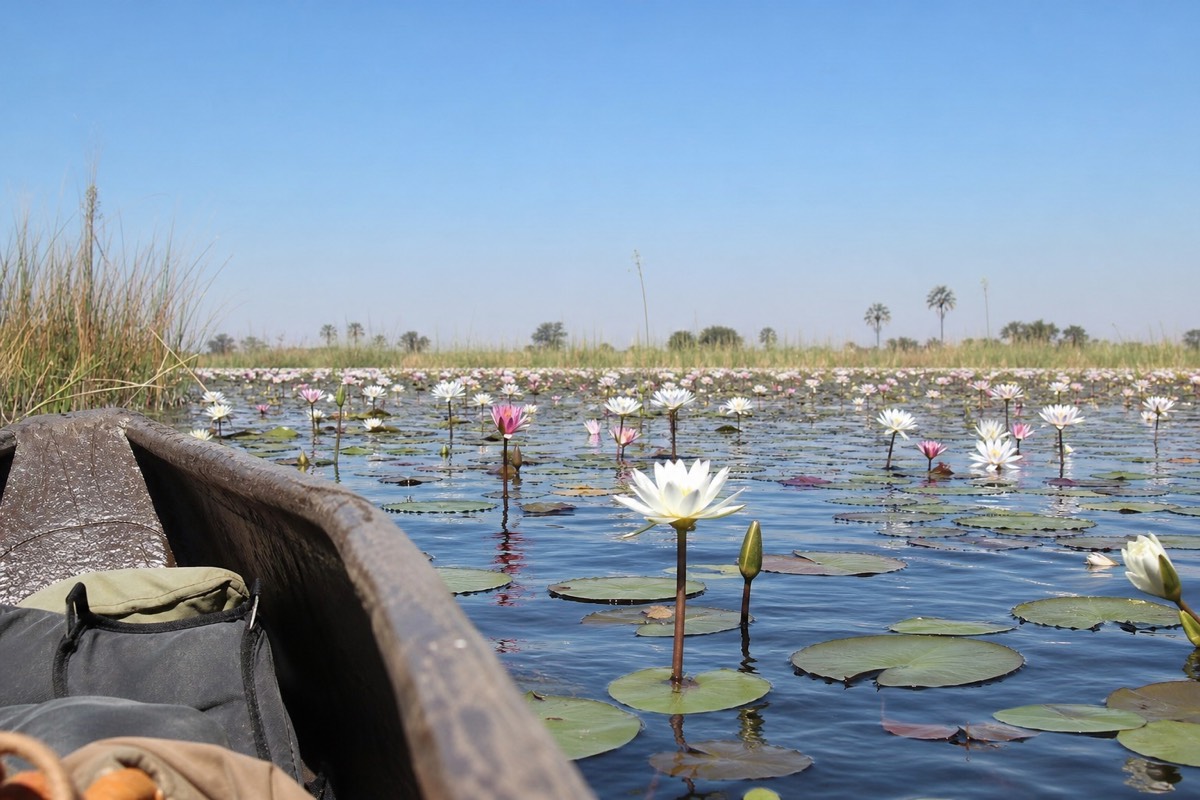
This is why the poler matters more than the boat. Channels are often narrower than the mokoro is long, so there is no room for a late correction, and the whole craft of poling is anticipating what is around the reeds before you reach it. Passengers sit low and still, which is also what makes the wildlife ignore you. On the full-day mokoro trip with community trust polers the men poling grew up on this water. For the mechanics of the boat itself, see how a mokoro is poled.
Is it safe to walk in the bush and sleep in an unfenced camp?
Yes, within the camp's rules. Walking safaris go out with an armed, licensed guide and a tracker. Camps are unfenced by design, so staff escort guests to their tents after dark and nobody moves around alone at night. That single rule prevents most of what could go wrong.
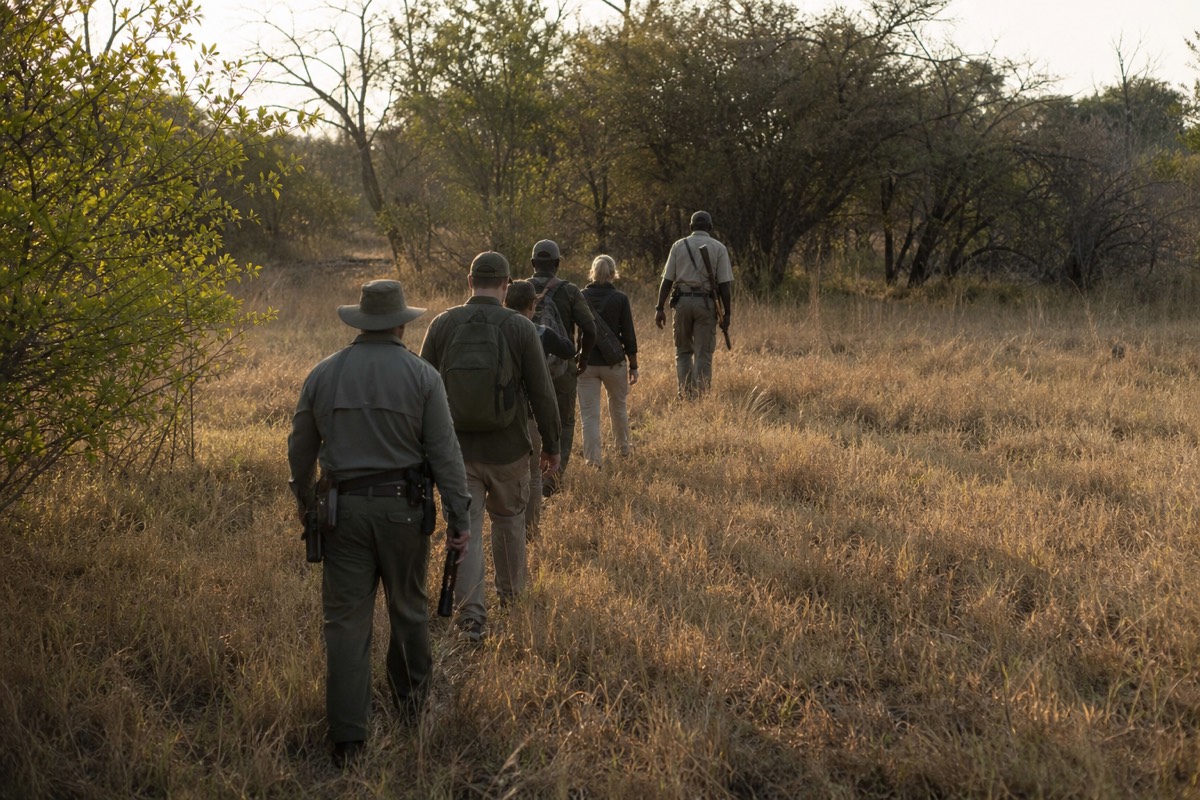
Deferring to your guide is the entire safety model, and it happens to be the quality model too. Visitors who follow their guides consistently describe better sightings and a richer understanding of what they are watching; the ones who try to direct the experience describe less of it. Guides in the private concessions have often spent their whole working lives in this ecosystem, and their calls about when to approach, when to wait and when to reverse out are not negotiable. Four days in private concession camps runs on exactly that footing.
Do you need malaria precautions in the Okavango Delta?
Yes. The CDC lists Ngamiland, including Maun and the Okavango Delta, and Chobe as malaria risk districts. Transmission peaks in the rainy season, roughly November to April, and is present year round in the north though lower in the dry months. The CDC recommends chemoprophylaxis for those districts plus daily bite prevention.
| Season | Months | Risk picture | Standing advice |
|---|---|---|---|
| Rainy or green season | November to April | Peak transmission in the listed districts | Prophylaxis plus repellent, long sleeves after dusk |
| Dry season | May to October | Lower than the rains, but present year round in the north | The recommendation does not switch off; same precautions |
| Outside the risk districts | Year round | Gaborone has no transmission and the Central Kalahari is not on the high-risk list | Confirm your own route with a clinic before you travel |
Which drug, and when to start and stop it, is a decision for a doctor or travel clinic and not for a tour operator. The CDC names atovaquone-proguanil, doxycycline, mefloquine and tafenoquine among the options for Botswana, and the choice between them depends on your own health and itinerary. Check the current guidance on the CDC's Botswana travel health page and take it to your clinician. Bite prevention is the part nobody can prescribe for you: DEET-based repellent from late afternoon through after dark, every day of the year, which is why it sits near the top of our packing list for an Okavango safari.
Yellow fever vaccination is a separate question and applies only if you arrive from or transit a country with transmission risk, per the Government of Botswana. Our guide to Botswana entry and health requirements carries the full picture. Requirements change, so confirm against the primary sources before you fly.
Are the light aircraft and small boats safe?
Charter flights between Maun and the delta airstrips are routine daily work for operators who fly nothing else, on six to twelve seat aircraft, 20 to 45 minutes each way. They are weather-dependent, so the practical risk is a delay or a cancellation rather than a safety question. Motorboat transfers are the same.
The strict soft-bag baggage limit that surprises first-timers is a weight and balance requirement, not fussiness, and arguing with it at the airstrip does not work. Safety is rarely the thing that decides a delta trip either way, and whether the Okavango is worth what it costs is the question that usually does. One planning habit is worth adopting: leave a night in Maun rather than connecting straight from a delta airstrip to a long-haul departure, because a weather hold on a bush flight has nowhere else to go.
Is crime a risk in Botswana or in Maun?
Botswana is a stable country, and most of the delta is remote concession land with no towns inside it, so visitors are surrounded by camp staff and other guests rather than anybody else. Ordinary precautions in Maun cover the realistic risk, which sits nowhere near the top of the list here.
Use the tent or room safe, keep passports and cards together, and treat Maun as you would any small town you do not know. The currency is the pula, US dollars are widely accepted in safari areas, and there are ATMs in town. Solo travellers, including solo women, consistently report the guided environment as calm and unintrusive. Our guide to Maun as the delta gateway covers what to do with the night before your flight in.
Who should think twice before booking?
Anyone with an unmanaged heart condition, anyone who cannot get into and out of a low dugout canoe, families with very young children looking at camps that limit them, and pregnant travellers weighing the malaria prophylaxis question. None of those is an automatic no, and all of them are conversations to have twice.
Have the first conversation with your doctor, because the honest risk multiplier in the delta is not the animals, it is the distance from a hospital. The evacuation cover named in the table above is the most useful thing anyone buys for this trip. Have the second with us, before booking rather than after, because camps differ: some take children on mokoro trips readily and restrict walking safaris by age, some adapt drives for reduced mobility, and the mokoro itself asks you to sit low and get up again. Tell us the constraint and we will tell you which itineraries fit it, which is a much better outcome than discovering it at a launch point.