Maun, Botswana: The Gateway to the Okavango Delta
Maun is a small town on the southern edge of the delta and the staging point for virtually every safari operation in it. Almost nobody comes here for Maun, and almost everybody passes through it.
Leave room around arrival and onward travel. A canoe day, a short scenic flight and a multi-day safari each use a different amount of your Maun stop. Explore Mokoro Day From Maun
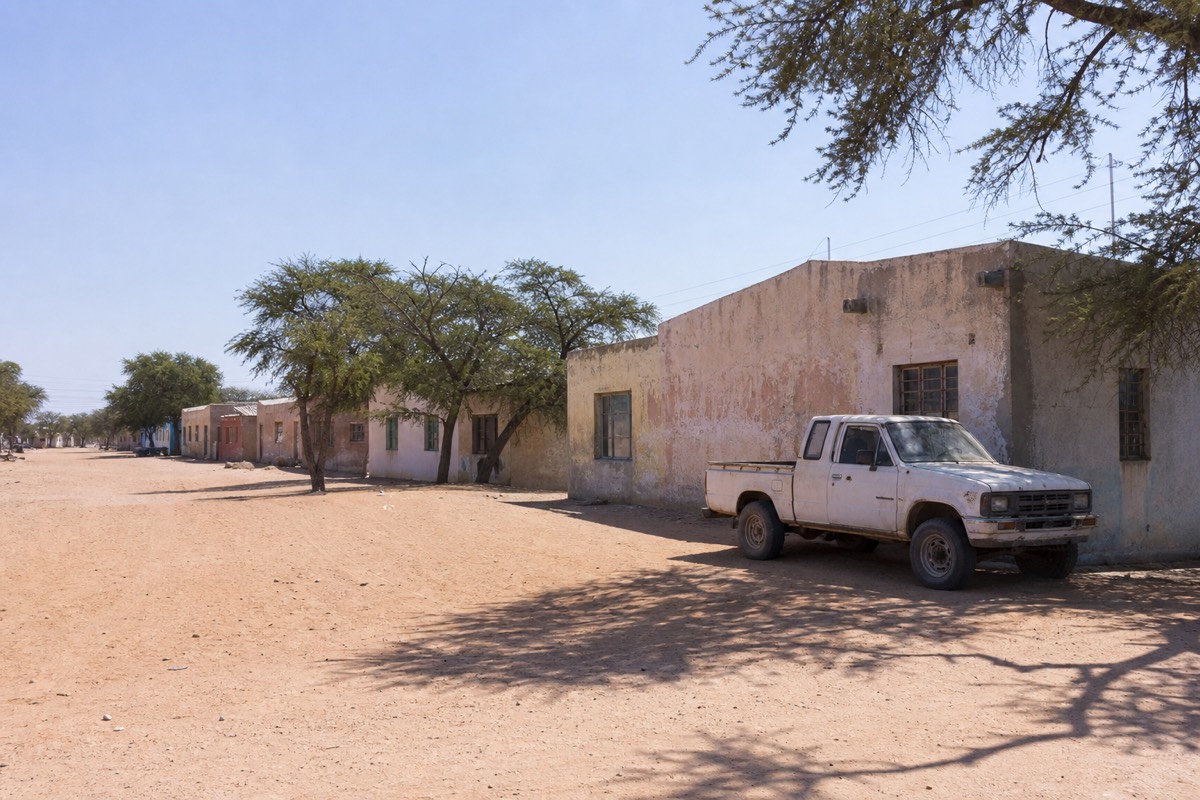
Maun is where the tar ends and the sand begins. It is a small, hot, working town on the southern edge of the delta, and it exists in the modern travel imagination for one reason: almost every safari that operates in the Okavango is staged from here, loaded here, and flown out of here in a six-seat aircraft. Visitors who arrive expecting a resort town are briefly baffled. Visitors who arrive understanding what Maun is for tend to have a much better first day.
The airport code is MUB, the airstrip is busy from mid-morning onwards with light aircraft rotating out to concession strips, and the town itself is the last place you will see an ATM, a pharmacy or a supermarket for the length of your trip. The team at Okavango Delta Botswana Tours books trips that start here, and the single most common planning mistake we correct is a same-day international arrival stacked against a same-day charter into camp.
Maun works as a hub: scheduled jets in, light aircraft and sand tracks out
Flight times are typical scheduled durations and the charter figures are the range operators quote per person one way, both subject to the airline and the camp. Route maps change between seasons, so confirm against the carrier before you build an itinerary on them.
What is Maun, and what is it not?
Maun is the administrative and logistical centre of Botswana northwest, a town on the southern fringe of the delta and the staging point for virtually all safari operations in it. It is not a resort, not a scenic destination in its own right, and not somewhere most people would choose to spend three nights. It is somewhere you pass through with purpose.
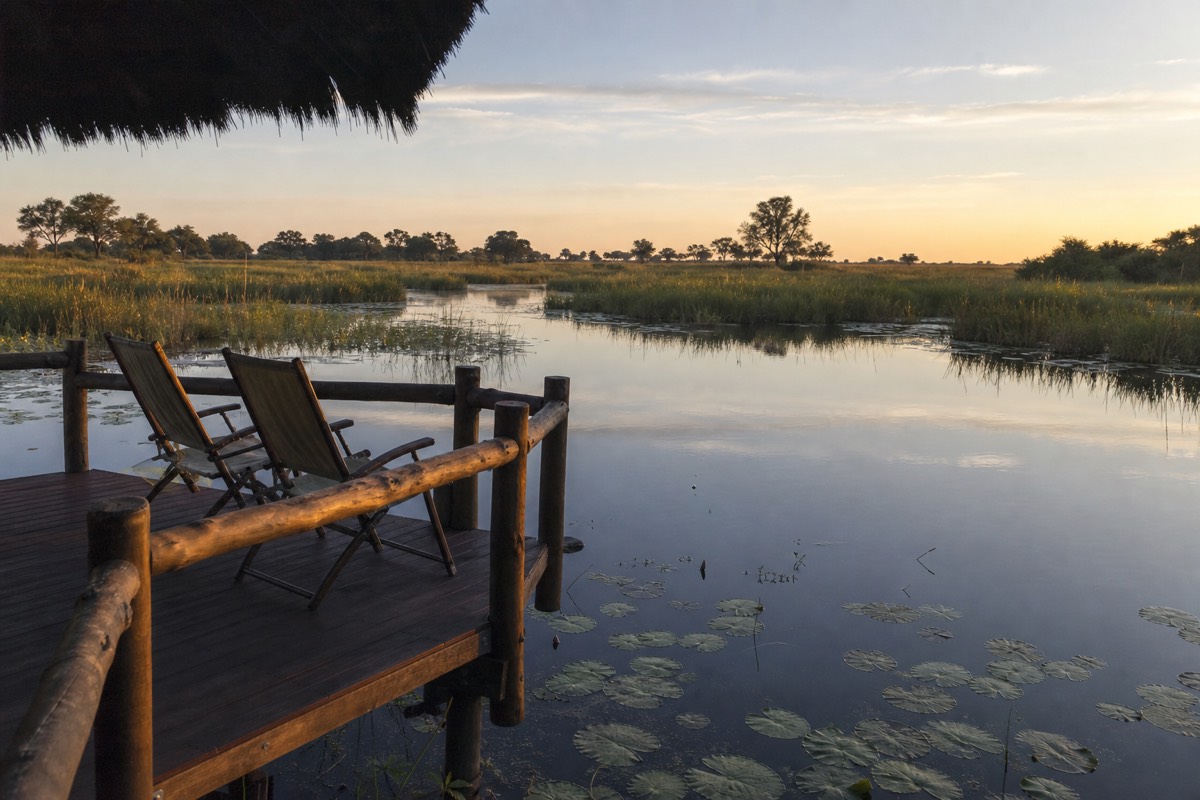
What that means on the ground: low buildings, dust, safari vehicles parked nose-in outside supply shops, aviation offices, and a river-edge fringe of lodges and campsites catering almost entirely to people about to leave. The town sits roughly 65 kilometres from the edge of the delta floodplain, which is close enough to feel the ecosystem and far enough that Maun itself is dry Kalahari scrub, not wetland.
Set expectations accordingly and it becomes a pleasant, functional 18 hours. Set them wrong and it reads as a disappointment before your safari has even started. If you want the wider geographical picture first, our explanation of where the Okavango Delta sits covers the map that Maun anchors from the south.
Which airlines fly into Maun Airport, and from where?
Maun Airport, code MUB, is served by Air Botswana from Gaborone and Kasane, by Airlink from Johannesburg and Cape Town, and by CemAir from Johannesburg. Johannesburg to Maun takes about 1 hour 30 minutes to 2 hours, Gaborone to Maun about 1 hour 20. Most long-haul visitors route through Johannesburg because that is where the connections are.
There is no direct intercontinental service. Whatever you fly from Europe, North America, Asia or Australia, you will land at a hub first, and in practice that hub is almost always Johannesburg. From there the Maun leg is a short, unremarkable jet flight, and it is the last conventional aviation of your trip.
| Airline | Flies to Maun from | Typical flight time | Notes |
|---|---|---|---|
| Airlink | Johannesburg | About 1h30 to 2h | The workhorse connection for long-haul arrivals |
| Airlink | Cape Town | About 2h30 | Useful if you are combining the delta with the Cape |
| CemAir | Johannesburg | About 1h30 to 2h | A second option on the same key route |
| Air Botswana | Gaborone | About 1h20 | The domestic link from the capital |
| Air Botswana | Kasane | Short regional hop | The Chobe gateway, handy for delta and Chobe combinations |
Route maps and frequencies change by season and by year, so treat this as a planning allowance and confirm the specific schedule with the airline before you commit connecting flights. General background on the airport sits in the reference entry for Maun Airport.
How do the light-aircraft charters out of Maun work?
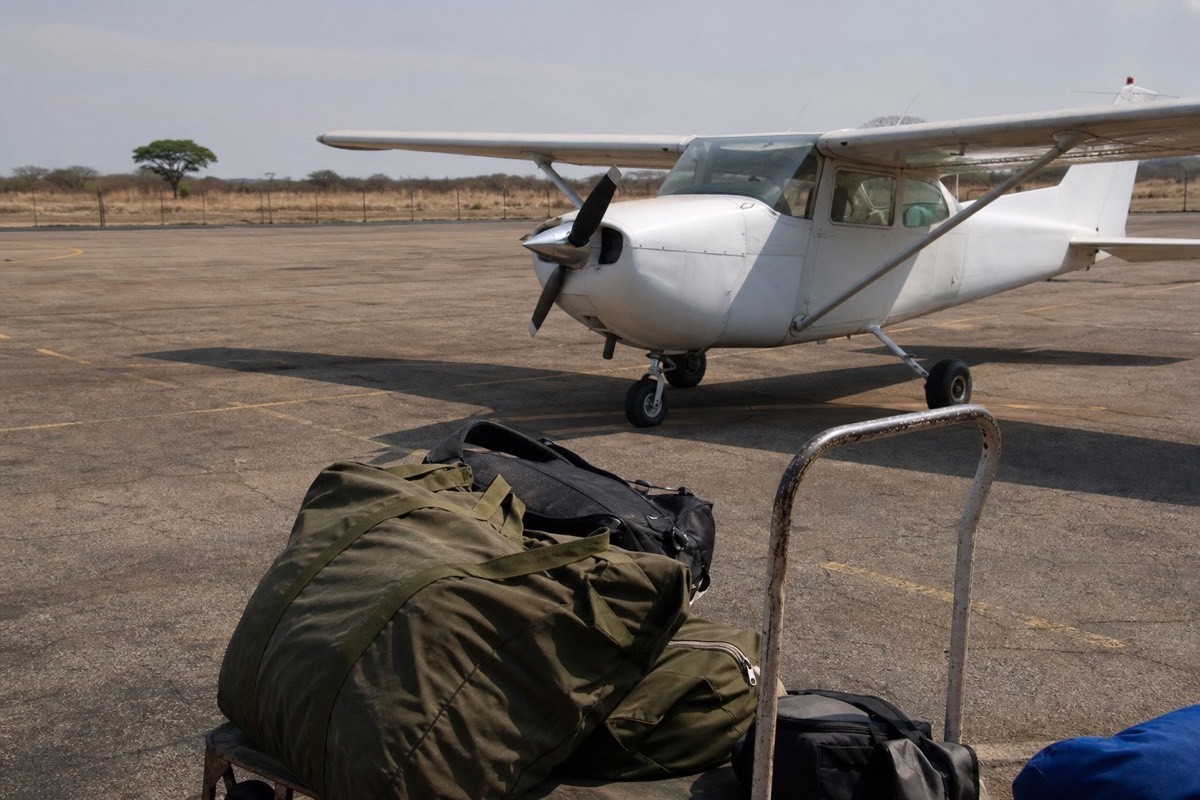
Charter flights from Maun to airstrips inside the concessions take 20 to 45 minutes depending on the camp, cost roughly USD 200 to 600 per person one way, and are usually bundled into the camp package rather than bought separately. The aircraft are small, six to twelve seats, and they only take soft bags.
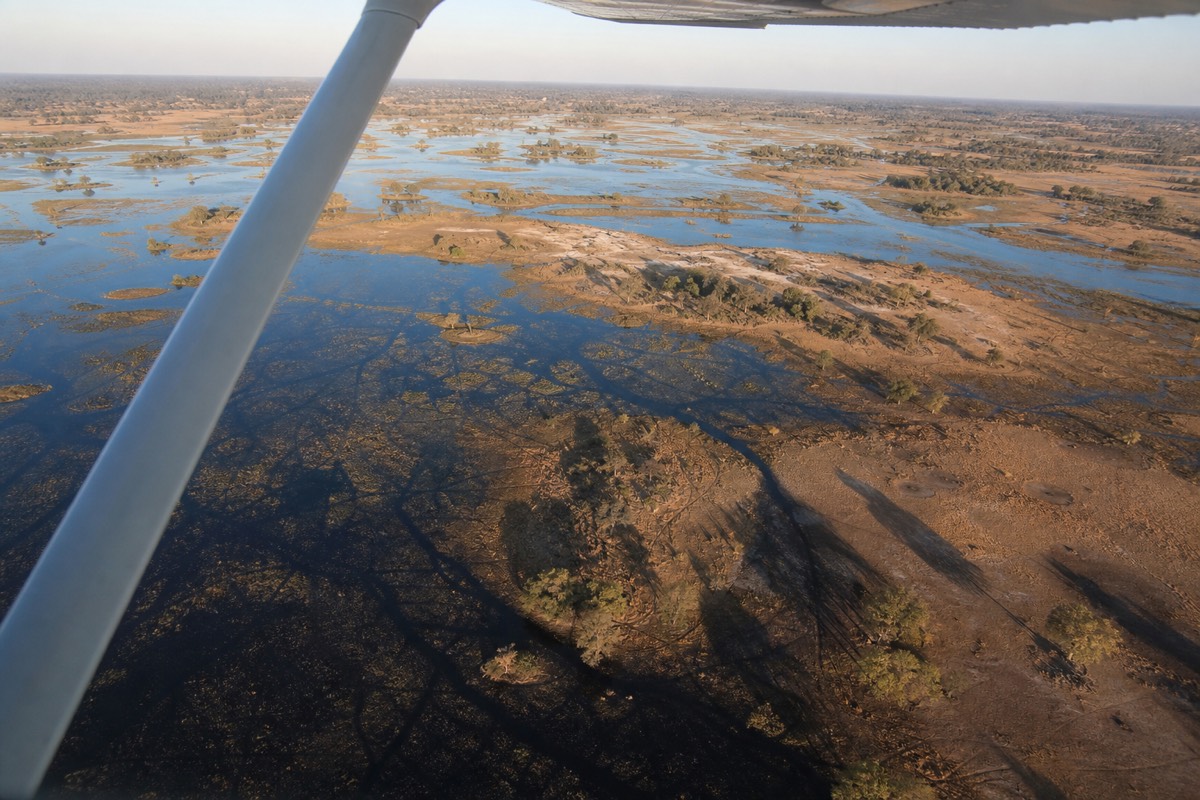
This is the part of the journey that surprises people most, and the part they most often describe as a highlight. The aircraft flies low enough that the structure of the delta is legible below you: the channel maze, the permanent and seasonal islands, elephant herds as grey shapes crossing shallow water, and the hard line where floodwater meets dry Kalahari sand. Round trips are often cheaper than two singles, and shared charters bring the per-person figure down.
The baggage rule is not negotiable and it catches out first-timers with hard suitcases. Allowances are set by the charter operator, not by a national standard: one published example is Mack Air light-aircraft luggage policy, which allows 20 kg in a soft-sided duffel with maximum dimensions of roughly 30 cm wide by 35 cm high by 70 cm long, while other operators and camps quote closer to 15 kg. Work on 15 to 20 kg in a soft bag and confirm the number on your own booking.
| Charter detail | What to plan for |
|---|---|
| Flight time to a concession airstrip | 20 to 45 minutes |
| Cost per person, one way | USD 200 to 600, often included in a camp package |
| Aircraft size | Small, typically six to twelve seats |
| Baggage | Soft duffel only, typically 15 to 20 kg, set by the charter operator |
| Hard suitcases | Do not fit the hold; leave them stored in Maun |
| Weather | Occasional delays, rare cancellations; airstrips can close in heavy rain |
Costs above are the range published for standalone charters and shift with fuel and aircraft type, so read them as an allowance rather than a quote. Packing to a soft-bag limit takes planning, which is why we wrote up how to pack for a delta safari as its own piece.
Why does almost everyone spend a night in Maun before flying in?
Because charter rotations run in the morning, camps want you arriving in time for an afternoon activity, and no sane itinerary stacks a long-haul flight, a connection through Johannesburg and a light-aircraft transfer into one day. One night in Maun turns a fragile schedule into a solid one.
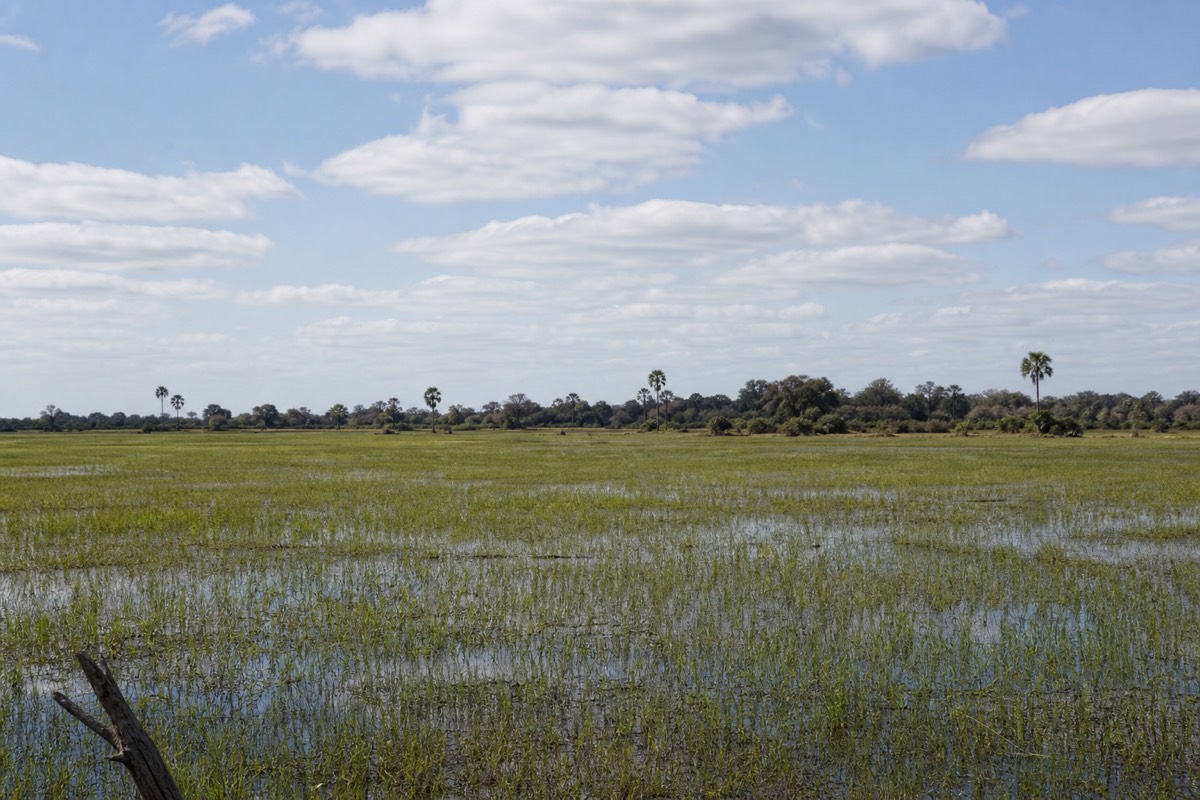
The mechanics are simple. Your Johannesburg flight lands in Maun in the middle of the day. Charter departures cluster around camp changeover times. Delay anywhere in the chain, and the aircraft that was going to take you into the delta has already gone, taking your first night of paid camp accommodation with it. Airlines lose bags. Weather closes airstrips. A night in Maun absorbs all of it.
There is a second reason, less obvious and more valuable. Arriving in the delta genuinely tired means sleeping through your first dawn, which is the single best hour of any safari day. Guests who land, eat, sleep properly in Maun and fly in the following morning start the trip awake. The same arithmetic applies to the whole itinerary: nights inside the ecosystem are the thing you are actually buying, and travel days quietly spend them.
What is worth doing with a spare half day in Maun?
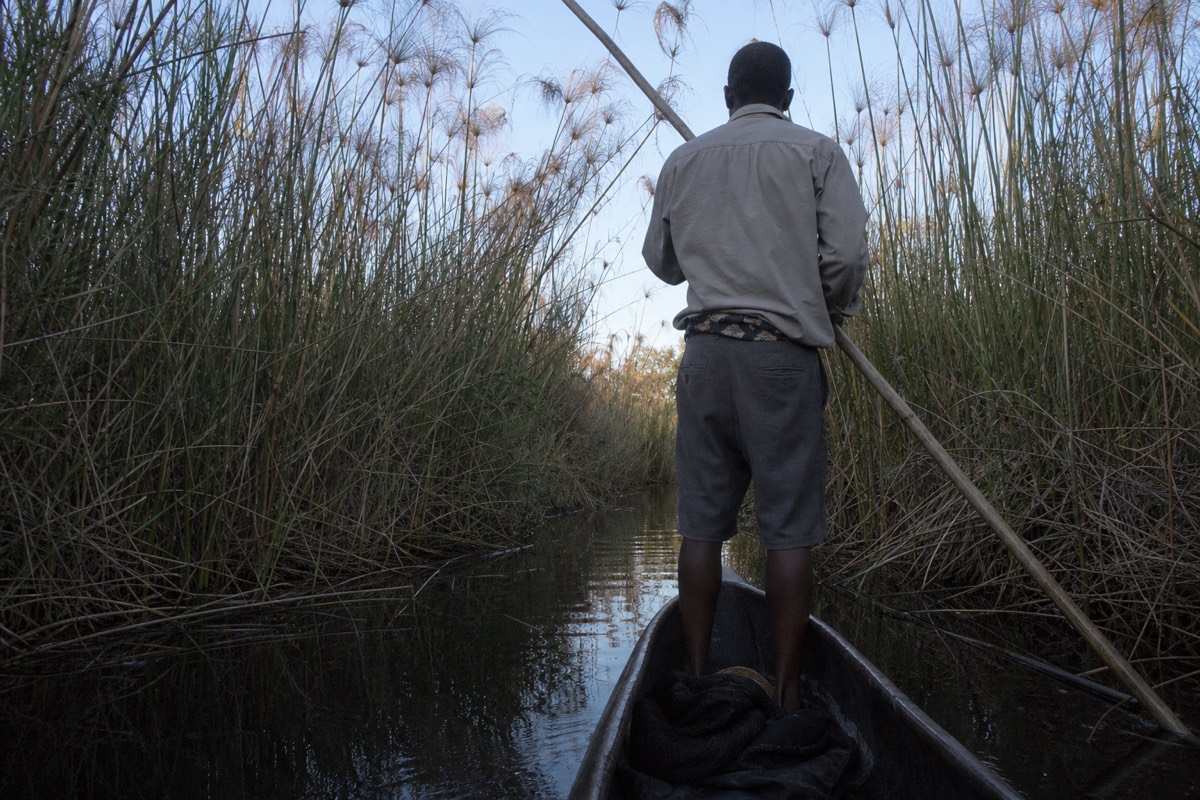
Three things earn their place: the 45-minute scenic flight over the delta, a full-day mokoro trip out to the floodplain and back, or an early departure towards the Central Kalahari if the desert is part of your plan. Everything else in Maun is an errand.
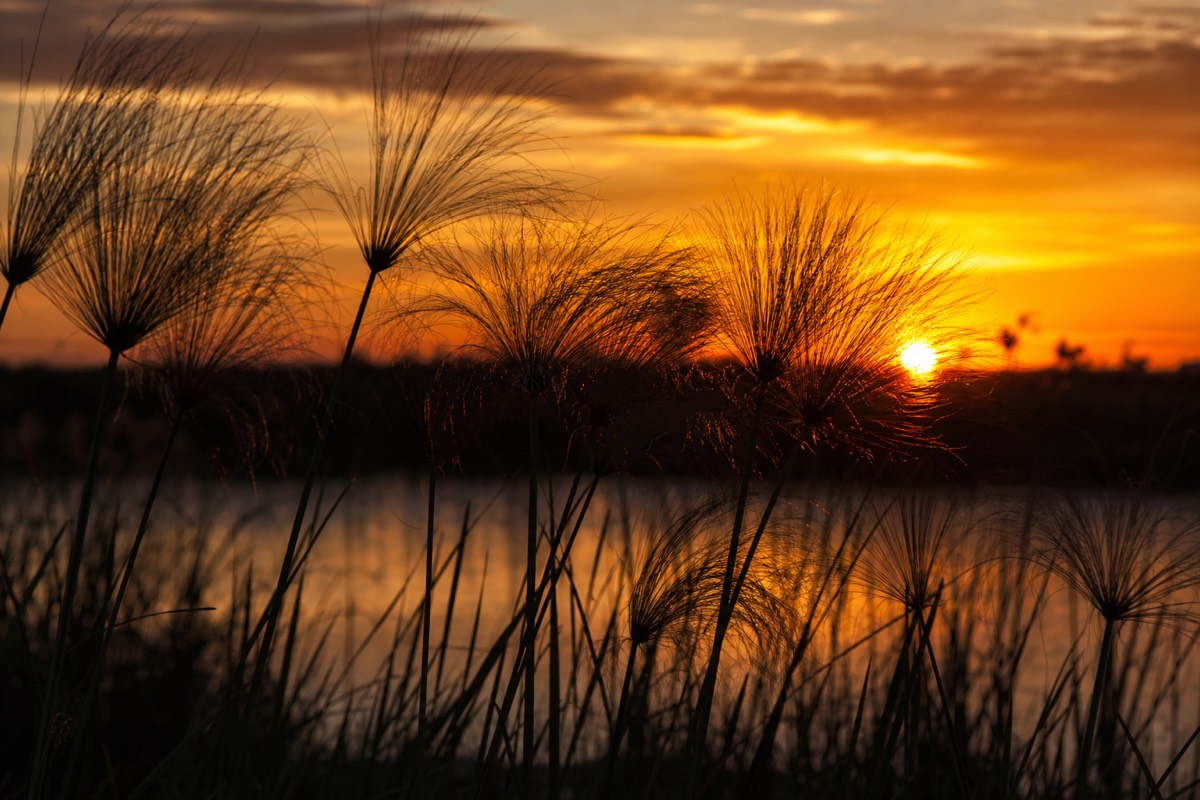
The scenic flight is the one we recommend most often to people who only have a Maun afternoon, and the one most often questioned on price. From $543 per person for 45 minutes, with the current price on the live listing, it is expensive per minute. It also does something nothing on the ground can: it shows you the whole system in a single sweep, so that everything you see later from a mokoro has a shape to fit into. Hotel pickup in Maun is included and there is no landing in the delta.
| Option | Duration | From | Best for |
|---|---|---|---|
| Aerial scenic flight over the delta | 45 minutes plus transfers | $543 per person | Understanding the scale before you go in at ground level |
| Full-day mokoro adventure from Maun | 8 hours | $200 per person | Getting on the water without an overnight commitment |
| All-inclusive mokoro with an island walk | Full day | $181 per person | Community polers, picnic island, short nature walk |
| Central Kalahari bush safari | 3 days, 2 nights | $1,375 per person | Pairing the wetland with the desert on one trip |
| Errands and rest | 2 to 3 hours | Free | Cash, SIM, repellent, repacking into a soft bag |
Prices are the site starting prices per person and move with season and availability, so check the current figure on the live listing. The Kalahari option is a genuine contrast rather than a top-up, because those desert grasslands run on almost the opposite seasonal logic to the delta and peak in the green months.
What should you sort out in Maun before you go bush?
Cash, a local SIM if you want data, insect repellent, any pharmacy items, a last check that your bag is soft and under weight, and fuel plus supplies if you are driving yourself. Once the aircraft lifts off, there are no shops.
Camps are all-inclusive to a point, but the things they do not carry are exactly the things people forget. Tips for guides and polers are paid in cash and small USD notes are the practical currency. Batteries, memory cards and a spare charging cable are worth having, because camp power is limited and often generator-scheduled rather than continuous.
| Task | Where | Why it matters | When |
|---|---|---|---|
| Draw cash | ATMs in Maun town | Tips and incidentals; camps rarely handle cash withdrawal | On arrival, before the shops close |
| Buy or top up a SIM | Provider shops in town | Last reliable data before patchy or no signal | Same afternoon |
| DEET repellent | Pharmacy or supermarket | Needed late afternoon through after dark, year round | Before you fly in |
| Pharmacy items | Pharmacy in town | Antimalarial prescriptions should be started before you travel, not here | Ideally already done at home |
| Repack into a soft bag | Your Maun accommodation | Hard cases do not fit charter holds; most places store them | The night before the charter |
| Fuel and supplies | Filling stations and supermarkets | Self-drivers get no second chance past the delta gates | Morning of departure |
This is a checklist rather than a requirement list, and nothing here replaces the official guidance. Malaria and entry rules are set by authorities, not operators: our summary of Botswana entry requirements and malaria precautions points at the primary sources, and the CDC travel health page for Botswana is where the health detail should be confirmed.
Money, connectivity and the last real supermarket
The currency is the Botswana Pula, ATMs are available in Maun, and US dollars are widely accepted in safari areas. Data coverage is decent in town and patchy to absent in the delta, and the supermarkets in Maun are the last full grocery shopping for anyone driving themselves.
Card payment works in Maun for accommodation, restaurants and fuel, but the further you get from town the more the economy runs on cash and pre-arranged inclusions. Nobody in a bush camp is going to run your card for a tip. Small denominations matter more than the total: a handful of five and ten dollar notes covers guides, polers and camp staff across a week without anyone having to make change in the middle of nowhere.
On connectivity, plan to be offline. Some camps have a signal or satellite arrangement for emergencies, but treating the delta as a place with reliable internet leads to frustration and, worse, to guests staring at a phone during the two hours a day the light is any good. Tell whoever needs to know that you will be uncontactable, and give them the camp name and dates instead.
What are the roads out of Maun like, and where do they go?
Tar leaves town in three directions and turns to sand and gravel where the delta begins. Reaching a public mokoro launch point such as Xakanaxa or the polers trust near Mababe Gate is 2 to 5 hours of sandy driving and needs a high-clearance 4WD plus real river-crossing experience.
The wider network is straightforward to describe and slower to drive than the map suggests. North-east takes you towards Kasane and Chobe. East runs towards Nata and on to Francistown. South-west heads for Ghanzi and eventually the Namibian border. All of these are long hauls in a country the size of France with a fraction of its road density, and most safari visitors fly rather than drive them.
| From Maun towards | Distance or time | Surface | Reality check |
|---|---|---|---|
| Edge of the delta floodplain | About 65 km | Tar, then sand | Close enough for a day trip, far enough that Maun is dry scrub |
| Public mokoro launch points such as Xakanaxa | 2 to 5 hours driving | Sand and gravel | High-clearance 4WD; deep sand and river crossings |
| Polers trust near Mababe Gate | Within the same 2 to 5 hour band | Sand | Community access point for mokoro and poler hire |
| A camp launch point on a guided transfer | Road 1 to 4 hours, then water 30 minutes to 2 hours | Mixed | The standard mid-range route into the delta |
| Kasane and Chobe, north-east | A long day on the road | Tar and gravel | Most visitors fly this leg instead |
| Nata and Francistown, east | A long day on the road | Tar | The route towards eastern Botswana and the Zimbabwe border |
| Ghanzi, south-west | A long day on the road | Tar | The route towards the Namibian border |
Only the delta figures are drawn from operator experience; for the long tar routes we deliberately give no drive-time number, because conditions, roadworks and animal traffic make them unreliable to promise. Confirm locally, and ask about water crossings on the delta tracks in the months either side of the flood peak.
Charter, guided transfer or self-drive: which route into the delta?
Charter flight is the standard for luxury camps, fast and scenic and usually included in the package. A guided road-and-water transfer is the standard for mid-range camps. Self-drive is for budget travellers with 4WD experience and time, and it cannot reach most prime concessions at all.
That verdict is the one this site has published for years and it holds up. The reason self-drive cannot substitute for the others is not toughness, it is access: prime concessions are entered on a camp booking, not on a park permit, so a self-drive trip is structurally limited to the public and outer areas. That is a real safari, just a different one.
| Route | Time | Typical cost | Who it suits |
|---|---|---|---|
| Charter flight to a concession airstrip | 20 to 45 minutes | USD 200 to 600 per person one way, often in the package | Anyone booking a fly-in camp; time-poor travellers |
| Guided road plus boat or mokoro transfer | 2 to 6 hours total | Usually included; standalone about USD 150 to 400 per person round trip | Mid-range camps, travellers who want to see the ground |
| Self-drive plus public mokoro | 2 to 5 hours driving plus 1 to 3 hours on the water | Fuel plus roughly USD 50 to 100 per day for mokoro and poler | Experienced 4WD drivers with time and a tight budget |
Standalone transfer costs are the published ranges and vary by distance and operator; most camp packages fold them in. The full mechanics of each option are laid out in our piece on getting from Maun into the delta.
What can you still arrange on arrival, and what has to be locked in?
Day mokoro trips from Maun are realistically bookable on arrival, especially in the April to May and November to December shoulder. Multi-day peak-season packages are not: the best concessions and the community camps are allocated months ahead, and late arrivals end up on the accessible outer floodplain instead of the inner channels.
Maun has plenty of licensed operators and a walk-in culture, which is genuinely useful in a quiet month. The failure mode is arriving in July expecting the same flexibility. The scenic flight also fills ahead in July and August, which surprises people who assume an aircraft is always available.
| What you want | Book ahead | Arrange in Maun | Why |
|---|---|---|---|
| Day mokoro trip | Nice to have | Realistic, particularly in shoulder months | Multiple operators, daily departures |
| Scenic flight | Yes in July and August | Often possible outside peak | Aircraft and morning slots fill from confirmed bookings |
| Multi-day concession camp | Months ahead | Rarely, and usually only on the fringe | Camp capacity across the delta is tiny by design |
| Community mokoro camping | Months ahead in dry season | Sometimes in shoulder months | Daily capacity is capped to protect the ecosystem |
| Central Kalahari departure | Ahead, it is a scheduled trip | Occasionally | Vehicle, guide and camp are assembled per departure |
| Charter into a remote camp on the same day | Yes, as part of a camp booking | Genuinely difficult | Charter schedules are built around confirmed camp arrivals |
These are the booking patterns the operators we work with report, not guarantees of availability in either direction.
Where does Maun fit into a bigger Botswana itinerary?
Maun is the hinge. Kasane and Chobe sit to the north-east, reachable on a short Air Botswana hop rather than a drive. The Central Kalahari lies south. Victoria Falls is a border crossing beyond Chobe. All of that is doable, and none of it is doable in a week.
The temptation is obvious. You have flown a long way, four famous places sit within a few hundred kilometres of each other, and every one of them photographs well. What actually happens when you try to link them at speed is that most of your days become transfer days. The site position on this is blunt and we stand by it: combining the Okavango with Chobe or Victoria Falls inside a four-day window produces a travel schedule rather than a safari.
Two things make combinations work. The first is flying between them instead of driving, which is why the Maun to Kasane air link matters more than the road north-east. The second is giving each place its own block of nights rather than a single overnight. The itineraries that succeed tend to look like three or four nights in the delta, then three in Chobe, then the falls, which is roughly the shape of the Victoria Falls to Okavango circuit, an eleven-day trip that runs through Chobe. If you are choosing between the two Botswana anchors rather than stacking both, our comparison of Chobe riverfront elephants against the delta channels sets out which traveller each one actually suits.
Maun also works as a base rather than a corridor, which people rarely consider. From here you can do a day mokoro, a scenic flight and a Kalahari departure without changing accommodation, which is a reasonable way to build a shorter Botswana trip for someone who cannot commit to fly-in camp nights. It is not the delta at its best. It is a legitimate version of it for a limited budget or a tight calendar.
What do first-timers get wrong about Maun?
Two mistakes, and they are both scheduling. The first is treating Maun as the safari, booking two nights in town and one in the delta. The second is leaving no buffer between an international arrival and a same-day charter into camp.
The first happens because Maun is cheaper and easier to book, so an inexperienced itinerary drifts towards it. But the animals, the channels and the silence are not in Maun. Every hour spent in town is an hour not spent in the ecosystem you flew here for, and the town knows it: nearly everything on offer is a way of getting you out.
The second is more expensive. A missed charter is a lost camp night that nobody refunds, and it happens for reasons entirely outside your control. Build in the buffer. If you are choosing between one extra night in Maun as insurance and one extra activity, take the night, then use the spare half day for the flight or the mokoro rather than sitting still. Which camp you are heading to changes how much this matters, and our comparison of delta camps, lodges and mobile tented safaris covers which formats depend on a charter at all.
What we tell people planning their Maun night
Land in Maun with a day to spare, sleep, sort out cash and repellent, repack into a soft bag, do the flight or the mokoro if there is time, and fly into camp the next morning rested. That sequence costs one night and saves most of the things that go wrong.
Season shapes it too. In July and August the town is busy, charters are full and everything you have not booked is harder to get, so the buffer night doubles as insurance. In the shoulder months the pressure comes off and walk-in day trips become genuinely easy. Our month-by-month look at when to visit the Okavango Delta maps that onto the flood.
The practical value of booking the delta portion in advance is not the price, it is the sequencing. The trips we list bundle the transfer, the guiding, the park fees and the camp into one confirmed arrangement, which is exactly the combination that becomes hard to assemble on the ground in peak season, when concession space and the capped community mokoro dates are already allocated. Maun will still be dusty and functional when you get there. That is fine. You are not staying.