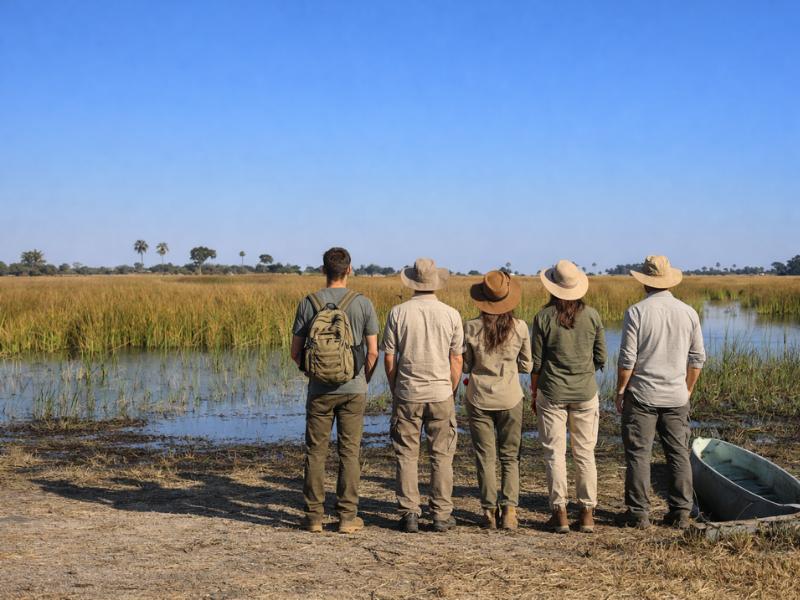
Book the best Okavango Delta tours in Botswana. Experience mokoro canoe safaris through papyrus channels, game drives spotting elephants, lions, leopards and wild dogs, luxury tented camps and floodplains full of hippos and birds on small-group or private multi-day expeditions from Maun. Year-round magic with seasonal floods. Secure your unforgettable Okavango Delta adventure today!
Our best-selling Okavango Delta tours immerse you in Africa's premier wetland wilderness with mokoro canoe drifts through reed channels spotting elephants, hippos, and lechwe, game drives in open 4×4s tracking lions and wild dogs, and walking safaris for close-up bird and antelope views.
This peaceful Mokoro adventure glides through the Okavango Delta’s quiet channels with a local guide/poler born and raised here. Enjoy the tranquil landscape, abundant birdlife, and occasional hippo or elephant sightings in a traditional dugout canoe. Stop for a picnic lunch on an island, followed by a short nature walk.
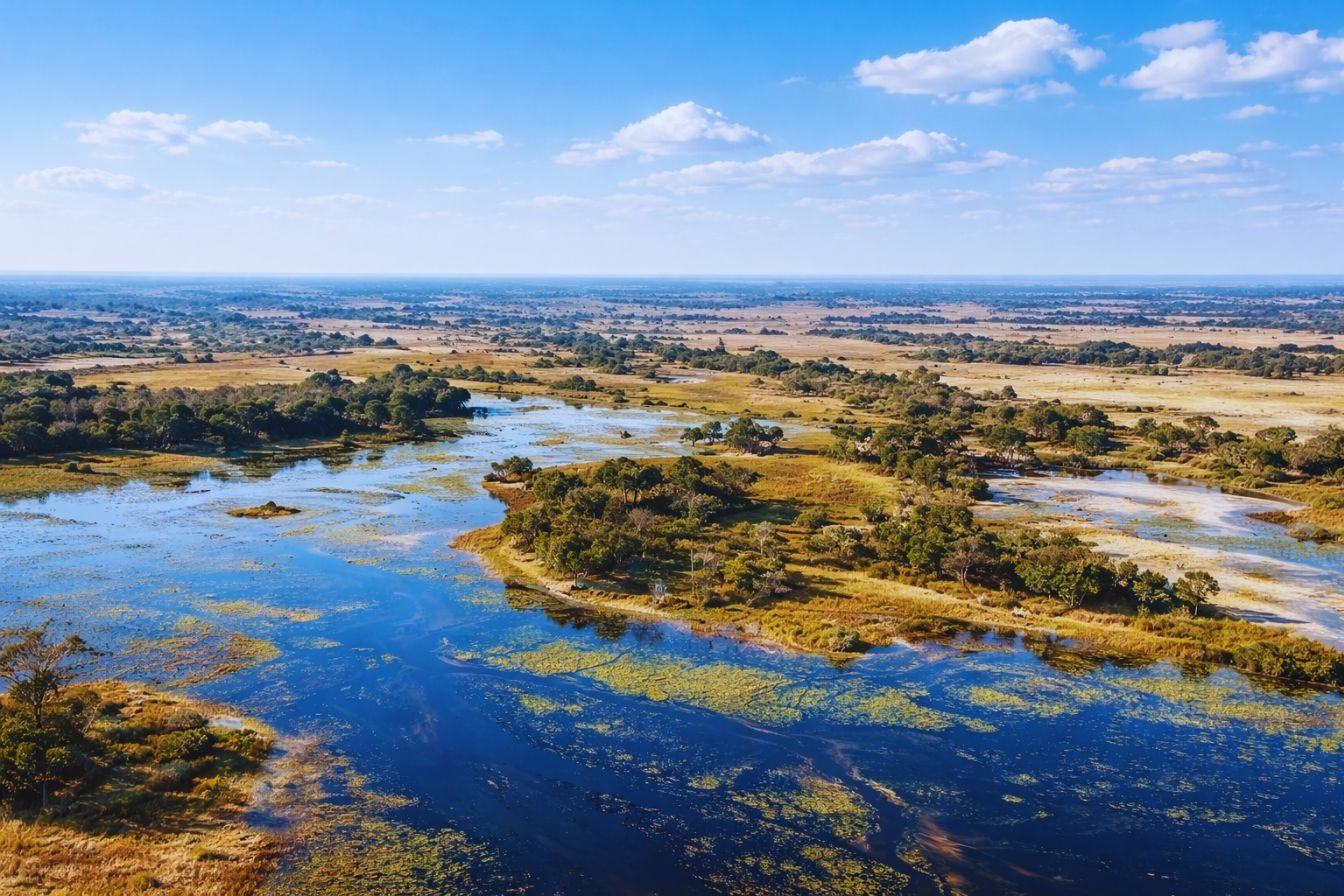
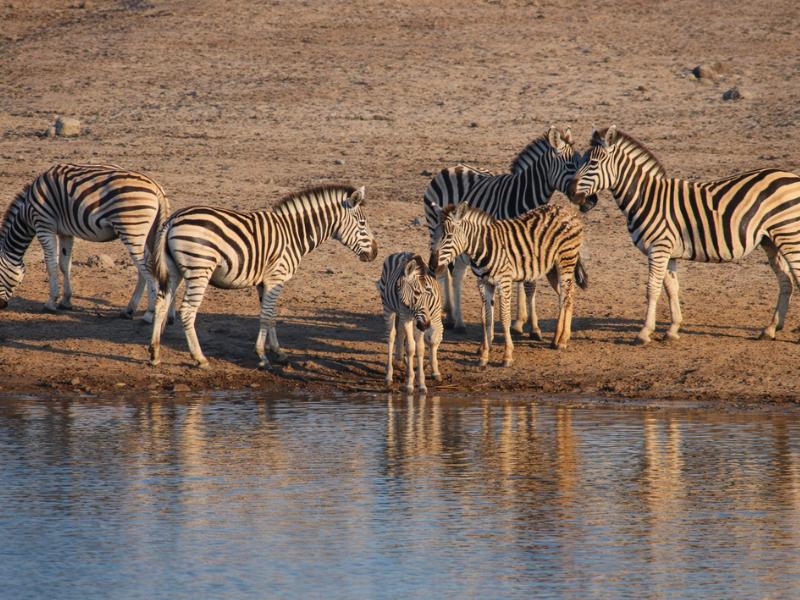
Soar above the UNESCO-listed Okavango Delta on this 45-minute flight from Maun. Witness the vast maze of meandering waterways, lush floodplains, and islands from the air. Spot elephants, hippos, giraffes, zebras, buffalo, lions, leopards, and hundreds of bird species. Enjoy hotel pickup/drop-off in Maun and nearby areas.
Glide silently through the Okavango Delta’s serene channels in a traditional mokoro canoe, spotting elephants, hippos, birds, and more in their natural habitat. Your local guide shares insights into the delta’s unique flora, fauna, and cultural heritage. All-inclusive with transfers, meals, park fees, and refreshments for a seamless journey.
Our multi-day Okavango Delta tours run 3-7 night immersions in luxury lodges or mobile camps with daily mokoro canoe drifts through papyrus channels, open 4×4 game drives tracking Big Five and wild dogs, walking safaris for close-up tracks and birds, and sunset sundowners on floodplains.
Explore the Okavango Delta’s serene channels and islands in a traditional mokoro canoe with a local guide from the Okavango Mokoro Community Trust. Glide through small waterways, spot wildlife like elephants, lions, and leopards on bushwalks, and camp comfortably with full catering. All meals and accommodations included – an immersive, sustainable adventure supporting local livelihoods.
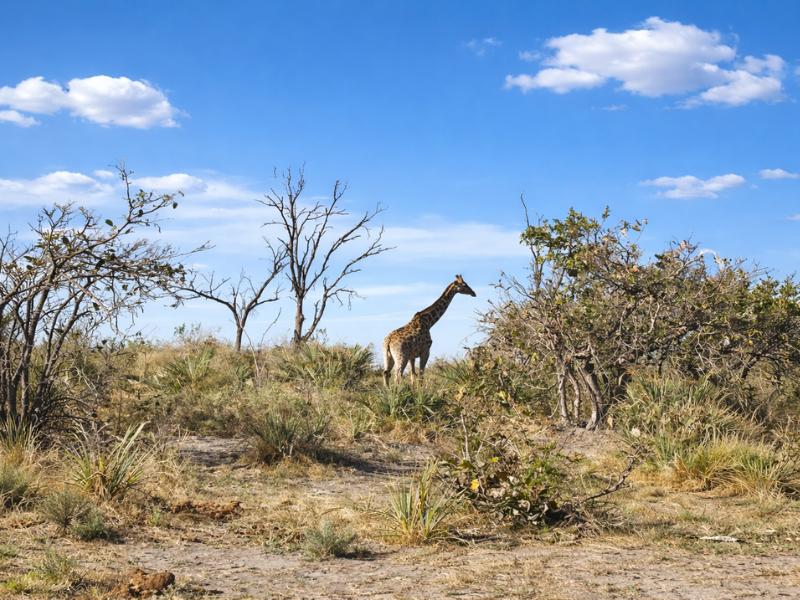
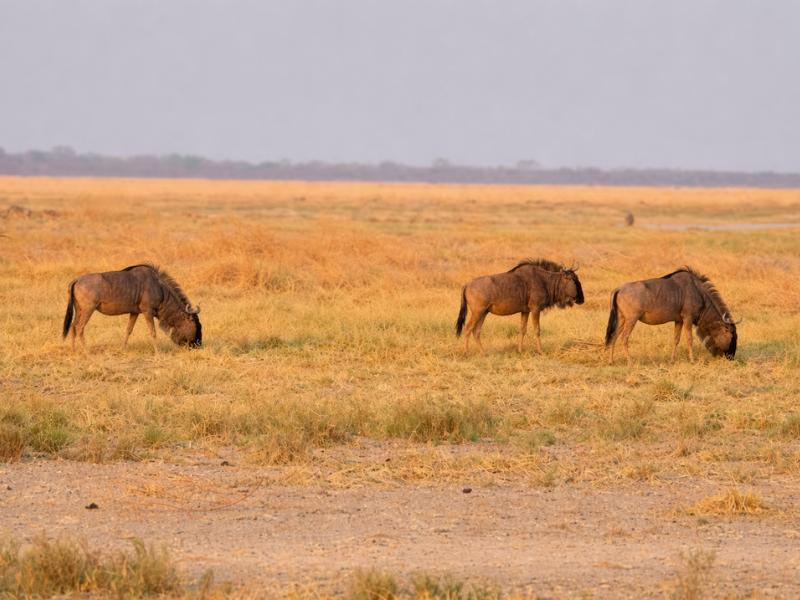
Depart Maun early for Deception Valley in CKGR. Camp amid vast grasslands teeming with springbok, gemsbok, wildebeest, hartebeest, eland, giraffe (best after rains). Afternoon game drive and sunset views. Evening campfire dinner. Day 2: morning drive to Sunday Pan, brunch at Passarge Valley, evening at Deception Pan. Day 3: dawn drive for cheetah, lion, leopard, then return to Maun mid-afternoon.
Nestled among majestic acacia trees and the iconic Mogotse bush, Boteti River Lodge blends seamlessly with its surroundings. Spacious decks offer peaceful views of the Boteti River, where hippos, crocodiles, and abundant birdlife thrive. Enjoy unlimited river access via guided mokoro or motorboat cruises.
Immerse in Botswana’s wild heart on this 7-day adventure: 2 nights in Moremi Game Reserve–Khwai, 1 night Mababe, 1 night shore with a day trip to Elephant Havens, and 2 nights in the Okavango Delta. Travel in a 4×4 open safari vehicle, boat, and mokoro. Spot wildlife, cruise channels, and see ancient rock paintings in Savuti.
Short on time but craving epic Africa? This fast-paced 11-day trip delivers Victoria Falls mist, Simunye Theatre energy, a home-cooked Lusumpuko feast by local women, Hwange & Chobe safaris hunting lions/elephants/rhinos, Okavango Delta mokoro glides, guided bush walks, and raw wilderness. Guided, cultural, and packed with jaw-dropping moments – your perfect excuse to finally explore Africa.
This 15-day guided lodge adventure takes you through Southern Africa’s most dramatic landscapes and wildlife hotspots. In Namibia, explore the towering red dunes of Sossusvlei and the eerie shipwrecks of the Skeleton Coast. Glide through Botswana’s lush Okavango Delta by mokoro, spotting lions, elephants, and more, then visit Chobe National Park for massive elephant herds along the river. End in Zimbabwe at the thunderous Victoria Falls.
The four types of Okavango Delta safari, and what each one actually gives you
Almost every Okavango Delta safari is built from these four ways of moving through the delta. Most good trips combine two or three of them in a day, and which ones dominate depends on where your camp sits and how high the water is.
Mokoro safari
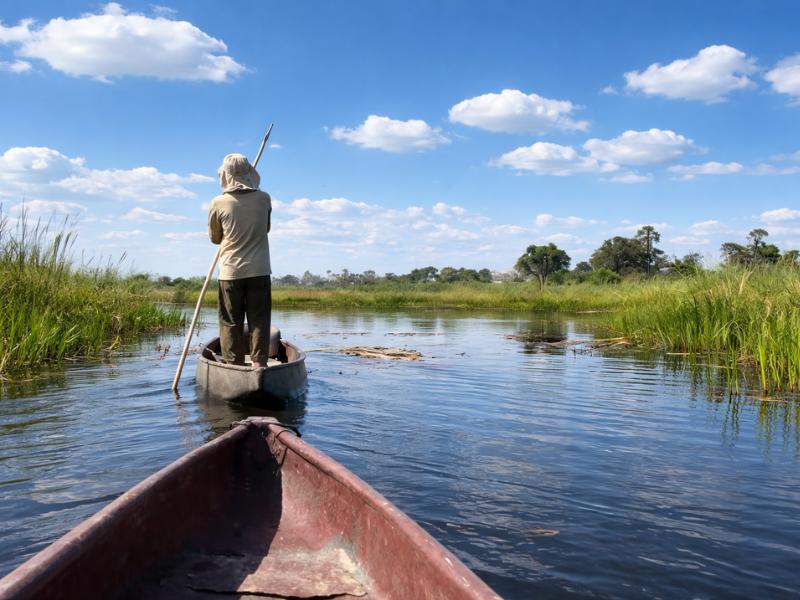
The traditional dugout canoe, poled from the stern by a guide who navigates by channel knowledge rather than landmarks. You sit inches above black, still water with papyrus on both sides. Nothing else in Africa produces the same silence or the same closeness to waterbirds, lilies and semi-aquatic wildlife.
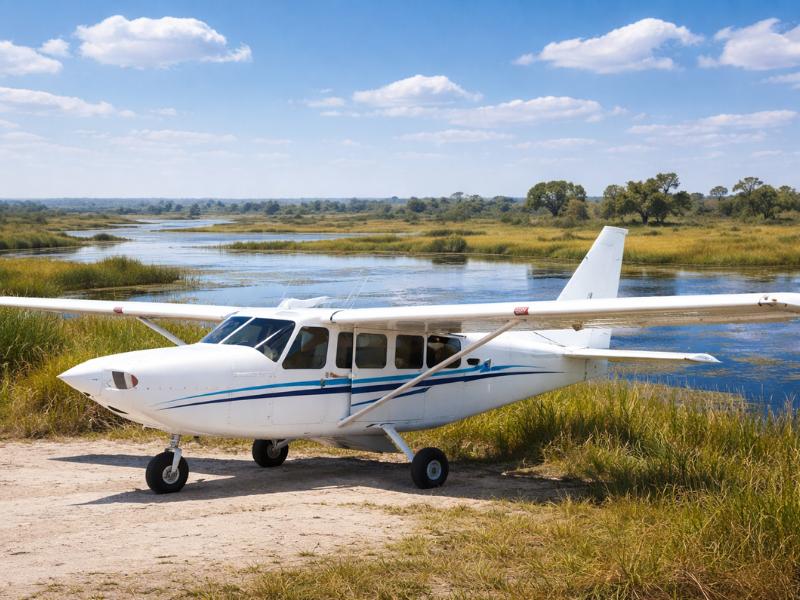
A light aircraft from Maun onto a bush airstrip inside a private concession, 20 to 45 minutes depending on the camp. It is how almost every inner-delta camp is reached, and the approach over the flooded channels is worth the fare on its own. Most camp packages include the flight.
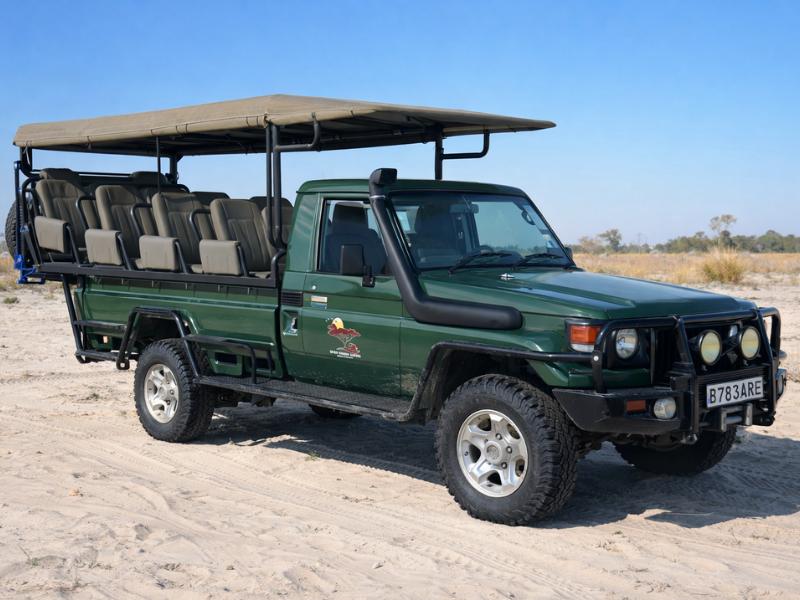
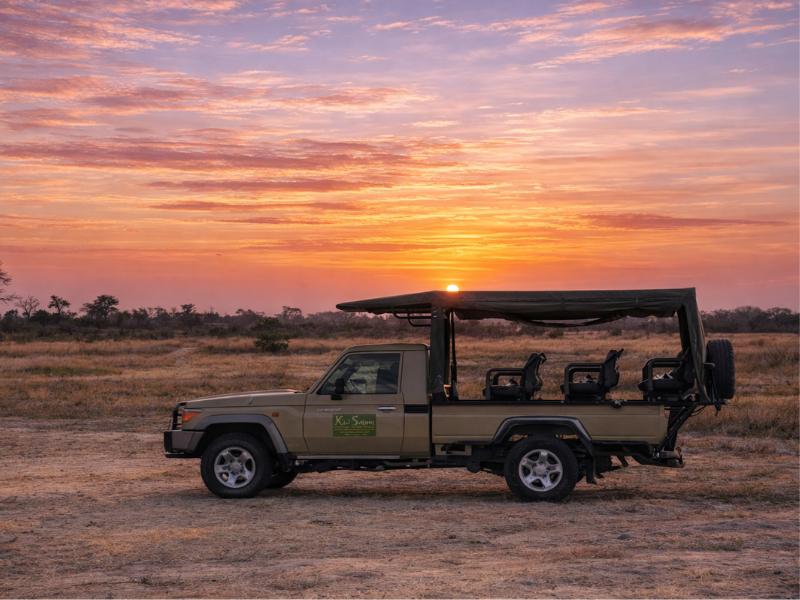
Open vehicle, two drives a day, timed to the first two hours after sunrise and the last two before dark, when the predators move and the light is worth being out in. Inside a private concession the vehicle numbers are capped by the concession agreement, so you can stay with a sighting instead of cycling through it.
On foot on a dry island with an armed, licensed guide and a tracker, usually mid-morning between the drive and the midday rest. It changes the scale of everything: tracks, dung, termite mounds, birds and the small detail a vehicle drives past. It is generally possible in concessions rather than inside the reserve itself.
In the heart of Botswana, the Okavango Delta is one of the world's most unique wildernesses—a massive inland wetland that floods the Kalahari Desert, creating endless channels, lagoons, and islands teeming with life. Glide silently through papyrus-lined waterways in a traditional mokoro canoe, spot elephants splashing in shallows, watch lions on the hunt from an open 4x4, or walk quiet trails hearing birds and antelope rustle nearby. Hippos grunt at dusk, wild dogs race across floodplains, and the birdlife is endless—it's pure, untouched Africa at its most magical. With Okavango Delta Botswana Tours, you'll explore remote concessions like Moremi or Khwai with expert local guides, combine water and land safaris for the full experience, stay in comfortable camps under starry skies, and get close to wildlife in ways that feel intimate and unforgettable.
Our expert team has been helping navigate and book Okavango Delta Botswana tours and activities for tourists from all over the world for over a decade, ensuring you have a hassle-free trip with everything booked in advance.
With deep knowledge of the Okavango Delta’s unique wetland wilderness, wildlife-rich floodplains, and pristine African ecosystems, partnerships with the best local safari operators and guides, and a passion for creating unforgettable experiences, we're committed to making your Okavango Delta adventure truly extraordinary. From your first inquiry to your last tour, we're here to support you every step of the way.
Award-Winning Travel Experience
Okavango Delta Botswana Tours is recognized by leading travel platforms worldwide
Botswana Okavango Excellence Award2024
Delta Explorer Choice Award2023
Best Okavango Delta Tour Operator2025
Okavango Region Sustainable Safari Tourism Award2024
How do I get to the Okavango Delta from Maun in Botswana?
Maun is the main gateway to the Okavango Delta, and there are several ways to reach the delta from Maun — the most common and practical options are by small plane (charter flight) or guided safari transfer (road + boat or mokoro).
1. Small plane / charter flight (fastest and most popular)
Direct scenic flights from Maun Airport (MUB) to airstrips inside the delta (e.g., Xigera, Mombo, Vumbura, Duba Plains, Chitabe, or other private concession airstrips).
Flight time: 20–45 minutes depending on camp location.
Cost: USD 200–600 per person one-way (round-trip often cheaper; shared charters lower the price).
Operators: Mack Air, Air Botswana, or camp-provided charters — book through your safari lodge/camp (most include this in the package).
Pros: Quick, stunning aerial views of the delta, avoids rough roads.
Cons: Expensive if not included in a lodge package; weather-dependent (rare cancellations).
2. Guided safari transfer (road + boat/mokoro)
Most lodges/camps arrange private 4x4 transfers from Maun to the delta edge (e.g., to a mokoro launch point or boat jetty), then continue by mokoro (traditional dugout canoe) or motorboat into the delta.
Cost: Included in most lodge packages; standalone transfers ~USD 150–400 pp round-trip.
Pros: Immersive — see wildlife on the drive and from the mokoro/boat.
Cons: Longer, dustier roads in dry season, weather can affect mokoro crossings.
3. Self-drive + mokoro/boat
Drive your 4x4 from Maun to a public mokoro launch point (e.g., Xakanaxa or Mokoro Polers Trust near Mababe Gate) — roads are sandy/gravel, require high-clearance 4WD.
Cons: Challenging driving (deep sand, river crossings), limited public access to prime delta areas (most prime concessions require lodge booking).
Verdict
Charter flight is the best and most common way — fast, scenic, and direct to luxury camps/lodges (most safari packages include it).
Guided transfer is the standard for mid-range camps.
Self-drive/mokoro is only for budget travelers with 4WD experience and time.
You can book highly rated Okavango Delta tours from Maun (with flights/transfers, mokoro, game drives, luxury camps, and expert guides) at Okavango Delta Botswana Tours.
How does a mokoro safari work in the Okavango Delta?
A mokoro safari is a traditional, silent canoe trip through the shallow channels and floodplains of the Okavango Delta, poled by a skilled local guide (called a poler) standing at the back of the dugout canoe.
Here’s how it typically works in 2025–2026:
Setup and start
You meet your poler/guide at a launch point (usually near a lodge/camp or after a short 4x4 transfer from Maun).
Mokoro is a narrow, flat-bottomed wooden canoe (originally carved from a single tree, now often fiberglass for durability).
2 passengers max per mokoro (plus the poler) — very stable and low to the water.
The journey
The poler stands at the rear and uses a long pole (3–5 m) to push off the bottom (like punting), silently gliding through narrow waterways, reed beds, and lily-covered lagoons.
No engine — completely quiet, so you hear birds, hippos grunting, elephants splashing, and wind in the papyrus.
Speed: Slow and gentle (3–5 km/h) — perfect for spotting wildlife up close (hippos, elephants, crocodiles, lechwe antelope, birds, fish eagles, herons).
Depth: Usually 0.5–1.5 m — polers navigate channels by feel.
Duration and stops
Standard mokoro trip: 2–4 hours (morning or afternoon).
Full-day: 4–6 hours with a picnic lunch on an island.
Multi-day mokoro safaris (3–7 nights): Camp on islands, combine with walking safaris (guided walks on dry land to see big game — elephants, lions, buffalo).
Stops: Picnic on a palm island, short guided walk (to see tracks, birds, or small antelope), swimming in safe channels (if water levels allow and guide approves).
What to expect
Very peaceful and intimate — you’re low to the water, so animals often don’t see you as a threat.
Guides are experts — they know animal behavior, bird calls, plant uses, and delta ecology.
Safety: Extremely safe — mokoros are stable, polers are highly skilled, and channels are shallow. Hippos and crocs are present but guides avoid them.
Verdict A mokoro safari is the most authentic and serene way to experience the Okavango Delta — silent gliding through the waterways, close wildlife encounters, and a deep connection to the landscape. It’s suitable for all ages/fitness levels (no paddling required) and often combined with game drives or walking safaris for a complete safari.
You can book highly rated Okavango Delta mokoro safaris from Maun (day trips or multi-day camping, with poler/guide, meals, and transfers) at /.
What wildlife can I expect to see on a mokoro trip in the Okavango Delta?
On a mokoro trip in the Okavango Delta, you can expect to see a rich variety of wildlife — the silent, low-to-the-water approach of the mokoro allows for exceptionally close and intimate encounters, often closer than on game drives.
Common and very likely sightings (high chance on most trips):
Hippos — extremely common — you’ll hear them grunting and see them submerged or partially out of the water; guides avoid close approaches for safety.
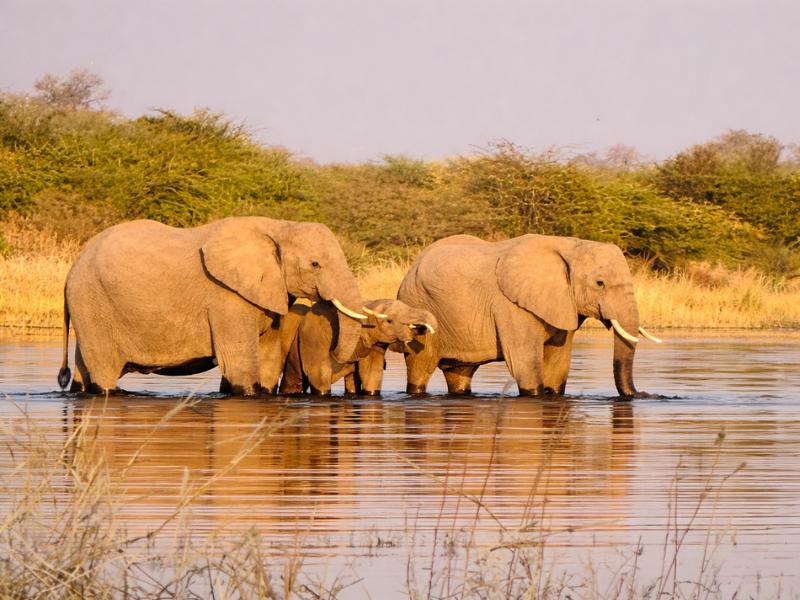
Elephants — frequent — often seen drinking, bathing, or crossing channels; they’re relaxed in water and come very close to mokoros.
Red lechwe (antelope) — abundant — they wade in shallow water and are easy to spot grazing in floodplains.
Birds — hundreds of species — fish eagles, herons, kingfishers, bee-eaters, African jacana, malachite kingfisher, wattled crane, and many waterbirds are almost guaranteed.
Crocodiles — common — Nile crocodiles bask on banks or float in channels; guides keep a respectful distance.
Waterbuck, impala, and other antelope — regularly seen on islands or floodplains.
Good but not guaranteed sightings (50–80% chance depending on season/location):
Giraffe — often seen on larger islands or open areas.
Zebra — common in drier parts or during dry season.
Warthog — frequent on land near water.
Buffalo — herds sometimes seen grazing in floodplains.
Monkeys (vervet, baboon) — in wooded areas or islands.
Special/rarer sightings (20–50% chance, more likely on longer/more remote mokoro trips):
Lions — occasional — may be seen on islands or banks (especially dry season).
Leopards — rare but possible — very elusive, but guides sometimes spot them in trees.
Cheetahs — very rare — open floodplains occasionally.
African wild dogs — rare but possible in northern delta areas.
Best chances overall:
Early morning (dawn) and late afternoon — animals are most active.
Dry season (May–October) — animals concentrate around permanent water channels.
Longer trips (multi-day mokoro safaris) — deeper into the delta, more remote areas, higher chance of big game (elephants, lions).
The mokoro’s silence and low profile give you a unique, up-close perspective — many visitors say the wildlife feels more intimate than on a vehicle safari.
You can book highly rated Okavango Delta mokoro safaris from Maun (day trips or multi-day, with expert poler/guide, meals, and high wildlife sightings) at Okavango Delta Botswana Tours.
How good is birdwatching in the Okavango Delta during different seasons?
Birdwatching in the Okavango Delta is excellent year-round — the area hosts over 500 bird species, making it one of the top birding destinations in Africa. The quality and highlights change dramatically with the seasons due to water levels, migration, and breeding patterns.
Dry season / low water (May–October)
Best overall time for birdwatching — most birders rate this period highest.
Why excellent:
Water recedes → birds concentrate around permanent channels, lagoons, and waterholes → much easier to spot large numbers and rare species.
Breeding season for many waterbirds (herons, egrets, storks, pelicans, darters) — spectacular colonies and activity.
Raptors (fish eagles, marsh harriers, bateleurs, African hawk-eagle) are very visible hunting over drying floodplains.
Specialty birds easier to find: wattled crane, slaty egret, African skimmer, Pel's fishing owl, white-backed night heron, carmine bee-eater colonies.
Crowds: Moderate — fewer people than summer peak, quieter mokoro trips and hides.
Best months: July–September — driest, most concentrated birds, clearest views.
Wet season / high water (November–April)
Still very good birdwatching, but different character — lush, green, flooded delta with dispersed birds.
Why still excellent:
Massive influx of migratory birds from Europe/Asia (waders, swallows, bee-eaters, cuckoos, warblers).
Breeding season peaks for many species — flooded plains full of nesting storks, herons, ibis, and flamingos.
Waterbirds in huge numbers (open-billed storks, yellow-billed storks, African openbill).
Easier to see kingfishers, bee-eaters, and malachite kingfisher along channels.
Downsides: Birds more spread out (harder to find specialties), more rain (afternoon showers), hotter/humid (30–35°C), and some roads/trails flooded.
Best months: November–December (migration peak) and February–March (breeding colonies at full force).
Verdict
Dry season (July–September) = best for most birders — highest concentration, easiest spotting, best access to remote areas, and clearest photos.
Wet season (Nov–Apr) = best for migration and breeding spectacle — huge numbers of waterbirds and summer visitors, but more effort to find specialties.
If you want the highest success rate for rare/specialty birds and comfortable conditions, go July–September. If you want massive breeding colonies and migration, go November–March.
You can book highly rated Okavango Delta birding safaris from Maun (mokoro, boat, walking, hides, expert birding guide) at /.
Game drives vs walking safaris in the Okavango Delta – which to prioritize?
Prioritize game drives if this is your first safari or you want the highest chances of seeing the Big Five (lion, leopard, elephant, buffalo, rhino) and a broad range of wildlife — they are the core and most reliable way to experience the Okavango Delta.
Game drives (in open 4x4 safari vehicles) let you cover more ground, reach distant parts of the delta, and spot animals from a safe distance — especially predators (lions, leopards, cheetahs) and large herds (elephants, buffalo) that are often too far or dangerous for walking. They’re also more comfortable (seats, shade, cooler), allow for longer game viewing sessions (morning and afternoon drives), and are the best way to learn tracking, animal behavior, and ecology from expert guides.
Walking safaris are highly complementary and worth adding if you have time — they provide a more intimate, immersive, and sensory experience (hearing, smelling, feeling the bush), let you focus on smaller details (tracks, plants, insects, birds), and feel thrilling when tracking animals on foot (e.g., following elephant paths or approaching a herd cautiously). However, they cover much less ground, have stricter safety limits (no walking near dangerous game like lions or elephants without armed guides), and are limited to specific concession areas where walking is permitted.
Verdict
Prioritize game drives — they are the foundation of any Okavango Delta safari (most camps do 2 per day), give you the best chance of seeing big predators and large mammals, and are the most versatile/comfortable.
Add walking safaris (1–2 per stay) if you’re interested in a deeper, more sensory connection to the bush — many camps offer them as an optional activity alongside drives.
Most visitors do both in a 3–5 night stay: game drives as the main activity (morning and afternoon), walking safaris once or twice (usually early morning when animals are active and temperatures are cooler).
You can book highly rated Okavango Delta safaris from Maun (including game drives, walking safaris, mokoro trips, luxury camps, and expert guides) at Okavango Delta Botswana Tours.
Best time of day for mokoro excursions in the Okavango Delta to spot animals?
The best time of day for mokoro excursions in the Okavango Delta to spot animals is early morning (dawn to mid-morning, usually 5:30–9:00 AM departures).
Here’s why early morning is the clear winner:
Animals are most active at dawn and early morning — hippos, elephants, lechwe, and other herbivores come to the water to drink/feed after the night, while predators (lions, leopards) are often still moving or resting near channels.
Birds are at their peak — fish eagles, herons, kingfishers, bee-eaters, and wattled cranes are very visible and vocal in the morning light.
Cooler temperatures and calmer waters — the delta is still, reflections are mirror-like, and visibility is excellent before midday wind or heat haze.
Fewer other mokoros/boats — early departures have the channels almost to themselves, making wildlife less skittish and easier to approach quietly.
Golden light — sunrise/morning sun creates stunning glow on the water, reeds, and animals — perfect for photography.
Second-best option: late afternoon (3:00–6:00 PM until sunset)
Animals return to water to drink before night, birds roost, and predators become more active.
Beautiful golden-hour light on the delta, often with dramatic reflections and silhouettes.
Quieter than midday — fewer boats, more peaceful feel.
Downside: Shorter time before dark, and some animals (especially birds) settle earlier.
Avoid midday (10:00 AM–3:00 PM):
Heat/humidity rises, animals retreat to shade, birds less active, wind can ripple the water (reducing reflections), and more mokoros/boats on the channels (wildlife more skittish).
Quick tip: Book the earliest possible mokoro departure (dawn) — most camps/lodges offer sunrise or early morning mokoro trips, which give you the highest wildlife activity and the most magical, peaceful delta experience.
You can book highly rated Okavango Delta mokoro safaris from Maun (early-morning departures for maximum wildlife spotting, expert poler/guide, meals, and transfers) at /.
Is the Okavango Delta crowded during peak dry season in Botswana?
No, the Okavango Delta is not crowded during peak dry season (July–October) compared to most major safari destinations — it remains relatively quiet and exclusive, even in high season.
Here’s the realistic picture for 2025–2026:
Visitor numbers: The delta has very limited accommodation capacity — only ~1,000–1,500 beds total across all private concessions and camps (luxury lodges like Mombo, Vumbura, Xigera, Chitabe, Duba Plains, etc.). This naturally caps daily visitors, so even in July–October (peak dry season), the delta never feels busy or overcrowded.
Game drives & mokoro: You often see no other vehicles or only 1–2 other jeeps during a 3–4 hour drive — mokoro trips are silent and solitary (2 people + poler per canoe), with almost no other boats on the same channel.
Camps & lodges: Private concessions limit vehicles per sighting (usually 2–3 max), so even when animals are concentrated around water, you rarely share a sighting with more than one other vehicle. No mass tourism buses or large groups.
Airports & airstrips: Small planes (6–12 seats) land at remote airstrips — arrivals feel private, no long queues or crowds.
Compared to other places:
Much quieter than Maasai Mara (Kenya), Serengeti (Tanzania), or Kruger (South Africa) in high season — no traffic jams at sightings.
Similar exclusivity to Botswana’s Chobe or Moremi, but even more spread out.
Peak dry season specifics (July–October):
July–August: Cooler nights, animals very concentrated around water — highest wildlife density, but still very low human presence.
September–October: Warmer, drying floodplains, excellent visibility — slightly busier than July/August but still uncrowded.
Verdict Even during peak dry season, the Okavango Delta feels remote, exclusive, and peaceful — the limited access and high-end private concessions keep it uncrowded compared to almost any other major African safari area. You’ll often feel like you have the delta to yourself.
You can book highly rated Okavango Delta safaris from Maun (mokoro, game drives, luxury camps, small groups, and expert guides — uncrowded even in peak dry season) at Okavango Delta Botswana Tours.
Best month for water activities in the Okavango Delta Botswana?
The best month for water activities (mokoro safaris, boating, canoeing, swimming in safe channels, and water-based game viewing) in the Okavango Delta is June to August (peak dry season / high-water season).
Here’s why June–August is the clear winner in 2025–2026:
Water levels: Highest and most extensive flooding — the delta is at its fullest after the Angolan rains arrive (May–June), creating vast shallow floodplains, deep channels, and beautiful lagoons. Mokoro trips can access the most remote and scenic areas, with water everywhere for the classic “water in the desert” experience.
Weather: Dry and sunny days (25–30°C / 77–86°F), cool nights (5–15°C), very low rainfall — perfect for comfortable boating/mokoro without rain interruptions. Clear skies and calm water make wildlife spotting (hippos, elephants, crocs, lechwe, birds) easier from the boat.
Crowds: Moderate — high season but the delta’s vast size and limited camp capacity (~1,000–1,500 beds total) keep it feeling exclusive — rarely see more than 1–2 other boats/mokoros on the same channel.
Wildlife concentration: Animals gather around permanent water — excellent sightings from the mokoro (elephants bathing, hippos in channels, birds in colonies).
Best months within this window:
June–July — highest water, greenest scenery, most immersive mokoro experience.
August — slightly warmer, water still high, excellent visibility.
Quick comparison to other seasons:
September–October (late dry): Water receding fast — some channels become too shallow for mokoro, fewer water-based activities, but good game viewing on land.
November–April (wet/high water peak): Water very high, but heavy afternoon rains, more mosquitoes, and hotter/humid conditions make mokoro less comfortable. Wildlife more spread out.
Verdict: June–August is the prime time for water activities — maximum water coverage, best mokoro access, comfortable weather, and the classic Okavango “flooded paradise” feel. June–July edges out slightly for peak flooding and green landscapes.
You can book highly rated Okavango Delta mokoro and boat safaris from Maun (peak water season in June–August, with expert poler/guide, luxury camps, and maximum wildlife from the water) at /.
Does rain or flooding affect tours in the Okavango Delta during wet season?
Yes, rain and flooding significantly affect tours in the Okavango Delta during the wet season (November to April, peaking December–March), but they rarely cancel them — they actually enhance the experience for most activities.
Here’s how it works in practice:
Rain impact — Short, intense afternoon showers are typical (30–90 minutes), not all-day downpours. Morning mokoro trips, game drives, and boat cruises usually run normally. Heavy rain may pause open-air activities briefly (e.g., walking safaris), but operators simply wait it out or shift to covered options (boat or vehicle). Cancellations are uncommon except during rare prolonged storms or lightning.
Flooding & water levels — The delta is designed to flood — the annual flood from Angolan highlands peaks in the delta between June and October (dry season in Botswana), not during Botswana’s wet season. In November–April (Botswana wet season), local rain adds to water levels, but the delta is already full, so channels are deeper and more extensive — mokoro trips can access wider areas, lagoons are fuller, and wildlife concentrates around permanent water. This makes water-based activities (mokoro, boating) better and more immersive during/after rain.
Positive effects
Lush, green scenery — the delta looks greener and more vibrant after rain.
Wildlife viewing improves — animals gather at water sources, birds breed in huge colonies, and birdwatching peaks.
Dramatic skies — post-rain rainbows, misty mornings, and golden light are common.
Negative effects
Some roads/tracks become muddy or impassable — game drives may be shorter or rerouted.
Mosquitoes increase after rain — bring strong repellent.
Occasional boat/mokoro delays if channels overflow temporarily.
Heat + humidity feels heavier (30–35°C with high humidity).
Verdict Tours run almost every day in the wet season — rain and flooding don’t stop them; they often make the delta more beautiful and wildlife-rich. If you want maximum water coverage and don’t mind occasional showers, November–April is excellent (with July–October still best for peak flood extent). If you prefer guaranteed dry days, stick to dry season.
You can book highly rated Okavango Delta tours from Maun (mokoro, boat, game drives — rain-or-shine with flexible routing) at Okavango Delta Botswana Tours.
What should I pack for a safari in the Okavango Delta Botswana?
Pack light layers that can be combined for big temperature swings — days are warm/hot (25–35 °C / 77–95 °F), nights and early mornings drop sharply (5–15 °C / 41–59 °F), plus wind on boats, dust on game drives, and occasional rain even in dry season.
Clothing (neutral colors – khaki, olive, beige, brown; no bright/white/black)
Pack in soft duffel bags (easier for small planes and mokoro transfers) — most camps have laundry service (daily or every 2 days).
Are kids allowed on mokoro or walking safaris in the Okavango Delta?
Yes, children are allowed on both mokoro and walking safaris in the Okavango Delta — there are no strict minimum age restrictions across most camps and operators in 2025–2026, but practical age/ability guidelines apply for safety and enjoyment.
Mokoro safaris
All ages are welcome — infants and toddlers ride safely with parents in the mokoro (child-sized life jackets are mandatory and provided).
Kids ~5–6 years and older can sit comfortably and enjoy the experience (polers adjust pace for families).
Younger children (under ~5) usually stay in the mokoro with an adult or parent — no paddling required, very stable and low-risk.
Verdict: Extremely family-friendly — many families do mokoro trips with kids as young as 2–3; the silent gliding and wildlife sightings (hippos, elephants, birds) are exciting for children.
Walking safaris (guided bush walks on dry islands)
Allowed for children 6–8 years and older in most camps — they must be able to walk steadily for 1–3 hours, follow instructions, and stay quiet.
Younger children (under ~6–8) are usually not allowed on walking safaris due to safety risks (wild animals like elephants, lions, buffalo can be close, and quick retreat is needed if necessary).
Walking safaris are always led by an armed professional guide + tracker — they choose safe routes and carry rifles for protection.
Verdict: Great for older kids/teens who are active and interested in tracks, plants, and small details — many camps offer shorter family-friendly walks (1–1.5 hours) with more breaks.
General notes:
Private or small-group safaris (most luxury camps) are very flexible — they adjust activities, pace, and duration for families with young children (e.g., shorter walks, more mokoro time, extra game drive stops).
Child rates: Usually 50–70% off for ages 6–12, free or heavily discounted for under 6 (confirm with camp).
Safety: Life jackets mandatory on mokoro, armed guides on walks, and camps have strict protocols — families report feeling very safe.
Is the Okavango Delta safe for solo travelers on Botswana safaris?
Yes, the Okavango Delta is very safe for solo travelers on Botswana safaris — it is one of the safest safari destinations in Africa, with extremely low crime rates against tourists and a strong focus on professional operations and guest safety.
Key safety points for solo travelers in 2025–2026:
Low crime risk — Violent crime or theft targeting safari guests is virtually nonexistent. The delta is remote, with no local villages inside most private concessions — only lodge staff and other guests. Petty theft (unattended items at camps) is the only minor concern — lock valuables in your tent/room safe.
Professional camps & guides — Luxury camps (Mombo, Vumbura, Xigera, Chitabe, Duba Plains, etc.) have 24/7 staff, armed escorts for walks, and strict safety protocols. Guides are highly trained (many with 10–20+ years experience), carry rifles on walking safaris, and never leave guests alone in dangerous situations.
Group setting on activities — Game drives, mokoro trips, walking safaris, and boat excursions are always guided and usually in small groups (2–6 people per vehicle/mokoro) — you’re never isolated. Solo travelers often join shared activities and quickly bond with others.
Solo female feedback — Solo women consistently report feeling completely safe and respected — guides are professional, camps have private tents/rooms, and the environment is calm and non-intrusive. Many describe it as “safer than walking in many cities.”
Wildlife risks — The main real danger is animals (elephants, lions, hippos, buffalo) — but guides are experts at reading behavior, maintaining safe distance, and retreating if needed. Walking safaris are always armed and cautious; no unguided walks are allowed.
Practical tips for solo travelers:
Choose reputable luxury or mid-range camps — they have the best safety standards and trained staff.
Book through trusted operators or directly with camps — avoid very cheap, unregulated options.
Share your itinerary with someone (camp name, guide contact, dates).
Keep phone charged (some camps have signal; satellite phones available in remote areas).
Dress neutrally (khaki/earth tones) and follow guide instructions on drives/walks.
Overall verdict: The Okavango Delta is extremely safe for solo travelers on safaris — much safer than urban areas or less-regulated parks. The professional camps, armed guides, small-group activities, and remote location make it one of the easiest and most secure solo safari experiences in Africa.
You can book highly rated Okavango Delta safaris from Maun (small-group or private, with game drives, mokoro, walking safaris, luxury camps, expert guides, and strong safety focus) at Okavango Delta Botswana Tours.
Is one day enough to experience the Okavango Delta or stay multiple nights?
One full day is not enough to truly experience the Okavango Delta — it only gives you a brief taste (usually a short mokoro trip or game drive), while most visitors find staying multiple nights (3–7 nights) is essential for the full magic of the delta.
Here’s the realistic breakdown:
One day (day trip from Maun)
Possible via a short mokoro trip or game drive (usually 4–6 hours on the water/land).
You’ll see some channels, reeds, hippos, elephants drinking, and birds — but only a small fraction of the delta.
Pros: Quick, affordable (~USD 150–300 pp), no overnight needed.
Cons:
Very rushed — long road transfer each way (~2–4 hours round-trip to launch points).
Limited access — public areas only, miss prime private concessions with best wildlife.
No sunrise/sunset, no night sounds, no deep immersion.
Feels like “checking the box” rather than truly experiencing the delta’s vastness and silence.
Multiple nights (recommended)
3 nights / 4 days (minimum for most):
Arrive Maun Day 1 → fly into camp.
Days 2–3: Game drives (morning & afternoon), mokoro excursions, walking safaris, night drives — see lions, leopards, elephants, hippos, wild dogs, and incredible birdlife.
Day 4: Morning activity → fly back.
Gives you a good overview of the delta’s diversity (floodplains, lagoons, islands, predators).
5–7 nights (ideal):
Time for multiple camps (different concessions = different ecosystems).
Sunrise/sunset game drives, night drives (better predator sightings), longer mokoro/walking safaris.
Weather buffer (rain can close airstrips), deeper relaxation, and true immersion in the silence and wilderness.
Best for wildlife photographers, honeymooners, or anyone wanting the full Okavango experience.
Verdict
One day → minimum taste — fine if time/budget is extremely tight, but most people regret not staying longer.
3 nights → good minimum — see the essentials with some breathing room.
5–7 nights → highly recommended — the delta’s magic (silence, vastness, wildlife at dawn/dusk) only really unfolds when you stay longer.
You can book highly rated Okavango Delta safaris from Maun (mokoro, game drives, luxury camps — 3–7 night packages with expert guides and all logistics) at /.
How long do most people spend on a mokoro excursion in the Okavango Delta?
Most people spend 2–4 hours on a mokoro excursion in the Okavango Delta, with the average being around 3 hours for a standard guided trip.
Here’s the typical breakdown in 2025–2026:
Short mokoro excursion (most common on day trips or half-day activities):
Duration: 2–3 hours total.
Includes: 1.5–2.5 hours gliding through channels + 30–60 minutes for a picnic stop on an island, short guided walk, or time to observe wildlife from the mokoro.
Best for: First-timers or those combining with game drives.
Longer/full-day mokoro safari (often part of multi-day stays):
Duration: 4–6 hours total (sometimes split morning/afternoon).
Includes: Longer paddling through remote channels, multiple stops for birdwatching, wildlife viewing (hippos, elephants, lechwe), lunch on an island, and more immersive time in the delta.
Best for: Nature lovers wanting deeper exploration.
Why 2–4 hours is standard:
Mokoro moves slowly (3–5 km/h) and is silent, so time passes peacefully — 2–3 hours feels substantial without fatigue.
Guides choose routes based on water levels, wildlife activity, and guest fitness — shorter for families/kids, longer for experienced travelers.
Many luxury camps offer morning mokoro + afternoon game drive, or vice versa, so the mokoro is just one part of the day.
Verdict
2–3 hours → perfect for most people — gives the classic silent glide, wildlife views, and island stop without being too long.
4+ hours → great if you want a deeper, more remote experience (often on multi-day safaris).
You can book highly rated Okavango Delta mokoro excursions from Maun (2–4 hours or longer, with expert poler/guide, meals, and transfers) at Okavango Delta Botswana Tours.
A Typical Safari Day in the Okavango Delta
One full day in the Okavango Delta, hour by hour, the way the guided safaris actually run it.
5:30 amWake-up call at camp, hot coffee and rusks
6:00 amDepart by open 4×4, morning game drive
9:00 amReturn to camp, full breakfast
10:00 amIsland walking safari with tracker
12:00 pmLunch at camp, rest through midday
3:30 pmDepart by mokoro, afternoon channel drift
5:30 pmSundowner on a dry island
7:00 pmReturn to camp, dinner around the fire
9:30 pmNight sounds, sleep under the stars
The Okavango Delta is not a game reserve in the conventional sense. It is an inland river system that floods the Kalahari Desert each year when water from Angola’s highlands travels 1,000 kilometers south and east to spread across a flat basin in northern Botswana, creating a temporary inland sea that covers up to 15,000 square kilometers at peak flood. The animals that live here do not stay because the land is particularly fertile in the permanent sense. They stay because the Delta creates conditions for life that the surrounding Kalahari cannot: permanent water, reed beds, lily-covered channels, dry islands, and the specific biodiversity that accumulates where water and land interface unpredictably. Okavango Delta Botswana Tours guides explain this hydrology before the first morning drive because understanding the system makes every subsequent observation more coherent.
The dawn game drive runs on the logic that every experienced guide in Botswana knows: the first two hours after sunrise and the two hours before sunset are when the Delta’s predators move and when the light is worth being outside in. The open 4×4 moves through floodplain and woodland on routes the guide adjusts based on tracking information from the previous day and radio communication with other vehicles. Wild dogs are the rarest and most sought-after sighting in the Delta, small groups that range across enormous territories and can appear anywhere in the concession or be entirely absent for days. Leopards are present and more often heard at night than seen during the day, though the guides know individual animals and their ranges. Lions move between the islands and the floodplains on schedules the guides read from tracks, scent, and behavioral cues that take years of daily observation to interpret reliably.
Here is what we tell clients honestly before their first day: the Okavango Delta is genuinely remote and the quality of the experience depends significantly on the camp and guide you are assigned to. Okavango Delta Botswana Tours works with operators in private concessions adjacent to Moremi Game Reserve, where the wildlife density is among the highest in southern Africa and the vehicle numbers are controlled by the concession agreements rather than the free access that applies to national park roads. What this means practically is that when a pride of lions is located on the morning drive, the vehicle can stay as long as the sighting warrants rather than cycling through quickly to make room for other vehicles. The intimacy of the Okavango experience is a direct function of the low-density, high-cost model that Botswana has deliberately maintained.
The mokoro is the experience that is specific to the Okavango and that nowhere else provides. The traditional dugout canoe, now more often made from fiberglass than the original jackalberry wood to reduce pressure on the trees, is poled through narrow channels by a local guide who stands in the stern and navigates by channel knowledge rather than visible landmarks. The channels are often narrower than the boat is long, papyrus walls on both sides, the water black and still and only a few inches below the gunwale. Hippos use these same channels, and the guides read the water ahead continuously, knowing the territorial ranges of individual animals and the channels they favor at different hours. The silence on the water is the silence of a place without roads or engines, broken only by birdsong and the soft sound of the pole pushing through the bed, and clients who have been on three continents of safari consistently describe the mokoro afternoon as the experience they would most want to repeat.
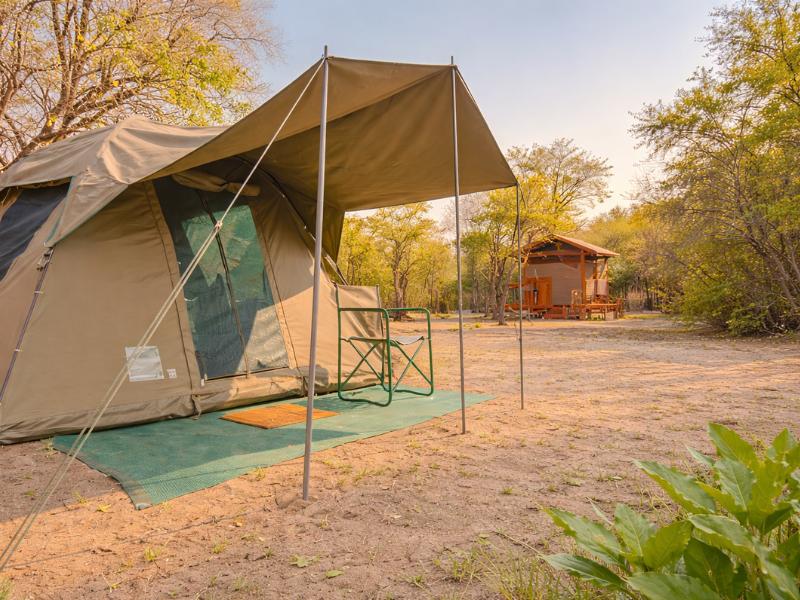
The night in the Delta, sleeping in a tent on a dry island with the sounds of the water and the bush surrounding the camp, is something that requires being there to understand. Hippos call from the channels nearby. Lions may be audible in the distance or closer. The guides build the campfire high enough to produce light and warmth and the specific social quality that fire produces in dark outdoor spaces. Dinner is proper camp food, hot and well-made, and the conversation that develops around the fire between clients and guides at the end of a full day in the bush is frequently the thing people mention when they are asked what they remember most about the Okavango Delta.
Average Tour Prices at the Okavango Delta, Botswana
Tap a column heading to sort.
Prices below are what you’ll pay when booking through verified operators online. They are current as of early 2026. The Okavango Delta is a UNESCO World Heritage Site and one of Africa’s largest and most biodiverse inland wetlands, covering approximately 15,000 square kilometres in northwestern Botswana. It is fed by the Okavango River flowing south from Angola, flooding seasonally between June and August as the annual inundation peaks. The gateway town is Maun, served by Maun Airport (MUB) with daily connections to Johannesburg and direct regional links; most visitors fly into Johannesburg (OR Tambo International, JNB) and connect onward. Remote camp and concession areas within the delta are typically accessed by light aircraft from Maun on bush airstrips. The best game viewing months are the dry season from May to October, coinciding with the seasonal flood; the wet season (November to April) offers lush scenery and excellent birding with fewer visitors.
Okavango Delta Botswana Tours: What Each Experience Costs Online
All multi-day safari prices are per person and fully all-inclusive of accommodation, meals, park fees, transfers, and guiding unless specifically noted otherwise. The $543 scenic flight covers a 45-minute aerial survey of the delta from Maun; it does not include landing in the delta or ground activities. The 2-night camping safari uses traditional bush camping with full catering and is operated in partnership with the Okavango Mokoro Community Trust, supporting local communities. The 7-day Moremi safari combines mokoro, motorboat, and open 4×4 safari vehicle across multiple concession areas including Moremi Game Reserve, Khwai, Mababe, and the inner delta.
Online vs. Arrange in Maun vs. Specialist Southern Africa Safari Operator: How Booking Method Affects What You Get
Book Online in Advance (via verified operators like Okavango Delta Botswana Tours)
$181 to $543 for single-day experiences; $850 to $6,997 for multi-day packages
Low: camp and concession slots confirmed, light aircraft transfers where applicable pre-booked, all meals and park fees managed; peak season (June to October) in premium concession areas fills months ahead; the 2-night community mokoro safari through the Okavango Mokoro Community Trust has limited daily capacity to protect the ecosystem; multi-day safari packages require significant lead time for accommodation allocation in the delta
Arrange on Arrival in Maun (approach operators in Maun town, book day-of or next-day)
Comparable to online for day mokoro trips in low season; much harder for multi-day peak-season packages
Medium to High in peak season: Maun has numerous licensed tour operators offering mokoro day trips and short safaris, and in the shoulder months of April to May and November to December same-day or next-day bookings are realistic; the specific challenge is that the best concession areas and community camps within the delta are allocated months ahead, meaning late-arriving visitors typically access only the closer, more accessible outer delta areas rather than the remote inner channels where wildlife density is highest; the aerial scenic flight similarly fills ahead during July and August
Specialist Southern Africa Safari Operator (book through a dedicated Africa safari company before departure)
Typically 30 to 60% above direct operator rates; premium includes bespoke itinerary design and flight coordination
Low: the luxury end of Okavango Delta tourism is dominated by specialist operators who hold allocations at private lodge concessions not available through general booking platforms; for visitors whose priority is a specific luxury lodge such as Wilderness Safaris or Sanctuary Retreats properties, working with a specialist makes practical sense; for visitors primarily interested in the mokoro canoe and camping experience rather than luxury lodge accommodation, direct booking through operators like Okavango Delta Botswana Tours delivers the same core experience at significantly lower cost
The Honest Case for Booking with Okavango Delta Botswana Tours in Advance
The Okavango Delta is one of the few wilderness destinations in the world where the logistics genuinely require advance planning, and where the difference between a well-planned visit and a last-minute one is not simply about price but about which part of the delta you actually access. The inner delta, reached by light aircraft or by mokoro through multiple channels from the outer floodplain, is where wildlife concentrations are highest during the dry season. Elephants move between islands in herds of 50 or more; lions hunt along the floodplain edges at dusk; wild dogs, one of Africa’s most endangered mammals, patrol large territories through Moremi and Khwai. The outer areas accessible by road from Maun are less pristine and less reliably productive for predator sightings. The difference between the two is the difference between a creditable safari and an exceptional one, and it is determined almost entirely by advance booking.
The 2-night mokoro camping safari at $850 is the most authentic format in the portfolio. The Okavango Mokoro Community Trust is a long-standing cooperative that employs local polers from communities surrounding the delta, funnelling income directly into villages that have historically depended on the ecosystem for their livelihoods. The mokoro itself, a traditional dugout canoe propelled by a standing pole, is the original method of navigating the delta’s shallow channels and delivers a quality of silence and proximity to waterbirds, water lilies, and semi-aquatic wildlife that no motorised craft can match. Two nights in a bush camp on a permanent island, with guided walking safaris in the afternoon and dawn mokoro sessions when the light and animal movement are at their best, is a more complete picture of the delta than any single-day visit can deliver.
The aerial scenic flight at $543 for 45 minutes is genuinely expensive relative to its duration, but for visitors with limited time in Maun or who are combining the Okavango with other destinations, it serves a purpose no ground-based experience can replicate: the view from 300 metres shows the scale and structure of the delta in a single sweep. The labyrinthine channel system, the patchwork of permanent and seasonal islands, the elephant herds visible as grey shapes moving through shallow water between vegetation strips, and the boundary where the floodwater meets the dry Kalahari sand are all incomprehensible from ground level and immediately legible from the air. For visitors spending multiple days in the delta, the flight adds a dimension to what they have already seen from the water. For visitors with only a day in Maun, it is the most efficient way to understand what they are looking at.
How to Visit the Okavango Delta
The Okavango is an inland delta in northern Botswana where a river from Angola fans out across the Kalahari sand and creates one of the most extraordinary wetland ecosystems on the planet. Water that floods in June and July from Angolan rains arrives here at the driest time of year, pushing animals onto permanent islands and drawing them to permanent channels in concentrations that make wildlife viewing exceptional. It is genuinely remote, genuinely wild, and genuinely unlike almost anywhere else. Getting there and experiencing it well requires planning that starts considerably earlier than most destinations. Here is what the team at Okavango Delta Botswana Tours tells first-timers when they reach out.
1
Fly into Maun (MUB), the main gateway to the delta.
Maun receives direct flights from Johannesburg with South African Airways, Airlink, and other carriers, with the journey taking around two hours. From other parts of Africa, connections through Johannesburg are standard. Maun itself is a small town on the edge of the delta and serves as the staging point for virtually all safari operations. Most visitors spend one night in Maun before flying into their camp by small charter aircraft the following morning. Charter flights from Maun to airstrips inside the private concessions take between 20 and 45 minutes and the aerial view of the flooded delta on approach is itself worth the journey.
2
Book your safari at least three to six months in advance, especially for peak season.
The Okavango Delta operates on a very limited accommodation model by design. Private concessions carry only a small number of guests at any time, which is what keeps the experience uncrowded and exclusive. The most sought-after camps during the dry season from June through October, when the floodwaters are highest and wildlife is most concentrated, fill up many months ahead. This is particularly true for July, August, and September. Late-season bookings in November or shoulder season in May and early June are somewhat more flexible, but the best camps reward early planning at any time of year.
A single day in the Okavango via day trip from Maun produces a brief and often rushed impression. Three nights at a single camp with two game drives daily plus mokoro excursions and a walking safari starts to give you the depth the delta rewards. Five nights, especially split between two camps in different parts of the delta, is the version most visitors say exceeded every expectation they brought with them. The silence of the mokoro on a still channel at dawn, the coolness of early morning game drives with lion tracks fresh in the sand, and the sundown sounds of frogs and hippos from a camp deck: these things require time to accumulate into the experience that stays with people.
4
Understand the mokoro before you arrive.
The traditional mokoro is a flat-bottomed canoe made originally from a single hollowed tree, now often fiberglass, poled by a guide standing at the back. Two passengers lie or sit very low to the water as the guide moves silently through channels, reed beds, and lily-covered lagoons. There is no paddling required. The low profile means animals at the waterline often ignore the boat, and the silence allows wildlife to behave naturally close to you. A standard excursion runs two to three hours; a full-day version with a picnic stop on an island runs four to six. Multi-day mokoro camping trips take you further into the delta and are among the most immersive experiences the delta offers.
5
The best time for water activities is June through August.
The Okavango floods on a counter-intuitive seasonal cycle: the rains fall in Angola from December through March and the water takes months to travel south, arriving in Botswana in May and peaking in June through August. This means the highest water levels and most extensive flooded channels occur during Botswana’s dry season. Mokoro excursions, boat cruises, and water-based game viewing are at their best in these months. Game drives are simultaneously excellent because animals concentrate around the remaining water. The combination of full channels for the mokoro and dense wildlife on the islands and floodplains is why June through August is peak season.
6
Pack in a soft duffel bag and dress in neutral earth tones.
Charter aircraft to and from the delta have strict baggage limits, typically 15 kilograms in a soft bag that can be compressed into a small hold. Hard-sided cases do not work. Clothing in khaki, olive, beige, and brown is not just a convention but genuinely practical: bright colours disturb animals and white catches dust badly. The temperature range between a pre-dawn game drive at 8 degrees and a midday camp rest at 30 degrees requires layers. A warm fleece or light down jacket, a waterproof shell, long lightweight trousers, and closed shoes for walking cover virtually all situations. DEET-based insect repellent is necessary from late afternoon through to after dark throughout the year.
The trackers and guides working in the Okavango Delta private concessions are among the most knowledgeable and skilled wildlife guides in Africa. Many have spent their entire lives in this ecosystem. Their decisions about where to go, how long to stay, when to approach and when to wait, and how to read animal behaviour are informed by experience that no amount of research produces. Visitors who defer to their guides consistently describe better sightings, better photographs, and a richer understanding of what they are watching. The ones who try to direct the experience consistently describe less of it.
8
The one thing most first-timers get wrong:
booking only three nights at a single camp and filling one of those days with a full-day transfer to another activity outside the delta. The delta is large, the private concessions are spread across different ecosystems, and the daily pattern of two game drives and a midday rest or mokoro excursion is specifically designed to put you in the right places at the right times. Trying to combine the Okavango with Chobe or Victoria Falls in a single four-day itinerary produces a travel schedule rather than a safari. We tell every client who asks: if the Okavango is the reason you are coming to Botswana, give it the nights it deserves. Nothing else in Africa produces what this place produces, and it only produces it when you stop long enough to let it.
Most Popular Okavango Delta Botswana Tours
Tap a column heading to sort.
The Okavango Delta draws a different kind of visitor than most destinations in the network — one who has typically planned carefully, budgeted for a premium experience, and arrived in Maun ready to commit to multiple days in the wilderness. The booking patterns at Okavango Delta Botswana Tours reflect that mindset clearly, with all three leading tours representing genuine overnight or multi-day commitments rather than the day-trip formats that dominate most other sites.
First-time delta visitors and travelers who want a fully supported overnight introduction to the Okavango combining a traditional mokoro canoe safari with a local poler born in the delta, a picnic island stop, and a short nature walk
Traditional dugout mokoro canoe guided by a local poler with deep knowledge of the delta’s channels and wildlife, silent gliding through papyrus waterways with hippo, elephant, and abundant birdlife sightings, picnic lunch on an island, guided nature walk through dry-land habitat, all transfers, meals and park fees included
Travelers who want deeper immersion in the delta with two nights of fully catered wild camping on remote islands, daily mokoro paddling, and guided bush walks through the Okavango Mokoro Community Trust concession
Daily mokoro paddling through small waterways spotting elephants, lions and leopards, fully catered wild camping on delta islands with all meals included, guided bush walks with community-trained local guides, sustainable tourism supporting local livelihoods, full 3-day delta experience from Maun and back
Wildlife enthusiasts based in Maun who want to combine the delta with the raw, arid drama of the Central Kalahari Game Reserve, tracking predators across open grasslands very different from the delta’s wetland character
Early departure from Maun to Deception Valley in the Central Kalahari Game Reserve, afternoon game drive and sunset views over vast open grassland with springbok, gemsbok, wildebeest, hartebeest, eland and giraffe, evening campfire dinner, Day 2 drive to Sunday Pan and Passarge Valley, Day 3 dawn drive for cheetah, lion and leopard before returning to Maun
4.6 (238+ bookings)
The single-night mokoro tour leading in volume is expected on a site where the delta’s remoteness and entry costs create a natural filter: most visitors are willing to commit to at least one full night but appreciate having the entire experience managed for them at a price that does not require a luxury lodge budget. The 2-night wild camping safari in second at $850 tells a more interesting story. Despite costing nearly five times the entry-level tour and requiring sleeping on a remote island with no fixed facilities, it accumulates nearly 350 bookings, which reflects how consistently visitors to the Okavango arrive willing to go further into the wilderness once they understand what the delta actually offers. The Central Kalahari tour in third operates in a completely different ecosystem from the delta’s waterways, and its presence in the top three reveals a meaningful segment of Maun-based travelers who use the city as a base for both wetland and desert safari in a single trip.
Location
The Okavango Delta sits in northwestern Botswana at the northern edge of the Kalahari Desert, where the Okavango River flows down from the Angolan highlands and spreads across a vast flat basin rather than reaching any ocean, creating the world’s largest inland delta and a UNESCO World Heritage Site. The gateway town of Maun, home to Maun Airport (MUB) with daily flights from Johannesburg (~1.5 hours) and Cape Town (~2.5 hours), sits about 65 km from the delta’s edge, with most visitors then transferring by small charter aircraft to bush airstrips within the delta itself, a 15 to 45-minute scenic flight that immediately reveals the scale of the floodplains below. The delta’s most remarkable characteristic is that it floods in the dry winter months, June through August, when rainfall from distant Angola arrives months later and swells the channels to three times their permanent size, drawing one of Africa’s greatest concentrations of wildlife to its waters at exactly the time the rest of southern Africa is driest. Take a look at the map below to see where our tours operate across the delta and surrounding reserves.
65 kmMaun to the delta
15 to 45 minMaun to camp
June through AugustPeak flood season
Guarantee Your Spot with Okavango Delta Botswana Tours
The Okavango Delta operates on strict capacity limits that are not an inconvenience but a conservation principle. The entire delta has roughly 1,000 to 1,500 beds across all private concessions. Every luxury camp has a maximum number of guests by design — Mombo, Vumbura, Duba Plains, Xigera, and Chitabe collectively hold fewer people than a single mid-range hotel in a major city. The 2-night mokoro wild camping safari with the Okavango Mokoro Community Trust has 346 bookings and fills its dry season slots months ahead. The 7-day Moremi Okavango luxury experience with a perfect 5-star rating requires coordinating four separate camps, charter flight legs between them, and permits for concession access. The 11-day Victoria Falls to Okavango via Chobe has 120 bookings and a 4.9 rating and is a confirmed group departure product.
Book before your Africa trip itinerary is assembled. The camp bed in the Okavango in July that your travel calendar allows is not held open indefinitely.
What you lock in when you book in advance:
A specific camp in the specific concession where your preferred wildlife experience exists. Not all camps are equal and not all parts of the delta are equal. Mombo concession is famous for predators — particularly lions and leopards — and its camps operate at full capacity from July through October months before the season opens. Duba Plains is known for buffalo and lion interactions. Chitabe and Sandibe offer more intimate, quieter experiences with wild dog sightings. The camp that matches what you want to see and how you want to travel requires a booking made well before your travel dates, because by the time you are researching it seriously, the peak-season availability may already be limited.
The charter flight that connects your camp without the 4-hour road transfer alternative. The small aircraft — six to twelve seats — that fly from Maun to remote airstrips inside the delta are the standard access for luxury camps. Those flights are coordinated with camp arrivals and departures and are chartered as part of your booking. In peak dry season, the Mack Air and similar charter schedules fill from confirmed safari bookings. Arriving in Maun and trying to arrange a charter on the same day to a remote camp is a genuinely difficult proposition. A confirmed booking through Okavango Delta Botswana Tours means the flight is part of the arrangement.
The 2-night mokoro wild camping safari before the Mokoro Community Trust dates are taken. The community-run mokoro safari, supporting local polers from villages adjacent to the delta and camping on islands inside the waterways, is one of the most authentic and sustainably run products in Botswana tourism. With 346 bookings and a 4.7 rating, the peak dry season dates from July through September fill progressively as travelers planning Africa trips confirm their bookings. A mokoro poler, camping equipment, full catering, and the specific island route cannot be assembled on arrival in Maun.
The 3-day Central Kalahari safari coordinated as part of a Botswana combination. The dawn game drives to Deception Valley for cheetah, lion, and leopard — through vast Kalahari grasslands with gemsbok, springbok, and eland that visitors consistently describe as unlike any other African landscape — run from a specific camp with a specific vehicle and guide. With 238 bookings and a 4.6 rating, the combination of Okavango Delta plus Central Kalahari as a single confirmed multi-destination itinerary requires advance coordination that a walk-up in Maun cannot replicate.
The multi-country itinerary that requires every logistical piece confirmed before you fly. The 11-day Victoria Falls to Okavango via Chobe, and the 15-day Namibia to Zimbabwe lodge tour, are comprehensive journeys crossing international borders, operating on specific group departure schedules, with confirmed accommodation, guides, permits, and transfers across multiple countries. These are not assembled from individual components on arrival. They are confirmed departure products with limited seats per journey that book from people who plan six to twelve months ahead.
The Okavango Delta is one of the last genuinely wild places on earth partly because access is controlled and capacity is limited. That is the same reason booking ahead matters more here than almost anywhere else on this list.
Videos from Okavango Delta Botswana Tours
Helpful articles about visiting the Okavango Delta
Everything we get asked before people book: when the flood actually arrives, what a delta safari costs, how you get in from Maun, and the questions worth settling before you pay a deposit.