What to Wear and Pack for an Okavango Delta Safari
One rule shapes this whole list: the aircraft that flies you into the delta takes a soft bag and not much of it. Everything else follows from that.
Pack for the activities and facilities you actually book. Compare supplied camping equipment and day-trip inclusions before buying or carrying extras. Explore Two Nights Of NG32 Mokoro Camping
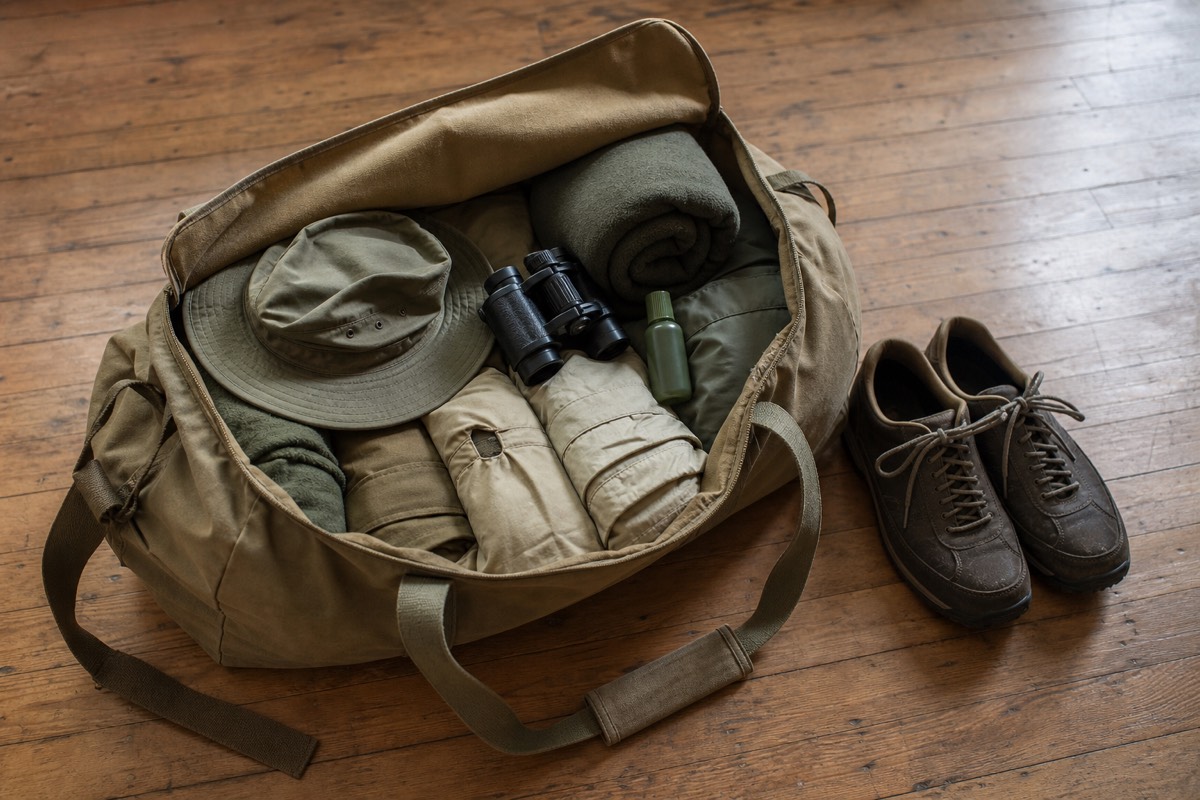
A hard-sided suitcase will not go into the hold of the aircraft that flies you from Maun to a delta airstrip. Not as an inconvenience: as a fact of the airframe. Start there and the rest falls into place, because a strict weight allowance forces the useful question of what earns its place in a small bag.
What is the baggage limit on a flight into the Okavango Delta?
Charter aircraft take a soft duffel only, typically 15 to 20 kg, and the exact allowance is set by the charter operator rather than the camp. Mack Air publishes 20 kg in a soft-sided bag with maximum dimensions around 30 cm wide by 35 cm high by 70 cm long, so confirm the number on your own booking.
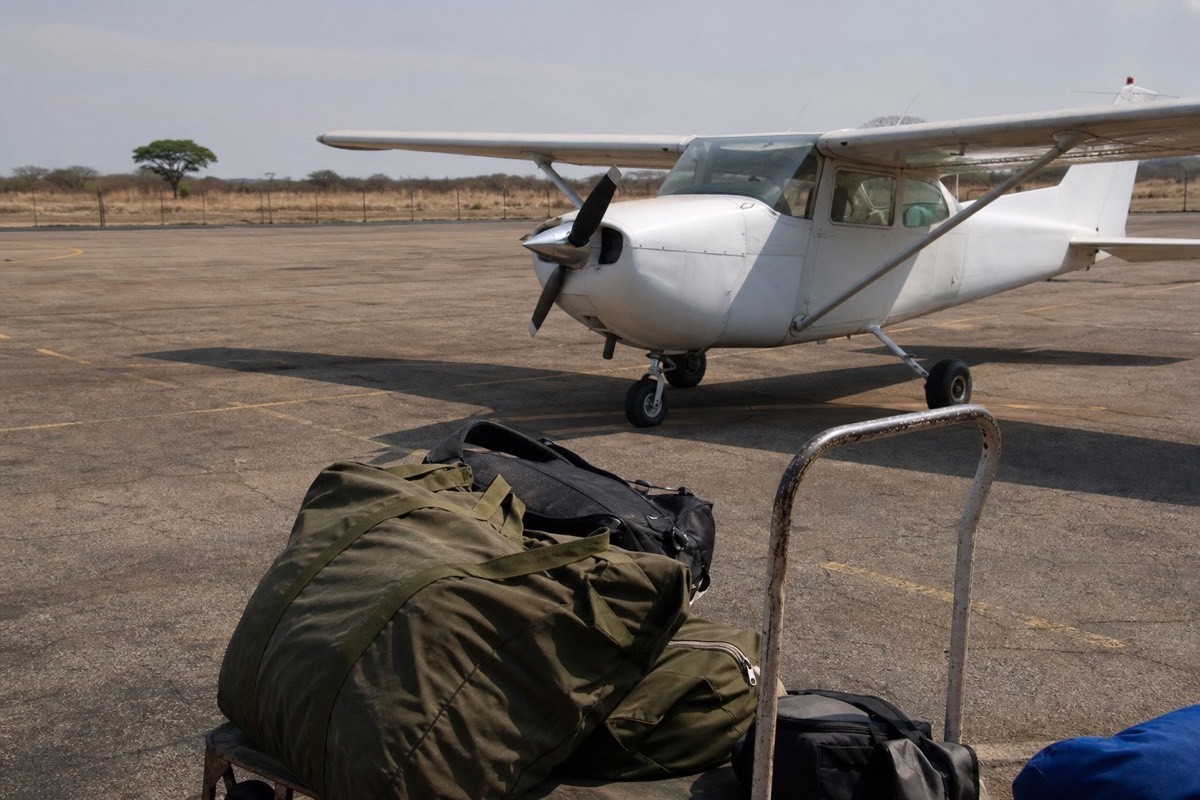
Weight and shape both matter. A duffel squashes into an irregular hold; a wheeled hard case does not, which is why no amount of goodwill at the airstrip gets it aboard. The published example above sits at Mack Air's luggage policy, and other operators set their own figure, so treat 15 to 20 kg as the planning range and the number on your confirmation as the real one. If you are arriving on a long-haul flight with a larger bag, ask your operator about leaving the excess in Maun.
Camp laundry means you pack less than you think
Most camps run laundry daily or every second day. That is why a seven-night itinerary needs roughly the same clothing as a three-night one: three shirts and three pairs of trousers in rotation cover both.
What colours should you wear on an Okavango safari?
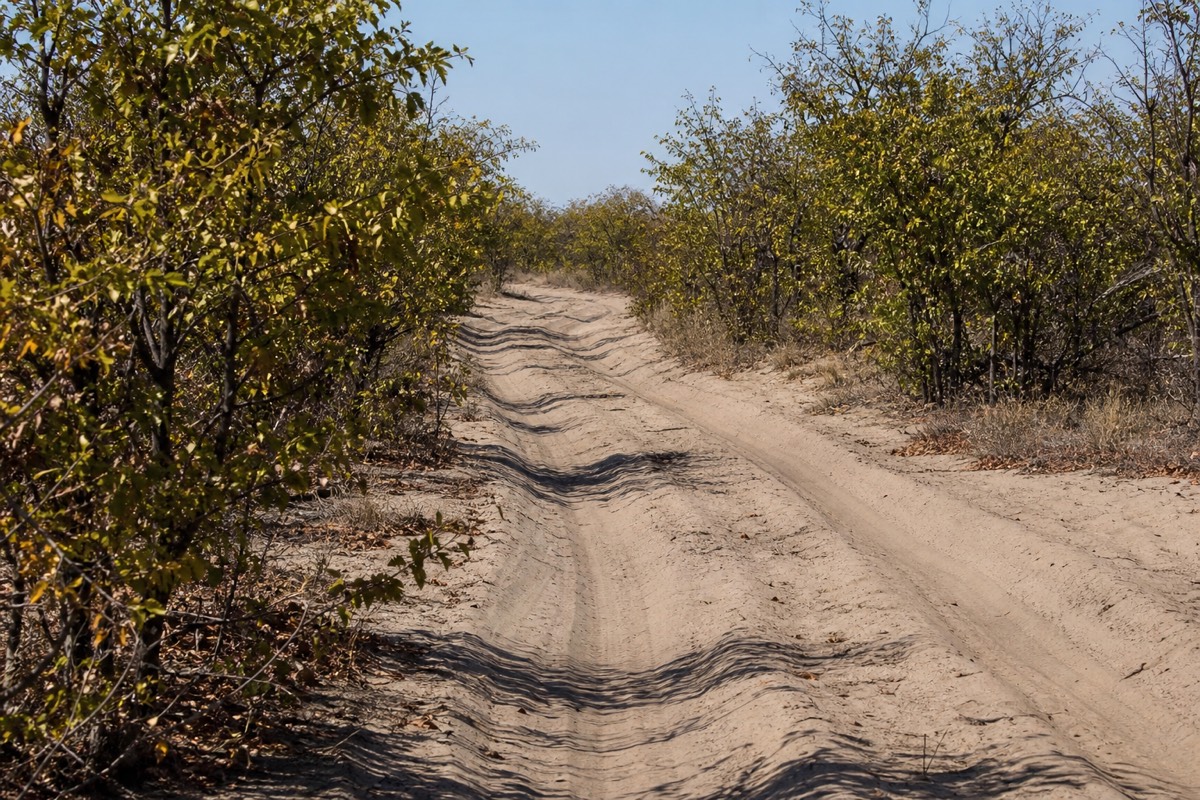
Neutral earth tones: khaki, olive, beige and brown. Bright colours disturb animals, and white shows delta dust within an hour of the first game drive. That is the practical reasoning our guides actually give, rather than any rule about particular shades and biting insects.
| Colour | Verdict | Why |
|---|---|---|
| Khaki, olive, beige, brown | Ideal | Reads as reed, sand and bush, and hides dust between laundry runs |
| Grey, muted blue-grey | Fine | Neutral enough for drives, walks and the mokoro |
| White and cream | Avoid | Dust settles on it immediately, and it stands out against dark water |
| Red, orange, yellow, hot pink | Avoid | High contrast disturbs animals and makes you conspicuous at close range |
| Black and dark blue | Not a Botswana rule | The tsetse-fly advice you have read applies to other regions and is not in our own guidance; dark fabric does absorb more heat |
| Camouflage patterns | Leave at home | Commonly restricted for civilians in parts of Africa, so check with your operator before packing any |
Those are practical preferences, not a dress code anyone enforces at the airstrip.
How do you dress for an 8 degree dawn and a 30 degree afternoon?
In layers you can shed within an hour. A pre-dawn game drive sits around 8 degrees C and midday camp rest around 30 degrees C on the same day, so the working outfit is long lightweight trousers, a long-sleeved shirt, a warm fleece or light down jacket, and a waterproof shell against wind on the water.
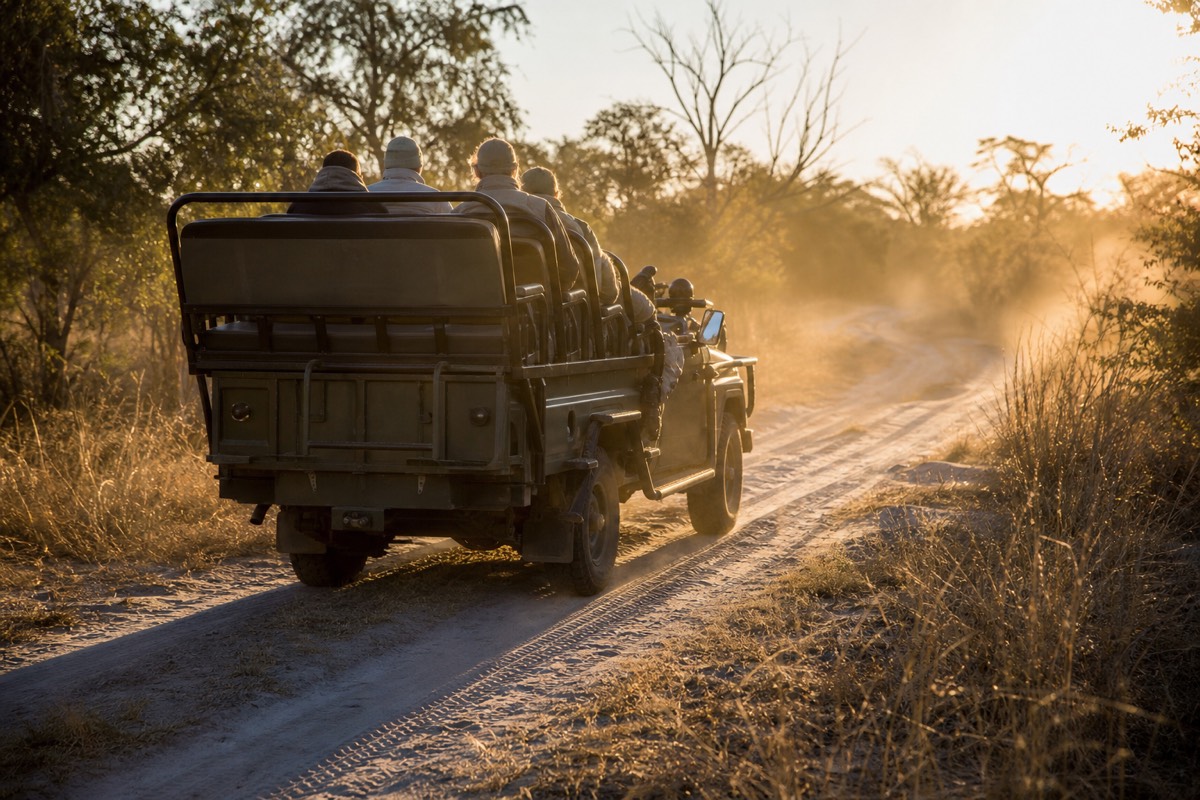
The open 4x4 adds windchill on top of the air temperature, so at 06:00 in July the fleece is not optional and a beanie earns its space. By the 09:00 breakfast stop you are in the shirt alone, and the same shirt with sleeves rolled down is your sun protection at midday. Long sleeves also do the work of repellent after dusk. Everything quick-dry, because laundry comes back faster and hand-washing in a bush camp actually works.
| Category | What to pack | Quantity for 4 to 7 nights |
|---|---|---|
| Drive and walk clothing | Quick-dry long-sleeved shirts, long lightweight trousers | 3 to 4 of each |
| Layers | Warm fleece or light down jacket, waterproof shell, beanie in the dry season | 1 each |
| Camp clothing | Short-sleeved tops, sandals or flip-flops | 2 tops, 1 pair |
| Feet | Closed walking shoes or light boots, quick-dry socks | 1 pair, 4 to 5 pairs of socks |
| Sun | Wide-brim hat, polarised sunglasses, high-SPF sunscreen, SPF lip balm | 1 each |
| Insects | DEET-based repellent | 1 bottle, used daily |
| Kit | Binoculars, camera with spare batteries and cards, dry bag, small daypack, headtorch, power bank, 1 litre water bottle | 1 each |
| Health and money | Personal medications, small first-aid kit, small US dollar notes for tips | As needed |
Quantities are a planning allowance based on camps that launder daily; adjust if your itinerary includes nights where they do not.
What shoes do you need for a mokoro and a walking safari?
One pair of closed walking shoes or light boots handles game drives and walking safaris, and sandals handle camp. The mokoro is the exception: you step in and out at shallow launch points, so footwear you do not mind getting wet beats boots you have just broken in.
Walking safaris cross uneven ground, dry grass and thorn, so closed shoes there are a requirement rather than a preference. Trainers are fine for drives and camp, merely adequate on a bush walk. Bring shoes you have already worn: the delta is not the place to find a blister on day one.
What do you need specifically for the mokoro?
You sit inches above the water for two to three hours with nothing above you, so the mokoro needs a dry bag for camera and phone, sun protection from overhead and reflected off the water, polarised sunglasses and a brimmed hat. A cap leaves your ears and neck exposed.
Reflected light is the part that catches people out: forearms and chin burn on a still channel even when the air feels cool, and long sleeves solve that better than reapplying sunscreen from a moving boat. Gear sits on the canoe floor within reach of splash, so a dry bag is the cheapest insurance here. No paddling is required, so both hands stay free for binoculars. If the boat is unfamiliar, read what a mokoro actually is first. Anyone booked on two nights camping on a delta island should add a headtorch with spare batteries and one more warm layer than they think they need, because island nights get cold and there is no wall between you and them.
What changes between the wet and the dry season?
The dry season, May to October, needs more warmth: a heavier fleece or down layer, a beanie, gloves for dawn drives. The wet season, November to April, needs waterproofing and quick-dry everything, plus more repellent, because malaria transmission peaks with the rains from November to April.
| Item | Dry season, May to October | Wet season, November to April |
|---|---|---|
| Warm layers | Fleece plus light down, beanie and gloves for 06:00 drives | One light fleece usually covers it |
| Rain gear | Light shell, mainly for wind on the water | Proper waterproof jacket or poncho; short intense afternoon showers are normal |
| Footwear | Dust is the issue, so extra quick-dry socks | Tracks turn muddy, so shoes that dry overnight |
| Insect protection | DEET repellent daily from late afternoon | More of it, plus long sleeves after dusk |
| Camera protection | Dry bag against fine grey dust | Dry bag against rain and humidity |
Which season you are packing for is worth settling before you book rather than after, and our month-by-month guide to visiting the delta sets out what each one gives you. Repellent is the one item here that is not seasonal: it belongs in the bag year round, because the CDC lists the Okavango and Chobe as malaria risk districts. The detail sits in our answer on how safe the Okavango Delta is and in the Botswana visa and malaria requirements.
What should you not pack?
Hard-sided suitcases, which do not fit the hold. Camouflage clothing, commonly restricted for civilians in parts of Africa. Drones, which need permits and are generally not allowed over concessions without one. Single-use plastics. And anything you would be unhappy to see coated in fine grey dust.
Check the camouflage and drone points with your operator rather than with a blog, ours included: rules vary by country and by concession, and getting them wrong lands at a border rather than at a camp. Beyond that the regrets are predictable: too many clothes for a place with daily laundry, formal wear for camps where nobody dresses up, a rigid camera case when a padded soft bag does the job, a second pair of boots. Excess luggage is the mistake that costs money at the airstrip.
What does travel well is small and specific: binoculars you can hold steady, a headtorch, a power bank for camps with limited charging, and small dollar notes for tipping guides and polers. On a long itinerary like seven days across Moremi and Khwai you move between camps by air more than once, so every kilogram gets weighed more than once too. The trips Okavango Delta Botswana Tours lists bundle the transfers and the charter legs, which means the operator confirms the exact allowance for your aircraft, and that figure is the one that counts.