Botswana vs Tanzania: Which Safari Is Right for You?
Tanzania puts more animals in front of more vehicles. Botswana puts fewer vehicles in front of fewer animals, and that single trade decides most of this comparison.
Compare actual routes: Botswana water and tented safaris start from Maun; the reviewed Tanzania camping itinerary starts from Arusha. Transfers between countries are separate. Explore Two Nights Of NG32 Mokoro Camping
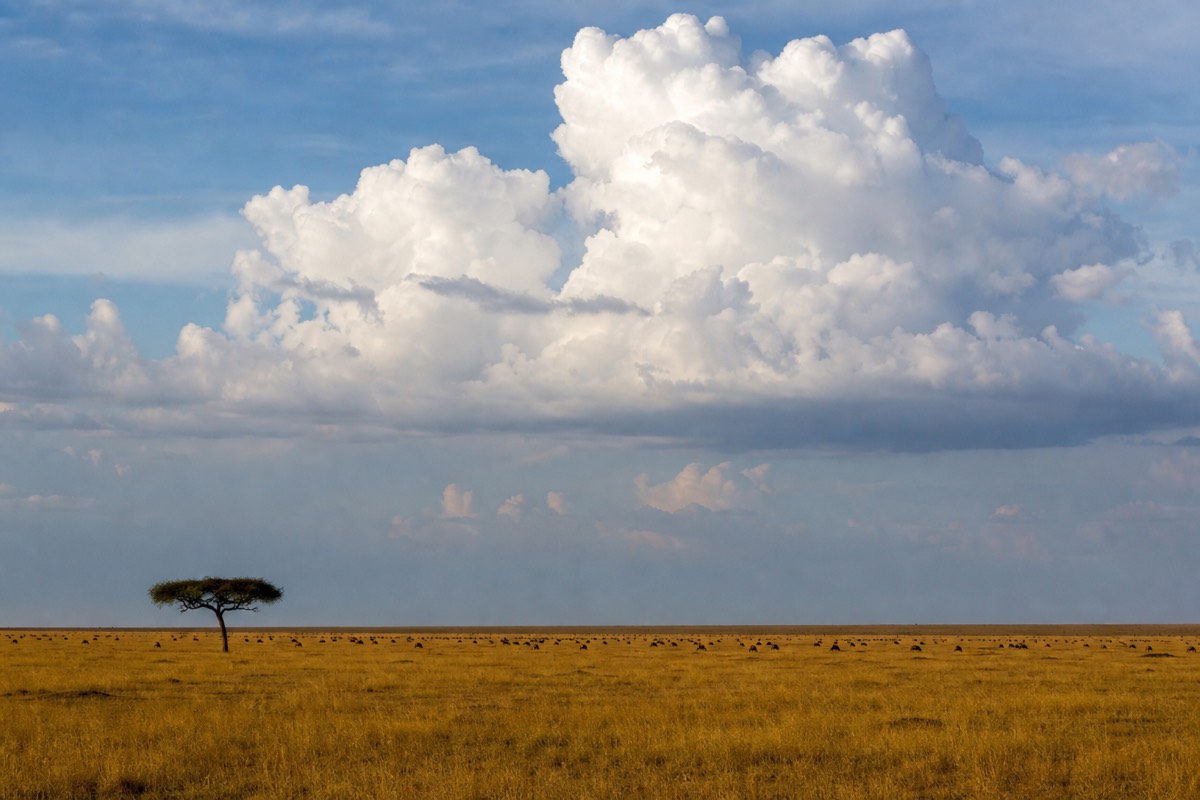
Tanzania puts more animals in front of more vehicles. Botswana puts fewer vehicles in front of fewer animals. Almost everything else in this comparison follows from that one trade, and the job is working out which side of it you actually want. Okavango Delta Botswana Tours sells one of the two, so where a Tanzanian figure belongs we say plainly that we do not have a verified one to quote rather than filling the gap with a guess.
Botswana or Tanzania: which safari should you choose?
Choose northern Tanzania for volume: open plains, large herds, the Serengeti and the Ngorongoro Crater, and a great deal of wildlife in a day. Choose Botswana's Okavango for water and exclusivity: poled dugout channels, private concessions, light-aircraft access and sightings you rarely share with another vehicle.
Both are excellent. They are simply not the same product, and the axes below are the ones that separate them.
| Axis | Botswana, the Okavango | Northern Tanzania |
|---|---|---|
| Landscape | Flooded inland delta, papyrus channels, dry islands | Open grass plains, escarpments, a volcanic crater |
| How you move | Open 4x4, mokoro, motorboat, light aircraft | Vehicle-based game viewing over long distances |
| Wildlife pattern | Concentrated on the remaining water in the dry season | Large herds spread across open country |
| Exclusivity | Concession agreements cap vehicles at a sighting | Open park access, so a good sighting draws a crowd |
| Water activity | Central to the trip, and unique to the delta | Not a feature of the northern circuit |
| Season logic | Times to the Angolan flood, highest June to August | Times to the seasonal movement of the herds |
| Cost per night | Higher, by deliberate national policy | Generally lower at a comparable style |
Cost appears as a level rather than a figure on purpose: Tanzanian rates move too far with operator and season for us to quote one honestly.
How different do the two actually feel?
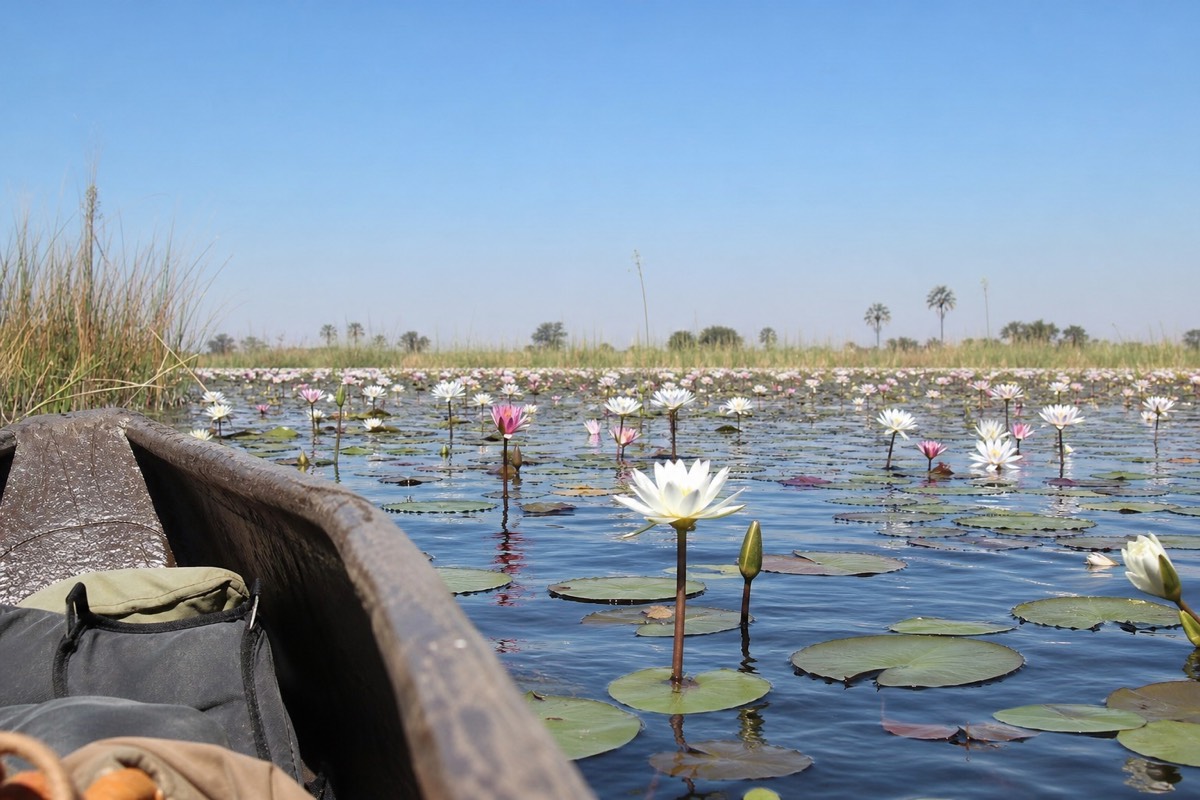
The Okavango is a water world. You sit inches above black, still water in a dugout canoe, in channels often narrower than the boat is long, with papyrus walls on both sides. Northern Tanzania is the opposite sensation: horizon, sky, grass, and animals you pick up from a long way off.
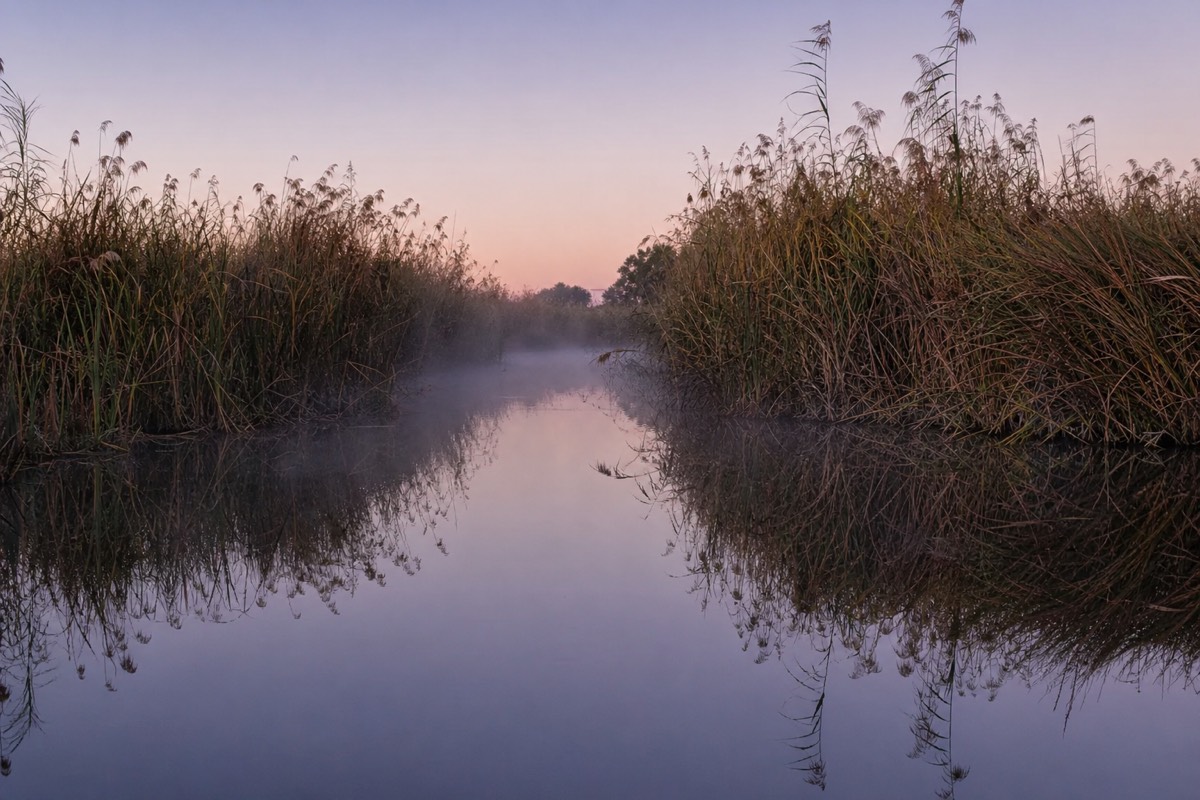
The delta is an inland river system that never reaches the sea. Water spreads across Kalahari sand and evaporates, covering roughly 6,000 square kilometres in the dry season and expanding to about 15,000 at peak flood, which is why it holds World Heritage listing as one of the planet's great wetlands. A day there mixes an open 4x4 drive, a walking safari on an island and an afternoon on the water, which is roughly the shape of four days in a private concession camp.
Tanzania's northern circuit runs on ground covered. You move between plains and the crater by vehicle, scanning distance rather than listening to a channel.
Density or exclusivity: which trade do you want?
This is the real decision. Inside an Okavango concession, vehicle numbers are set by the concession agreement rather than by open access, so your vehicle can stay with a pride of lions as long as the sighting warrants. The whole delta carries only about 1,000 to 1,500 beds.
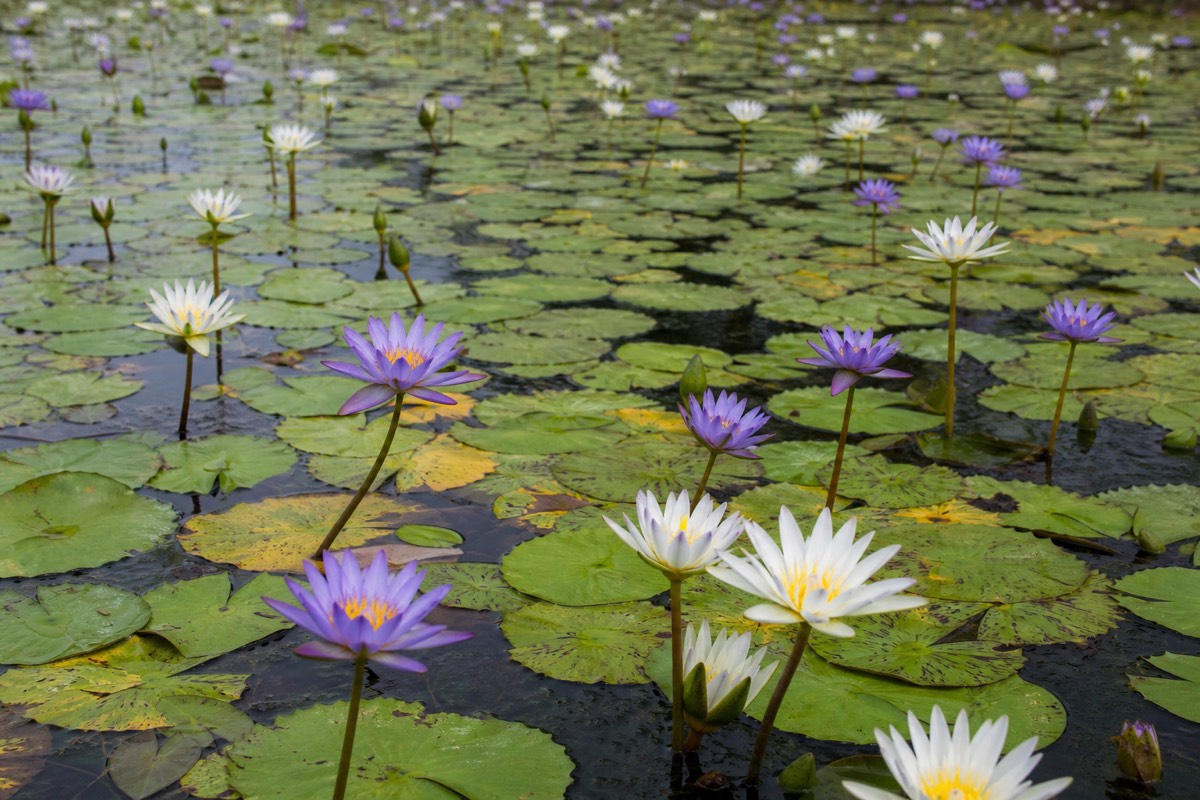
What that feels like in practice: on a three or four hour drive you often see no other vehicle, or one, and a mokoro carries two passengers and a poler with almost nothing else on the channel. Tanzania's northern parks are open to anyone with a permit, which is what makes them affordable and also what puts a line of vehicles at a leopard. The same open-versus-capped distinction is what separates Chobe's open park from a delta concession inside Botswana itself.
Volume suits a first safari and anyone counting species. Exclusivity suits photographers, honeymooners and repeat visitors who would rather have one sighting to themselves than four in traffic.
Migration or flood: what really drives the timing?
Tanzania's unique asset is the seasonal movement of the herds across the Serengeti. Botswana's is the flood. Both are the reason to time a trip rather than book it whenever, and both shift, so confirm herd timing for your own year with the operator rather than trusting a fixed calendar.
The Okavango's cycle is the stranger of the two. Rain falls in the Angolan highlands from November to April, the water travels roughly 1,200 kilometres south, arrives in Botswana in May and June and peaks in July and August, which is the middle of Botswana's own dry season. Around 11 cubic kilometres enters each year and close to 97% of it is lost to evaporation and transpiration rather than flowing out. That mechanic, laid out in this flood-cycle reference, is why the highest water arrives in the dry season.
Which one costs more?
Expect Botswana to cost more per night. That is policy rather than markup: the country runs an explicit high-value, low-volume tourism strategy, holding visitor numbers down in exchange for low-density concessions and intact wilderness. We will not set a Tanzanian number against it, because operator and season swing it too far to average.
The delta does start cheaper than its reputation. A full-day mokoro trip from Maun starts from $181 per person, a three-day community camping safari from $850, and the seven-day Moremi and Okavango route from $1,890 works out to the lowest nightly figure we list. The reasons the top end climbs so steeply are structural, and worth reading before you compare quotes: here is why the delta costs what it does. Botswana's own tourism body sets out the policy behind it at Botswana Tourism.
For a Tanzanian comparison, price live listings for your exact dates. Any single figure we published would be wrong for most readers.
How do you get to each?
Botswana access is short to describe. Fly into Maun (MUB), then take a 20 to 45 minute light-aircraft charter to an airstrip inside the concession, usually USD 200 to 600 per person one way and often bundled into the camp package. Tanzania's northern circuit works through its own gateway airports and a mix of road and air legs.
Maun is served by Airlink from Johannesburg and Cape Town, Air Botswana from Gaborone and Kasane, and CemAir from Johannesburg, with the Johannesburg leg running about 1h30 to 2h. Charter baggage is a soft duffel, typically 15 to 20 kilograms depending on the operator. We are not quoting Tanzanian flight times or park fees we have not verified, so treat that side of the logistics as something to price with your Tanzanian operator directly.
Which for a first safari, and can you do both?
If this is your first safari and you want the most wildlife for the money, northern Tanzania is the safer choice. If you have already done a plains safari and want something you cannot get anywhere else, the Okavango is the one. Doing both in a single trip is a long-haul routing exercise, not a saving.
| If this is you | Go | Why |
|---|---|---|
| First safari, want the Big Five | Northern Tanzania | Open plains and herds put more animals in a day |
| Second or third safari | Botswana | Water-based game viewing exists nowhere else |
| Photographer needing time | Botswana | Capped vehicles let you stay with a sighting |
| Honeymoon or a quiet trip | Botswana | Around 1,000 to 1,500 beds in the entire delta |
| Budget-led, wildlife-first | Northern Tanzania | Lower nightly cost at a comparable style |
| Want silence and no engines | Botswana | A poled dugout on a still channel, no motor |
Planning guidance rather than a promise: confirm what your dates actually deliver with the operator before you commit.
If you want to build a bigger Southern African trip, the natural pairing is not Tanzania at all. It is Botswana's own neighbours, which is what the eleven-day Victoria Falls, Chobe and Okavango route is for. Peak dry-season dates on the delta legs go months ahead, so that is the part to lock first.