Chobe National Park vs the Okavango Delta: Which One to Choose
Chobe is a river you reach by road; the Okavango is a maze of channels you usually reach by light aircraft. Deciding between them is less about which is better and more about which kind of week you want.
Chobe day trips use Kasane; these delta trips use Maun. Give each gateway its own travel time and compare a river-and-drive day with a canoe day or longer safari. Explore Seven-Day Moremi And Delta Safari
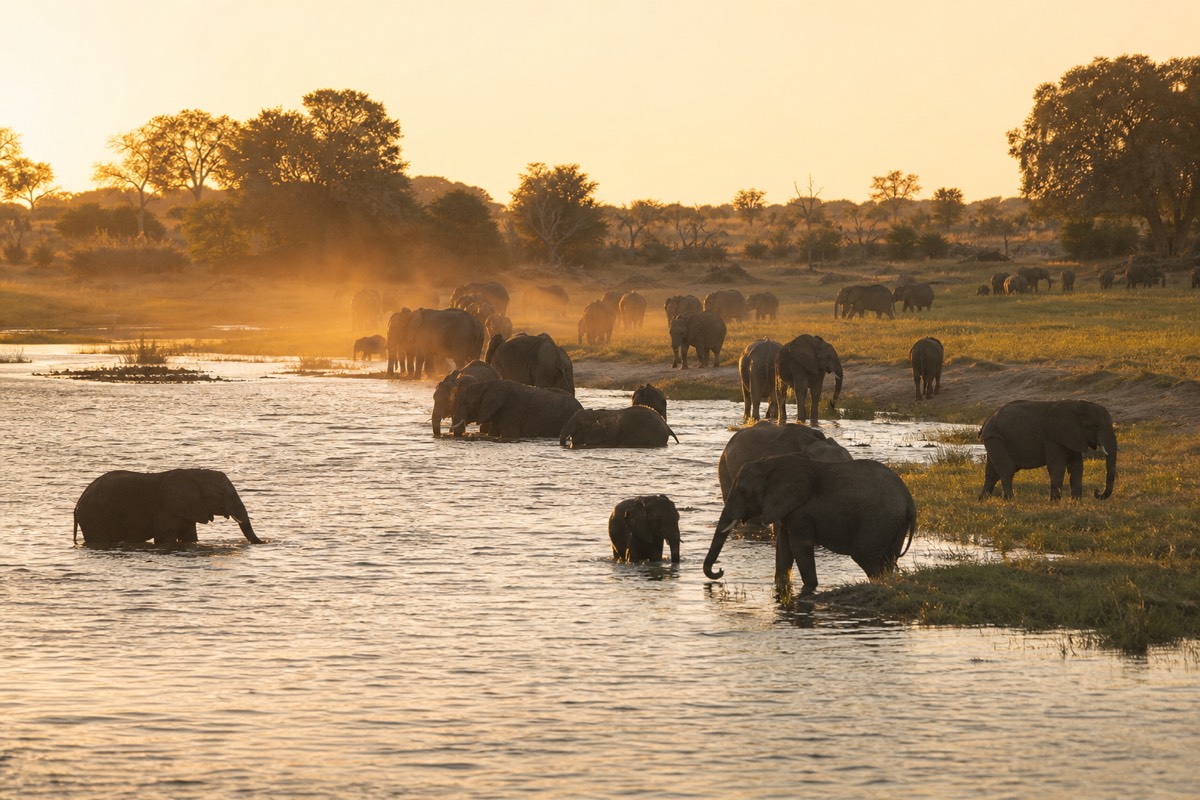
Chobe National Park covers 11,700 square kilometres and was declared in 1967, the first national park Botswana ever created. The Okavango Delta covers anywhere from about 6,000 square kilometres in the dry months to roughly 15,000 at peak flood, and it is not a national park at all. That mismatch explains almost everything that separates the two. One is a fixed block of protected land with a river along its northern edge. The other is a moving body of water spread across Kalahari sand, administered as a patchwork of one game reserve and many concessions. The team at Okavango Delta Botswana Tours fields this question more than any other, usually phrased as which one is better, and the honest answer is that they are not competing for the same week of your holiday.
How the northern Botswana circuit actually connects
Transfer types and durations are the ones the operators we work with publish for these legs. Charter times vary with the camp and the weather, and the road legs vary with water levels, so treat them as planning allowances rather than a timetable.
What exactly are Chobe and the Okavango Delta?
Chobe National Park is 11,700 square kilometres of protected land in Botswana's far north, established in 1967 and built around the Chobe river. The Okavango Delta is an inland delta of roughly 6,000 to 15,000 square kilometres depending on the flood, with no national park of its own: about 40% of the inscribed property is Moremi Game Reserve and the rest is concessions. The legal shape of each place is the reason they feel so different once you are inside them.
Chobe is a national park in the conventional sense. It has gates, public roads, a well-known riverfront section along its northern boundary, and an elephant population commonly estimated at around 50,000, which is what put it on the map. The general reference record for Chobe is consistent on those basics, and they have not changed much in decades.
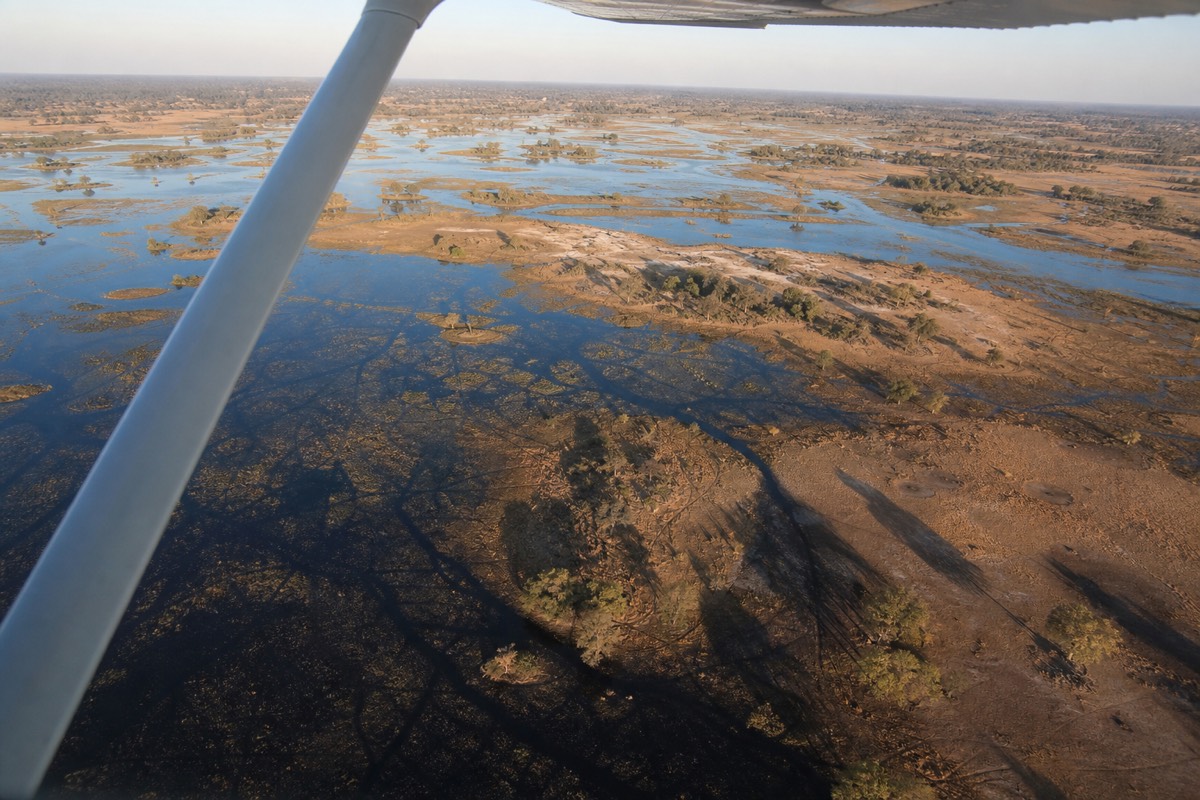
The Okavango is stranger. It is an endorheic delta: the river never reaches the sea. Water arrives from the Cubango and Cuito rivers in the Angolan highlands, spreads across a nearly flat basin, and disappears. Around 11 cubic kilometres of water enters each year and roughly 97% of it is lost to evaporation and transpiration instead of flowing out the other side. The whole system carries a UNESCO World Heritage listing, number 1432, inscribed in 2014 as the thousandth site ever added to the list, across an inscribed property of 2,023,590 hectares. If you want the geography laid out properly, the guide to where the Okavango Delta sits in Botswana works through the basin, the gateway and the flood path.
Inside that inscribed property, protection is layered rather than uniform. Moremi Game Reserve accounts for about 5,000 square kilometres, roughly 40% of the property, and was established in 1963 by the Batawana people rather than by a colonial administration, one of the earliest reserves in Africa created by a local community. Everything outside Moremi is a mosaic of Wildlife Management Areas and concession blocks on tribal land administered by the Tawana Land Board, held by community trusts and private operators. Our own full-day mokoro trips run in NG32 with the polers of the Okavango Mokoro Community Trust. The Moremi Game Reserve guide covers what that reserve does and does not give you compared with a private concession.
| Attribute | Chobe National Park | Okavango Delta |
|---|---|---|
| Protected status | National park, declared 1967 | UNESCO World Heritage Site (1432, 2014); no national park |
| Size | 11,700 sq km, fixed | About 6,000 sq km dry season to 15,000 sq km at peak flood |
| Land tenure inside it | State-protected park land | Moremi Game Reserve (about 40%) plus concessions on tribal land |
| Gateway airport | Kasane (BBK) | Maun (MUB) |
| Usual way in | Road transfer from Kasane | Light aircraft charter, or a guided road and water transfer |
| Signature activity | Sunset boat cruise on the Chobe riverfront | Mokoro drift through papyrus channels |
| Best-known wildlife draw | Elephant concentrations, commonly estimated around 50,000 in the park | Wild dogs in Moremi and Khwai; lions on the floodplain edges |
Sizes and dates are the standing published figures for each area; the delta's extent is a range because it genuinely changes through the year.
Which one is harder to reach, and what does the transfer cost?
Chobe is the easier and cheaper of the two to reach. Kasane airport (BBK) sits at the park's doorstep and close to Victoria Falls, so you can arrive by road with no bush flight at all. The delta gateway is Maun (MUB), and most delta camps then need a charter hop of 20 to 45 minutes at USD 200 to 600 per person one way. That single line item is the biggest structural cost difference between the two destinations.
Kasane's position is why Chobe slots into multi-country itineraries so readily. It is a short road transfer from the Victoria Falls area, which means a traveller can see the falls and be on a Chobe boat the same afternoon without touching a charter aircraft. That is exactly the logic behind our 11-day Victoria Falls to Okavango route via Chobe, which runs the falls, Hwange and Chobe first and then moves west into the delta. Air Botswana also flies scheduled services between Kasane and Maun, so the two halves of northern Botswana connect without a long backtrack.
Getting into the delta is a different exercise. Maun receives Air Botswana from Gaborone and Kasane, Airlink from Johannesburg and Cape Town, and CemAir from Johannesburg; the Johannesburg leg runs about an hour and a half to two hours. From Maun you have three realistic options into the water, and the site's own verdict has not changed: charter flight for luxury camps, guided road and water transfer for mid-range, self-drive only if you have real 4WD experience. The practical guide to Maun as the delta gateway covers the town itself, the airport and where the transfers leave from.
One practical constraint applies to the delta and not to Chobe: charter baggage. Plan on a soft duffel of typically 15 to 20 kilograms, with the exact allowance set by the charter operator and the camp, so confirm the number on your own booking. Mack Air, one of the operators flying these routes, publishes 20 kilograms in a soft-sided bag of roughly 30 cm wide by 35 cm high by 70 cm long in its luggage policy. Hard cases do not fit in a light aircraft hold, and there is no way around that.
| Leg | Chobe | Okavango Delta |
|---|---|---|
| Gateway | Kasane (BBK), on the park edge | Maun (MUB), on the delta's southern edge |
| Final approach | Road transfer, no bush flight needed | Charter 20 to 45 min, or road 1 to 4 h plus water 30 min to 2 h |
| Typical transfer cost | Usually bundled into the lodge or tour package | Charter USD 200 to 600 per person one way; road and water transfers about USD 150 to 400 per person round trip |
| Baggage rule | Normal vehicle luggage | Soft duffel, typically 15 to 20 kg, no hard cases |
| Budget access route | Self-drive on public park roads | 4WD to a public launch point, then a poler and mokoro at about USD 50 to 100 per day |
| Combines easily with | Victoria Falls, Namibia, Zimbabwe | Moremi, Khwai, the Central Kalahari, Chobe by air |
Those transfer figures are the ranges the operators we work with publish; they move with fuel, group size and whether the flight is shared, and multi-day packages usually absorb them.
Why do both places peak in the same dry season for opposite reasons?
Both destinations are at their best from May to October, but the mechanism is not the same. Chobe's elephants concentrate on the river because the inland pans dry out. The delta is at its fullest in July and August because the Angolan flood arrives in May and June, months out of phase with Botswana's own November to April rains. Understanding that difference is what stops people booking the wrong month.
Chobe's dry-season logic is the simple one. Rain falls in Botswana between November and April, water sits in inland pans, and animals spread out across the park. From about May the pans shrink, and by August the Chobe river is one of the few reliable water sources for a long way in any direction. Elephants walk to it daily, in numbers that make the riverfront boat cruise the most photographed activity in the country.
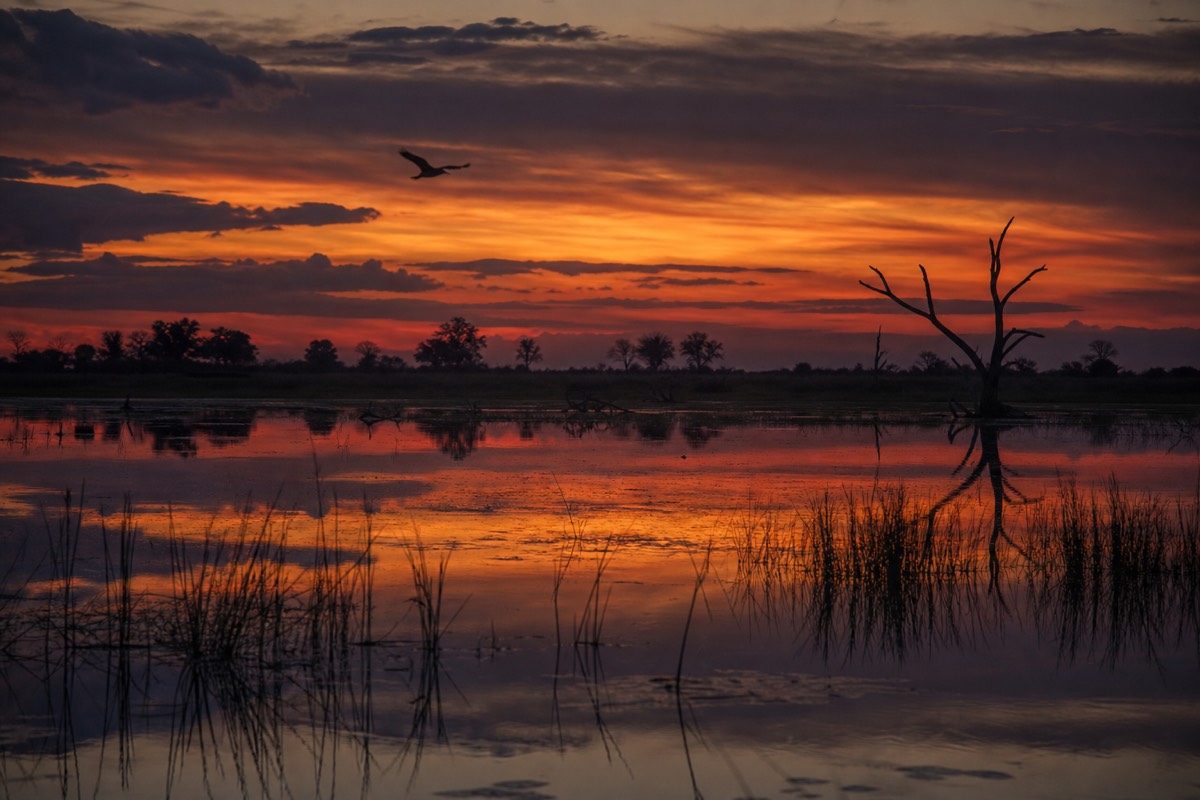
The delta runs on borrowed water. Rain falls in the Angolan highlands from November to April, drains into the Cubango and Cuito, and travels roughly 1,200 kilometres down a river system about 1,500 kilometres long. It reaches Botswana in May and June and peaks in July and August, which is the middle of Botswana's dry season. So the delta floods when the surrounding country is at its driest, and the flood and the game concentration arrive together. That is the single most counter-intuitive thing about the destination, and the flood-cycle reference tracks the timing year to year.
The practical effect is that a July trip gives you high water and concentrated game in the delta, and simultaneously the biggest elephant numbers on the Chobe river. If your dates are fixed for July or August, you are not choosing between a good month and a bad month. You are choosing between two good months that produce different photographs. Our month-by-month guide to the best time to visit the Okavango Delta works through the shoulder months in more detail.
Which month suits which destination?
July and August are the strongest months for both, with the delta at peak flood and Chobe's elephants pinned to the river. September and October favour Chobe slightly as the delta's water begins to drop. January to March favours neither, though the delta's green season delivers birding and lower prices. The differences at the edges of the year are what matter for planning.
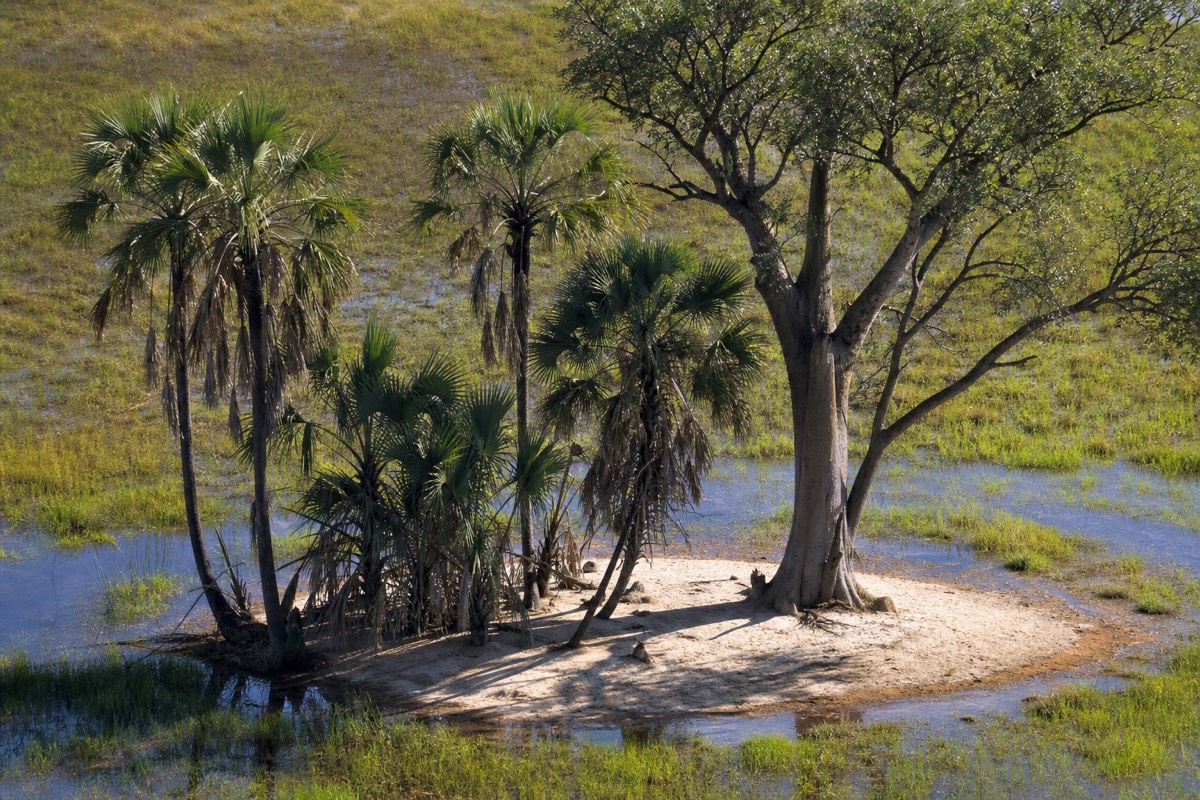
The shoulder months are underrated and much easier to book. April to May and November to December are when same-day and next-day day-trip bookings in Maun become realistic, which is not true in August. Temperatures swing hard in the dry months: a pre-dawn game drive can sit around 8 degrees while a midday camp rest touches 30, so layers are not optional. In the green season the range compresses upward and humidity climbs.
| Months | Okavango Delta | Chobe riverfront | Booking difficulty |
|---|---|---|---|
| January to March | Green season: low water, lush, excellent birding, fewest visitors | Animals dispersed inland to the pans | Easy |
| April to May | Flood begins to arrive; shoulder pricing; day trips bookable late | Pans drying, river traffic building | Easy to moderate |
| June | Water rising fast, mokoro access opening up | Strong and improving | Moderate |
| July to August | Peak flood, best mokoro and boat work, densest game | Peak elephant concentration on the river | Hardest of the year |
| September | Water receding, game viewing still excellent | Excellent, hot and dusty | Hard |
| October | Channels shallowing, land-based game viewing very good | Very good, the hottest stretch | Moderate to hard |
| November to December | Rains return, green season begins, prices soften | Animals begin to disperse | Easy to moderate |
These are the typical patterns rather than a forecast; the flood arrives earlier or later by several weeks from one year to the next.
What does Chobe give you that the delta cannot?
Chobe gives you a river with a road to it. The signature experience is a sunset boat cruise along the Chobe riverfront in the dry season, when elephants come down to drink in numbers that no other park in the region matches, and you can be on that boat without a charter flight or a multi-night camp commitment. Accessibility is not a consolation prize here. It is the product.
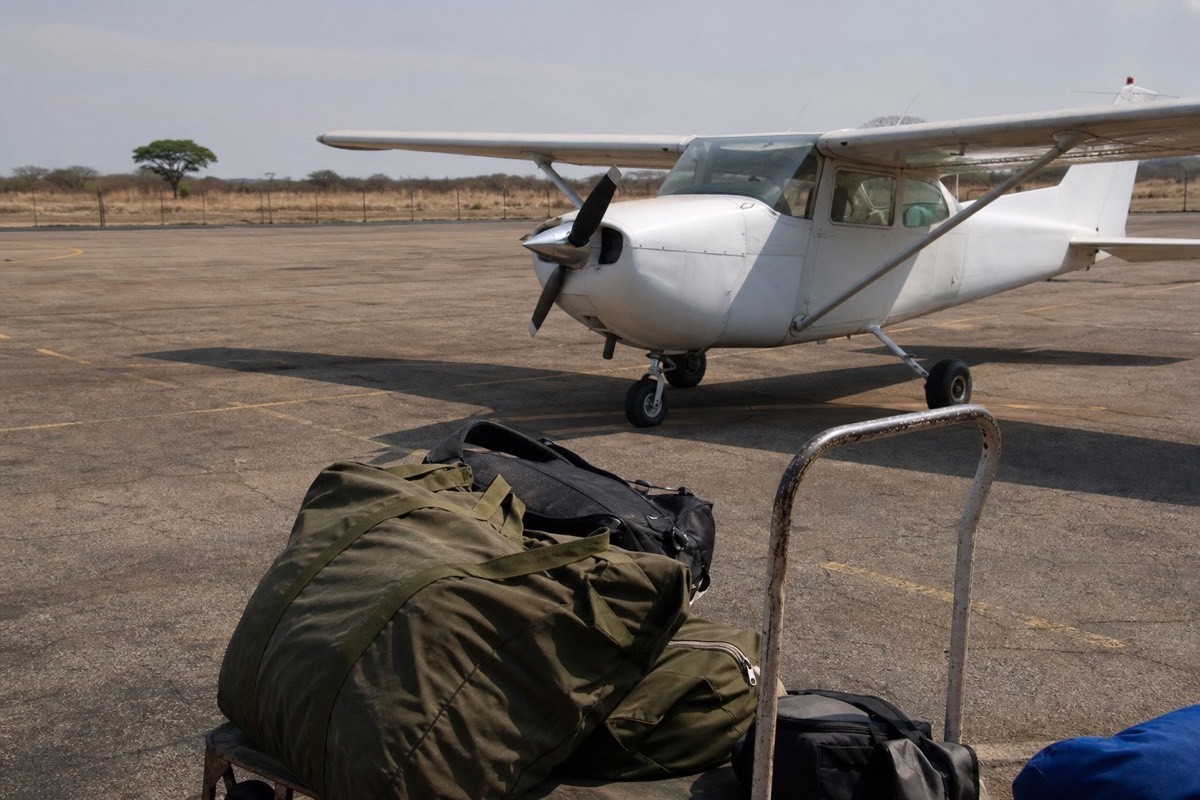
Because Chobe is a public national park with a town at its edge, the trip shapes available to you are broader. A traveller with two nights in Kasane can do a morning game drive and an afternoon cruise and leave having seen a great deal. The same two nights would barely cover the transfer time into the inner delta. That is why Chobe is the part of northern Botswana that works for people whose safari sits inside a longer Southern Africa trip rather than being the trip.
The elephant story is the reason to go. A population commonly estimated around 50,000 across the park, funnelled toward a permanent river through the driest months, produces a density of large mammals on a short stretch of water that is genuinely unusual. Our own 11-day itinerary describes tracking lions, elephants and rhinos across Hwange and Chobe, and the 15-day route bills the Chobe leg simply as massive elephant herds along the river. Neither of those is marketing invention; it is what the riverfront does in August.
Chobe also gives you a boat you can stand up in. A motorboat cruise covers distance, gets you wider views and lets a group of ten share one vessel. That is a different tool from a mokoro, and for photographers with long lenses it is often the better platform.
What does the delta give you that Chobe cannot?
The delta gives you silence, low density and the mokoro. A dugout canoe poled from the stern puts you inches above black water in channels often narrower than the boat is long, and the private concessions cap vehicle numbers by agreement, so a sighting is yours for as long as it lasts. Nothing on the Chobe river replicates either of those.
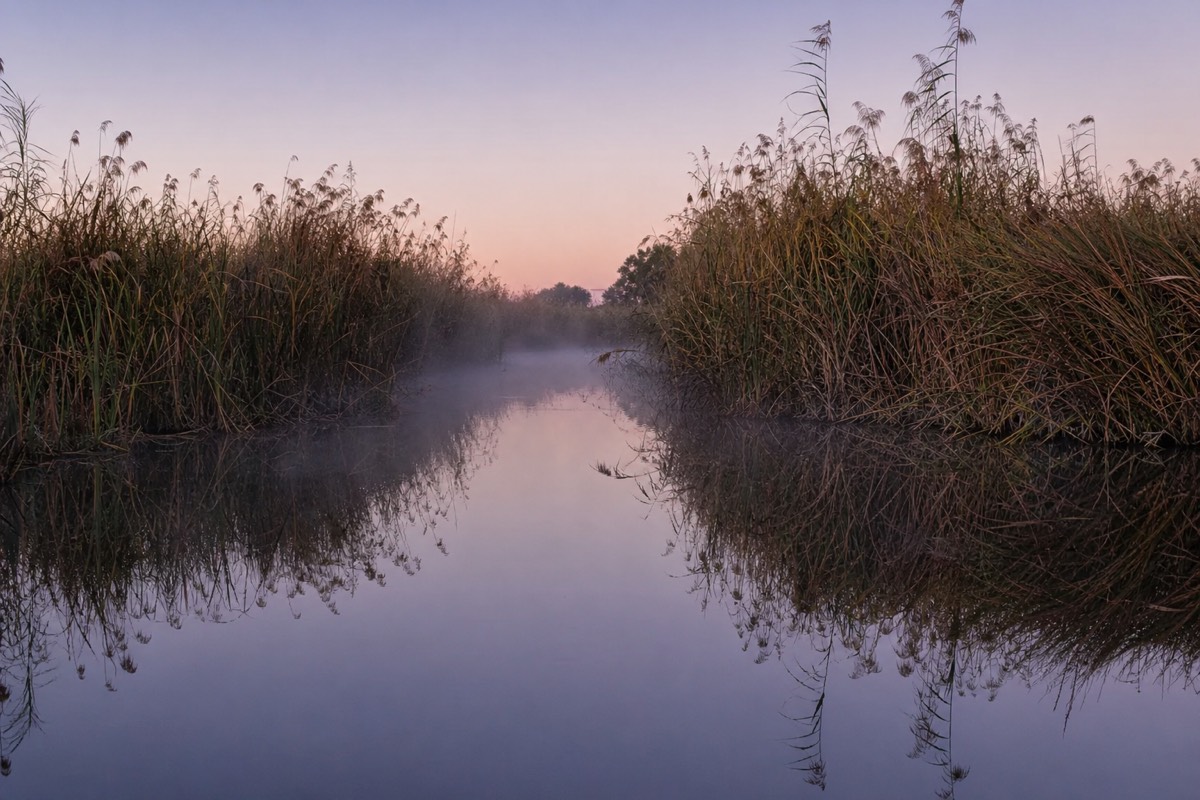
The mokoro is specific to this place. It is a flat-bottomed dugout, originally carved from a single tree such as a jackalberry and now often fibreglass to take pressure off the trees, poled by a standing poler who navigates by channel knowledge rather than landmarks. Two passengers sit very low, there is no paddling, and the low profile means animals at the waterline routinely ignore the boat. A standard excursion runs two to three hours; a full-day version with an island picnic runs four to six. Hippos use the same channels, and the polers read the water ahead continuously.
The exclusivity is structural rather than atmospheric. Vehicle numbers inside private concessions are capped by the concession agreement rather than by open park access, which means a vehicle can stay with a pride of lions instead of cycling through to make room. Across the whole delta there are only roughly 1,000 to 1,500 beds, and camps typically hold two or three vehicles maximum at a sighting. That is Botswana's deliberate high-value, low-volume tourism policy working as designed, and it is also the reason the delta costs what it costs.
Then there is the wildlife mix. African wild dogs, among the most endangered mammals in Africa, patrol large territories through Moremi and Khwai; they are the most sought-after sighting in the delta and can be absent for days. Lions hunt along the floodplain edges at dusk. Leopards are present and more often heard at night than seen by day. Red lechwe wade the shallows in real numbers, and the birdlife runs past 500 species, including Pel's fishing owl.
| Species | Chobe riverfront, dry season | Delta channels and floodplains | Notes |
|---|---|---|---|
| Elephant | The main event; large daily concentrations at the water | Frequent; herds of 50 or more move between islands | Both strong, very different staging |
| Hippo | Common along the river | Extremely common; heard constantly from a mokoro | Guides keep distance in both |
| Lion | Present; named on our Hwange and Chobe itinerary legs | Regular on floodplain edges at dusk; occasional from a mokoro | Vehicle-based sightings are the reliable ones |
| Leopard | Present, elusive | Present, more often heard at night than seen | Never plan a trip around leopards |
| African wild dog | Not the area's reputation | Moremi and Khwai are among the best places on earth for them, though they can vanish for days | The delta's signature rare sighting |
| Red lechwe | Present near water | Abundant, wading the floodplains | A delta staple |
| Waterbirds | Strong river birdlife | Past 500 species recorded, breeding colonies in the dry season | Both excellent, delta broader |
Every line above is a typical pattern, not a promise. Wild animals move, and any operator who guarantees a species is selling you something they cannot deliver.
Which one costs more, and where does the money go?
The delta is the more expensive of the two, and the gap is structural rather than a markup. Charter access, capped bed numbers across the whole system and concession agreements that limit vehicles all cost money. Chobe's road access and public park status put a much cheaper floor under a trip. Botswana chose this deliberately.
The country runs an explicit high-value, low-volume tourism strategy. Visitor numbers are held down and prices are correspondingly high, in exchange for low-density concessions and intact wilderness. When people ask why the delta costs what it does, that policy is the answer, not an operator's margin. The breakdown of what an Okavango Delta safari costs takes the numbers apart properly.
Rather than quote camp rates we cannot stand behind, here is our own published price ladder, which is the honest version of what these areas cost to visit through us. Every multi-day price is per person and covers accommodation, meals, park fees, transfers and guiding unless the listing says otherwise.
| Trip | Areas covered | Duration | From, per person |
|---|---|---|---|
| Full-day mokoro from Maun | Delta, outer channels | 8 hours | $200 |
| All-inclusive mokoro with island walk | Delta, community concession | Full day | $181 |
| Aerial scenic flight from Maun | Delta from the air, no landing | 45 minutes | $543 |
| Mokoro wild camping safari | Delta island camp | 3 days, 2 nights | $850 |
| Luxury private-camp safari | Delta private concessions | 4 days, 3 nights | $1,270 |
| Moremi and inner delta safari | Moremi, Khwai, Mababe, inner delta | 7 days, 6 nights | $1,890 |
| Victoria Falls to the Okavango via Chobe | Zimbabwe, Chobe, delta | 11 days | $3,500 |
| Guided lodge tour across three countries | Namibia, delta, Chobe, Victoria Falls | 15 days | $6,997 |
These are starting prices at the time of writing, with the current figure on the live listing. Booking through a specialist Southern Africa operator instead typically runs 30 to 60% above direct operator rates, which buys bespoke itinerary design and access to lodge allocations not sold on general platforms.
How crowded does each one feel in high season?
Neither is crowded by international safari standards, but the delta is quieter by a wide margin. With roughly 1,000 to 1,500 beds across every concession and camp, and two or three vehicles maximum at a sighting, you will often go a whole game drive without seeing another vehicle. Chobe's riverfront is the busiest water in Botswana.
That is not a criticism of Chobe. A public park next to a town with an airport is going to carry more traffic than a fly-in concession, and the riverfront cruise is popular precisely because it delivers. In practice it means the Chobe boat experience is shared and the delta mokoro experience is not: two passengers and a poler, with almost nothing else on the channel.
Within the delta's peak, July and August are cooler at night with animals tightly concentrated on remaining water, and still see very low human presence. September and October run warmer and slightly busier, with excellent visibility as the floodplains dry. Even at the top of the season, the limited access and the concession model keep the place feeling remote in a way that is hard to explain to anyone who has only done East Africa in August.
If you can only do one, which should you pick?
Pick Chobe if your time is short, your budget is tight, you are already going to Victoria Falls, or you want elephants above everything else. Pick the delta if this is a once-in-a-lifetime trip, you want water-based activity, you care about wild dogs and low-density game viewing, or you are travelling for a honeymoon or serious photography.
The traveller type matters more than the destination ranking. A first safari with three days available and a flight already booked into Victoria Falls should go to Chobe and come back for the delta later. A second safari from someone who has done Kruger or the Serengeti and wants something structurally different should go to the delta, because the mokoro and the concession model are the parts that will feel new. If you are still weighing Botswana against another country entirely, the comparison of Botswana against Tanzania for a first safari is the more useful argument to have first.
| You are | Pick | Why |
|---|---|---|
| On your first African safari, under 4 days | Chobe | Road access, no charter, high wildlife return on short time |
| On your second or third safari | Delta | The mokoro and low-density concessions are the genuinely new experience |
| Travelling with children | Chobe | Shorter transfers, boat cruises suit all ages, lower cost per day |
| A photographer with long lenses | Both, in this order: Chobe for volume, delta for intimacy | Boat platforms and elephant density, then waterline angles and staying with a sighting |
| On a tight budget | Chobe, or a delta day trip from Maun | No charter cost; our full-day mokoro trips start at $181 to $200 per person |
| On a honeymoon | Delta | Private concessions, silence, capped guest numbers |
| Chasing wild dogs specifically | Delta, Moremi and Khwai | The best territory for them anywhere, with no guarantees |
| Short on time inside a longer Southern Africa trip | Chobe | Kasane sits close to Victoria Falls and connects by air to Maun |
Treat this as a starting point for a conversation about your dates, not a ruling. Trip length and season shift the answer more than traveller type does.
What is the mistake people make when they try to do both?
The mistake is compressing them. Our own advice to first-timers is blunt: trying to combine the Okavango with Chobe or Victoria Falls inside a single four-day itinerary produces a travel schedule rather than a safari. Transfers eat the days, and the delta in particular punishes short stays.
The delta is large, the private concessions are spread across different ecosystems, and the daily pattern of two game drives and a midday rest or mokoro excursion is designed to put you in the right places at the right times. If the Okavango is the reason you are coming to Botswana, give it the nights it deserves.
Concretely: three nights at a single delta camp with two activities a day is the working minimum, and five is the version people describe as exceeding expectations. Spend one of those three days on a transfer to another region and you have two. Add Victoria Falls and you have one. The guide to how many days the Okavango Delta actually needs lays out what each night buys you.
There is a second, quieter mistake, which is assuming late booking will work. The best concessions and community camps are allocated months ahead, so travellers who arrive in Maun without a booking usually end up in the accessible outer delta rather than the inner channels where wildlife density is highest. The aerial scenic flight fills ahead in July and August too. Both halves of a Chobe and delta trip can be arranged late in April, May, November or December. Neither can in August.
How do the two fit together properly?
Properly means eleven days or more. Our Victoria Falls to Okavango route via Chobe runs 11 days from $3,500 per person, taking the falls, Hwange and Chobe first and finishing in the delta, and the 15-day guided lodge tour from $6,997 adds Namibia's dunes and Skeleton Coast on the front end. Those durations are not padding.
The 11-day shape works because it treats each place as a stay rather than a stop. Victoria Falls and its cultural programme, then Hwange and Chobe for the big land and river game, then west into the delta for mokoro work and bush walks. It is a confirmed group departure product rather than a private assembly, which is part of why it prices the way it does.
If you want the delta weighted more heavily than the multi-country route allows, the 7-day Moremi and inner delta safari from $1,890 spends six nights across Moremi, Khwai, Mababe and the inner delta, moving by open 4x4, motorboat and mokoro. Pair that with a separate two or three nights in Kasane for Chobe, connected by the Air Botswana flight, and you have both destinations at proper length without a marathon of road transfers.
At the other end, the 15-day guided lodge tour across Namibia, Botswana and Zimbabwe is the option for travellers who want one long, fully organised journey rather than several bookings. It crosses international borders on a fixed group departure schedule with accommodation, guides, permits and transfers confirmed in advance, which is the only realistic way to run an itinerary of that shape.
What does a worked two-week Botswana route look like?
Fourteen days is enough to do Chobe, the delta and one more region without rushing. A workable shape is Victoria Falls and Chobe first, a flight to Maun, then four to six nights in the delta split between a concession camp and Moremi, with two days of slack for weather and the flight home. Here is that route day by day.
| Days | Where | How you get there | What you do |
|---|---|---|---|
| 1 to 2 | Victoria Falls | International arrival | The falls, recover from the flight, cultural programme |
| 3 to 5 | Kasane and the Chobe riverfront | Border road transfer | Morning game drives, sunset boat cruises, elephant concentrations |
| 6 | Maun | Air Botswana, Kasane to Maun | Overnight in town, repack into a soft duffel |
| 7 to 9 | Inner delta concession camp | Charter, 20 to 45 minutes | Mokoro, walking safari, two game drives a day |
| 10 to 12 | Moremi or Khwai | Charter or road transfer | Predator-focused drives, wild dog territory |
| 13 | Maun | Charter back | Optional 45-minute scenic flight to see the whole system from the air |
| 14 | Departure | Airlink to Johannesburg | Connect onward |
Build a spare day into any delta itinerary: rain can close an airstrip, and charter schedules move. If you would rather swap a delta camp for a desert contrast, the Central Kalahari Game Reserve guide explains why that region runs on the opposite calendar and pairs badly with a July delta trip.
Who should skip one of them altogether?
Skip the delta if you have fewer than four nights in Botswana, a hard ceiling on cost, or an unshakeable dislike of small aircraft. Skip Chobe if your trip is short and the delta is the reason you came, because a two-night detour to Kasane will cost you the best part of your delta stay.
Small aircraft are worth being honest about. The standard access to inner delta camps is a six to twelve seat aircraft landing on a bush strip. Most people find the approach over the flooded channels one of the highlights of the trip. A minority genuinely do not, and for them the road and water transfer to an outer camp, or a Chobe-based trip, is the better plan rather than a week of dread.
Cost is the other honest filter. A delta day trip from Maun, at $181 to $200 per person for a full-day mokoro, gives you the channels, the silence and an island walk without the charter and the camp. It is a real experience rather than a compromise, and it lets a traveller on a tight budget see the delta at all. What it will not give you is dawn, dusk, night sounds or the inner concessions.
Whichever way you go, the trips we list bundle the charter transfer, the park fees, the meals and the camp into one confirmed booking, which is the part that becomes hard to arrange late. Peak-season concession space is allocated months ahead, the community mokoro camping trip is capped daily to protect the ecosystem it runs through, and the scenic flight fills in July and August. If your dates fall in that window, the booking is the planning.