Why Is the Okavango Delta So Expensive?
The price of an Okavango safari is not a mark-up on an ordinary safari. It is the conservation model Botswana chose, and it shows up in every part of the bill.
Compare the full inclusions, location and overnight setup. A Maun day or NG32 community camp is a different purchase from a private-concession lodge. Explore Two Nights Of NG32 Mokoro Camping
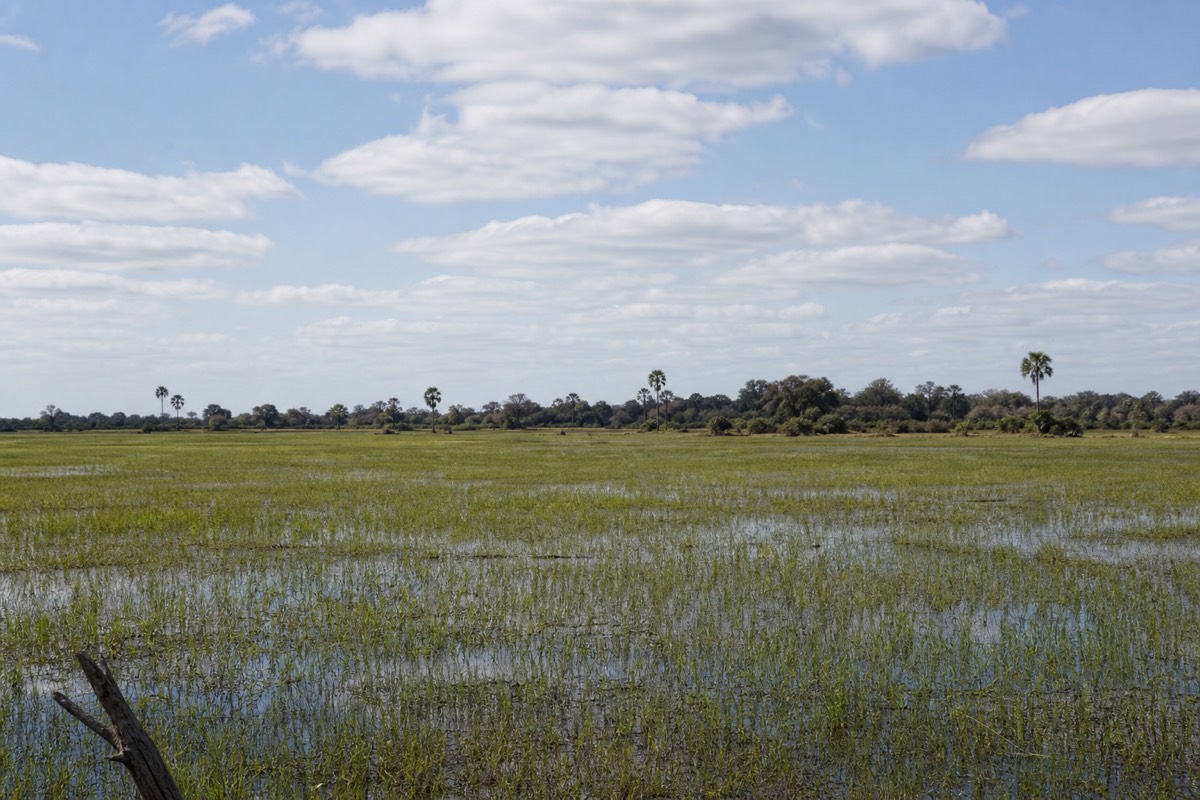
The whole Okavango Delta holds roughly 1,000 to 1,500 beds. That is fewer than one mid-sized city hotel, spread across a wetland that swells to about 15,000 square kilometres at peak flood, and the ratio is deliberate. The team at Okavango Delta Botswana Tours gets asked about the price more than anything else, so here is the answer without the marketing gloss: in the Okavango, the cost is the conservation model, not a premium bolted on top of a normal safari.
Is the delta expensive on purpose?
Yes. Botswana runs an explicit high-value, low-volume tourism policy: visitor numbers are deliberately held down and prices sit correspondingly high, in exchange for low-density concessions and intact wilderness. The cost is the mechanism that keeps the delta empty rather than a premium charged on top of an ordinary safari. That distinction is the substance of the Botswana against northern Tanzania price comparison. Other safari countries went the other way and built volume. Botswana decided that a smaller number of visitors paying more would do less damage and fund more protection.
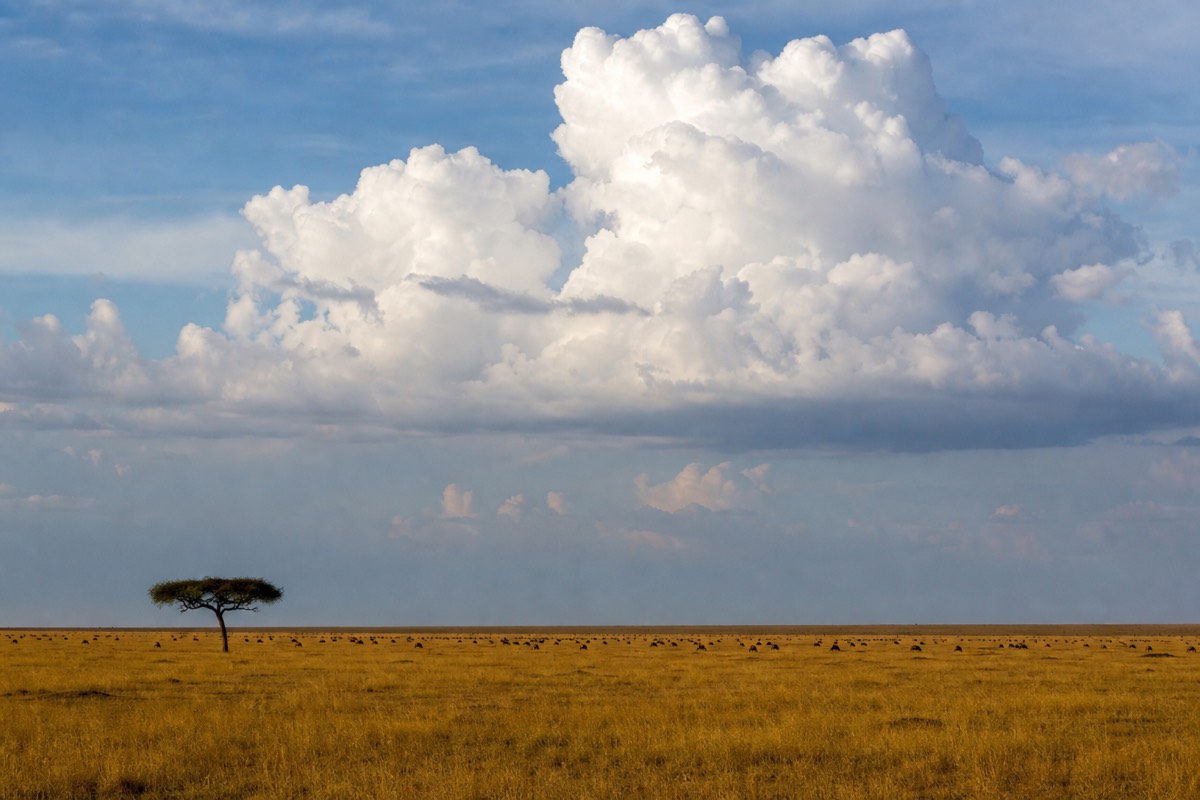
The scale of what that policy holds together is easy to underestimate. The delta's UNESCO World Heritage listing covers 2,023,590 hectares, and it was the thousandth site ever inscribed, in 2014. Running a wetland that size with no fences, almost no roads and no crowds costs money, and visitors pay it. The policy is set nationally, through the Botswana Tourism Organisation, rather than camp by camp. If you want line items rather than philosophy, our breakdown of what an Okavango safari costs works through them.
How does the concession system push prices up?
Vehicle numbers inside a private concession are capped by the concession agreement rather than by open park access, so a vehicle can stay with a sighting instead of cycling through to make room. Fewer vehicles means fewer beds, and fewer beds means the cost of running a remote camp is divided among very few people.
Moremi Game Reserve covers about 40% of the inscribed property. The rest is a mosaic of wildlife management areas and concessions, the NG blocks, on tribal land administered by the Tawana Land Board. What that buys is measurable: on a three to four hour game drive you often see one or two other vehicles, or none. When a pride is found at dawn, the vehicle stays as long as the sighting warrants. That is the real difference between four days in private concession camps and a queue at a sighting in a busier park.
Why does getting there cost so much?
Most delta camps have no road access, so guests fly in from Maun by light aircraft: 20 to 45 minutes, roughly USD 200 to 600 per person one way. Everything the camp uses arrives the same way or by hours of sandy track, so there is no economy of scale anywhere in the supply line.
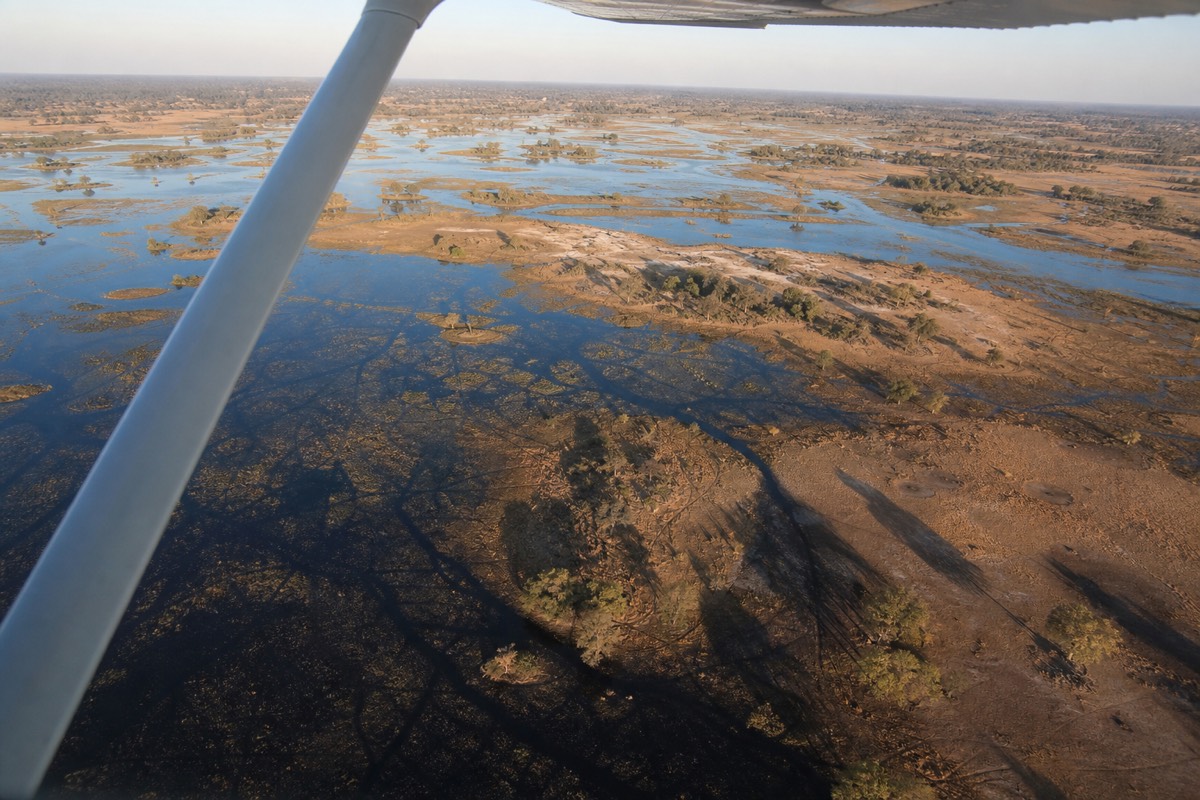
Shared charters bring the seat price down, round trips are often cheaper than two singles, and camps usually bundle the flight into the package so you never see it as a separate line. The alternative is a guided road and water transfer, two to six hours in total, one to four hours of driving plus 30 minutes to two hours by boat or mokoro, at roughly USD 150 to 400 per person round trip if bought on its own. That price gap is exactly why the cheaper end of the delta is the road-accessible outer floodplain and the expensive end is the inner delta. We set out every route from Maun into the delta and what each one really costs.
Why is peak season the most expensive time to come?
The delta's best window is narrow. Angolan rain falls from November to April, becomes the flood that reaches Botswana in May, and peaks in July and August, so full channels and concentrated wildlife arrive in the same few months. Demand piles into July, August and September, and camps fill many months ahead.
June to August is when the mokoro is at its best and the game drives are excellent at the same time, because animals gather on the remaining water. That coincidence is what carries the premium. Botswana's own rainy season, November to April, is the green season at the other end of the year: lush, superb for birding, far fewer visitors. Availability is genuinely easier then, and the April, May, November and December shoulder makes a day trip from Maun realistic at short notice.
What are you actually paying for?
Three things you cannot buy separately: near-exclusive wildlife viewing inside a concession with capped vehicle numbers, guides and polers who have spent their working lives in this one ecosystem, and the mokoro, which nowhere else provides. Part of the price also goes directly to the community trusts that hold the concessions.
That last point matters more than it sounds. The Okavango Mokoro Community Trust employs polers from villages around the delta and channels income straight into them, and it is the trust's own people who run the mokoro on the three-day community mokoro camping safari. That is a feature of the model, not overhead inside it.
Then there is the boat itself: a flat-bottomed dugout, poled from the stern by someone who reads channels rather than landmarks, carrying two passengers inches above black, still water. Clients who have been on safari across three continents consistently tell us the mokoro afternoon is the thing they would most want to repeat.
Can you visit the Okavango Delta on a smaller budget?
Yes, and this is the misconception worth correcting hardest. The delta is not a luxury-only destination. Our own portfolio starts at $181 per person for a full day on the water from Maun and $850 for three days with two nights camping on a delta island, against $1,270 for four days in private concession camps.
The cheap end is a real delta experience rather than a consolation prize: a full day of mokoro with community polers puts you on the same water, with the same silence, for a fraction of a camp night. What changes as you climb the ladder is not only comfort. It is which part of the delta you reach, and how many dawns you get there.
| Trip | Length | From, per person | Roughly per day |
|---|---|---|---|
| Full-day mokoro and island walk, community polers | Full day | $181 | $181 |
| Full-day mokoro adventure, all-inclusive | 8 hours | $200 | $200 |
| Mokoro wild camping on a delta island | 3 days / 2 nights | $850 | about $283 |
| Private concession camps | 4 days / 3 nights | $1,270 | about $318 |
| Moremi, Khwai, Mababe and the inner delta | 7 days / 6 nights | $1,890 | about $270 |
| Victoria Falls to the delta via Chobe | 11 days | $3,500 | about $318 |
These are the starting prices we publish, with the current price on the live listing. The per-day column is simple arithmetic on trip length, not a rate anyone quotes.
Does where you book change what you pay?
It changes the price and what you get for it. Booking online in advance runs $181 to $543 for single-day experiences and $850 to $6,997 for multi-day packages. Arranging on arrival in Maun is comparable for a low-season day trip. A specialist Southern Africa operator typically sits 30 to 60% above direct operator rates.
| Booking route | Typical price | What you gain | What you give up |
|---|---|---|---|
| Online in advance, direct with verified operators | $181 to $543 single-day; $850 to $6,997 multi-day | Confirmed camp and concession slots, transfers pre-booked, meals and park fees managed | Committing to dates well before you travel |
| Arranged on arrival in Maun | Comparable for day mokoro trips in low season | Flexibility, and it works in the April to May and November to December shoulder | Peak-season multi-day space, because the best concessions and community camps are allocated months ahead |
| Specialist Southern Africa operator | Typically 30 to 60% above direct operator rates | Bespoke itinerary design, flight coordination, access to lodge allocations not sold on general platforms | The premium itself, on the same core experience |
Treat those as planning ranges rather than quotes. The practical consequence of route two is worth stating plainly: late arrivals in July or August usually end up on the accessible outer floodplain instead of the inner channels, and the scenic flight fills ahead in those months too.
The trips we list bundle the transfer, the park fees, the meals and the guiding, which is precisely the part that becomes hard to assemble late. If the number still looks steep, the fairer question is not why it costs this much but whether it returns it, which is what we work through in our honest answer on whether the delta earns its price.