Okavango Delta Camps vs Lodges vs Mobile Tented Safaris: How to Choose
The delta holds barely 1,000 to 1,500 beds across every camp and concession in it. Which of those beds you book decides what you do every hour of every day, not just how comfortable the night is.
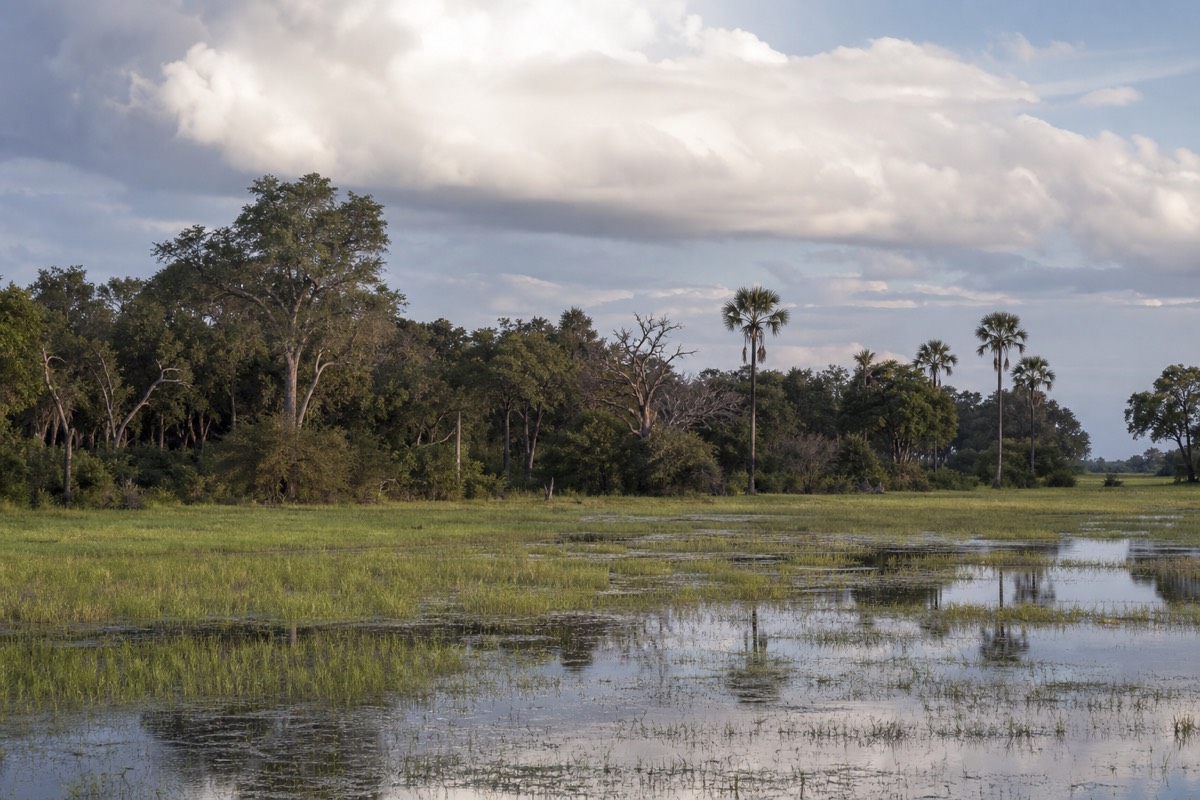
Check the actual tent, bathroom and movement between camps. NG32 island camping and a moving tented safari provide different stays; neither promises a solid-wall lodge. Explore Two Nights Of NG32 Mokoro Camping
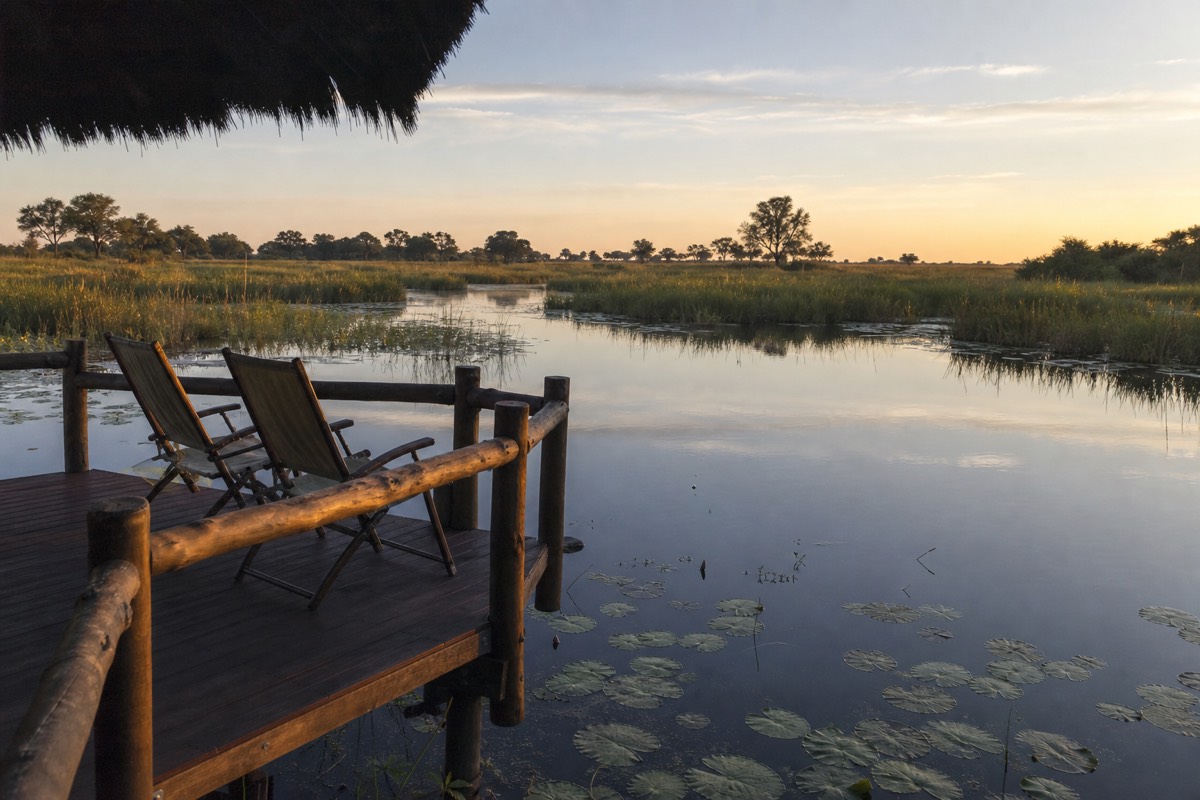
The whole delta holds something like 1,000 to 1,500 beds. Spread that across a wetland that swells out to roughly 15,000 square kilometres at peak flood and you have the reason accommodation matters more here than at almost any safari destination on the continent. There is no walk-up inventory to fall back on. And the format you book does not just set how soft the mattress is, it sets what you physically do between 6am and dark.
A lodge with a timber deck over a hippo channel and a mobile tent that gets struck the morning you leave are not two grades of the same product. They are two different holidays that happen to be in the same wetland. The team at Okavango Delta Botswana Tours books all of these shapes, from a community mokoro camp on a delta island through private-concession camps to a week-long circuit across Moremi and the inner channels, and the first sorting question we ask is never budget. It is water or land, and how much self-reliance you actually want.
Every camp type leans one way: towards the water, or towards the floodplain you can drive
The activity balance shown is the typical lean of each format, not a promise from any one camp; several run both water and land activities. The flood strip beneath is the usual annual pattern, and the water arrives earlier or later by several weeks from year to year.
What are the real accommodation types in the Okavango Delta?
Six formats cover nearly everything sold in the delta: permanent tented camps inside private concessions, permanent lodges with solid rooms and a deck over a channel, semi-permanent seasonal camps, fully serviced mobile tented safaris, participation mobile safaris where guests help pitch and cook, and community bush camping on a delta island. Each carries a different activity mix, a different level of comfort and a different amount of work that falls to you.
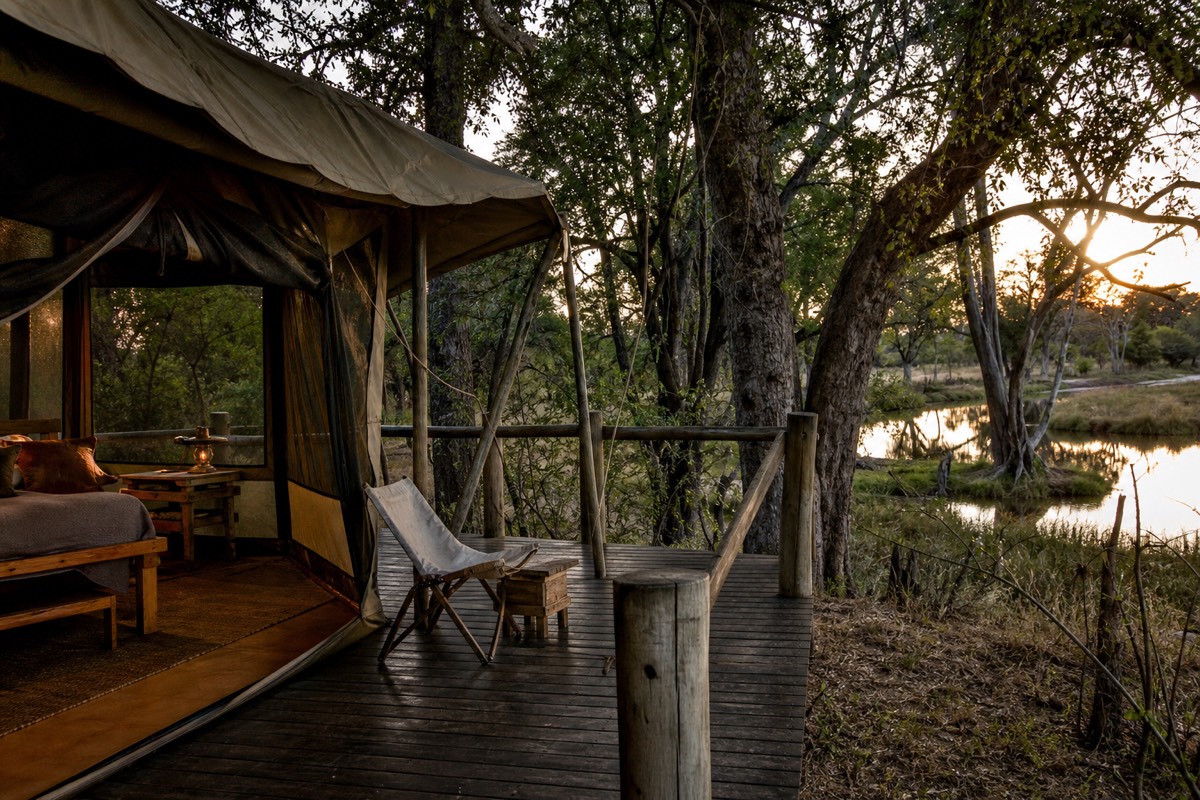
The words get used loosely in marketing, which is why people arrive expecting one thing and find another. A "camp" in the delta usually means canvas on a raised platform with a proper bed, plumbing and a bucket-fed or pumped shower, not a dome tent on the ground. A "lodge" means solid walls, often thatch and timber, sometimes air conditioning, and almost always a deck built out over water. A mobile safari means the whole camp travels in the vehicle behind you and is gone from the site within an hour of your departure. Community bush camping is the honest end of the scale: a tent on an island, catering done over fire, and polers who live in the villages that ring the delta.
| Format | What it actually is | Typical activity lead | Suits |
|---|---|---|---|
| Permanent tented camp, private concession | Canvas rooms on raised decks, en-suite bathrooms, fixed dining and fire area, flown in and out | Mixed, tilted to whichever the concession has more of, water or drivable floodplain | First-timers who want depth without discomfort, honeymooners, photographers |
| Permanent lodge | Solid rooms, thatch and timber, decks over a channel or river, often a pool | Boat cruises and drives from a fixed base | Travellers who want a real bed, older visitors, families wanting one base |
| Semi-permanent seasonal camp | Tented camp erected for a season and removed, lighter infrastructure, smaller guest numbers | Follows the season it was pitched for | Repeat safari travellers, anyone chasing a specific season |
| Fully serviced mobile tented safari | Crew pitches, cooks and strikes camp; guests do nothing but travel and watch | Game drives, with water added where the route allows | People who want to cover ground rather than sit in one concession |
| Participation mobile safari | Same movement, but guests help pitch tents, wash up and pack the vehicle | Game drives plus camp life | Fit, sociable travellers on a tighter budget |
| Community bush camping on a delta island | Tents on an island, full catering over fire, mokoro access, community polers and guides | Dawn mokoro and afternoon walking safaris | Travellers who want the delta itself rather than the trimmings |
Read that table as the shape of each format rather than a promise from any individual property, because operators build what their patch of the delta allows.
Water camp or land camp: which distinction actually decides your trip?
Water camps sit on permanent channels and lead with mokoro and motorboat activity. Land camps sit on larger islands with drivable floodplain and lead with game drives in open 4x4s. Plenty of camps offer both, but the balance is set by geography, and it is the single most useful question to ask before you book.
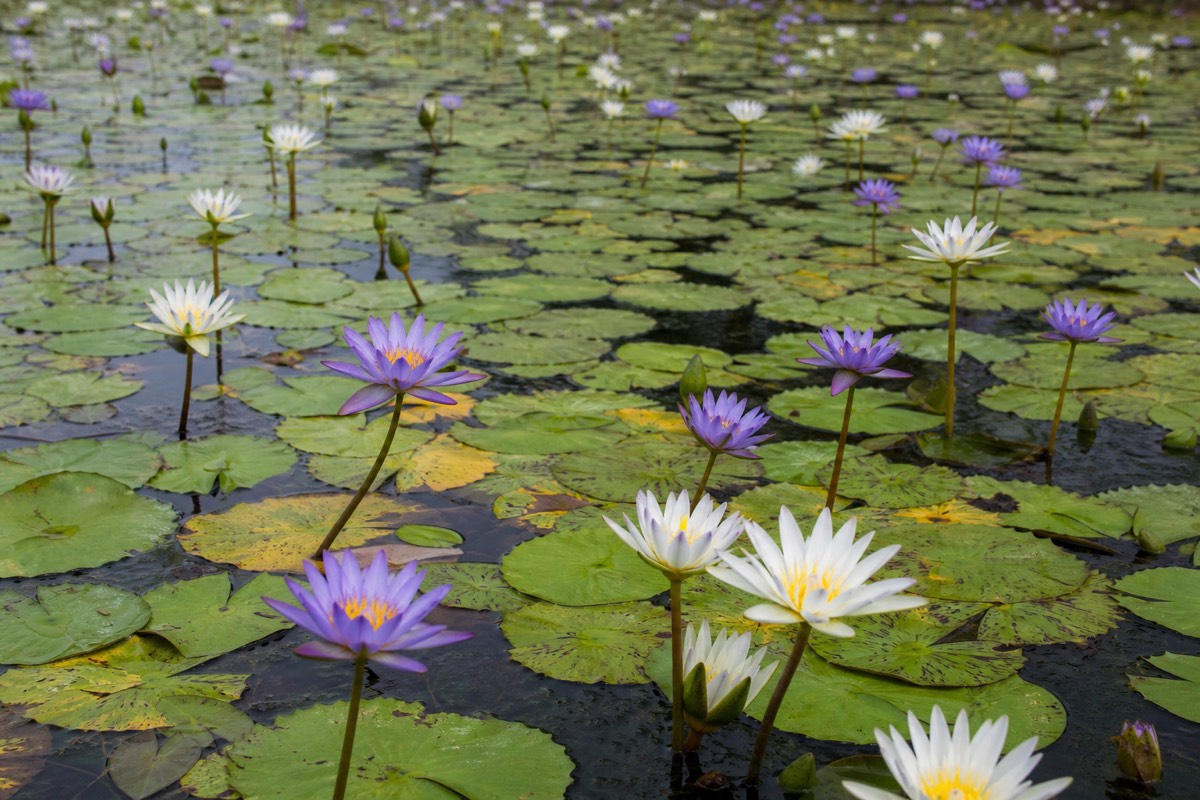
Almost no first-timer has heard this distinction, and it produces more disappointment than price ever does. A traveller who has flown eleven hours for lions can find themselves at a pure water camp where the day is a silent drift through papyrus and the biggest mammal on the schedule is a red lechwe. Another traveller who came for the mokoro can find themselves at a land camp on the reserve fringe where the water is a two-hour drive away in a low year. Both experiences are excellent. Neither is what that person booked for.
| Question | Water camp | Land camp |
|---|---|---|
| Where it sits | On or beside a permanent channel or lagoon, often deep in the inner delta | On a larger island or the floodplain margin with a road network |
| Signature activity | Mokoro drifts, motorboat cruises, fishing where permitted | Morning and afternoon game drives, tracking on foot where permitted |
| Predator odds | Lower on any single outing; big cats are seen from the water but not reliably | Higher, because the vehicle can follow tracks across ground |
| Best months | June to August, when channels are full and the boat can reach further | Strong year-round; September and October as the water pulls back off the tracks |
| Physical demand | Low, you sit or lie in the mokoro and nothing is asked of you | Low to moderate, plus hours of vibration on sand tracks |
| What you can miss | Big-cat action and large herds moving on land | The waterline intimacy the delta is famous for |
Treat the odds column as the pattern guides describe, never as a sightings guarantee; wild animals do not read booking forms.
How does the annual flood change the water-versus-land balance?
The flood does not come from Botswana rain. It falls in the Angolan highlands between November and April, travels roughly 1,200 kilometres down the Okavango River, arrives in the Botswana delta in May and June, and peaks in July and August, which is the middle of Botswana own dry season. That single fact reorders every accommodation decision.
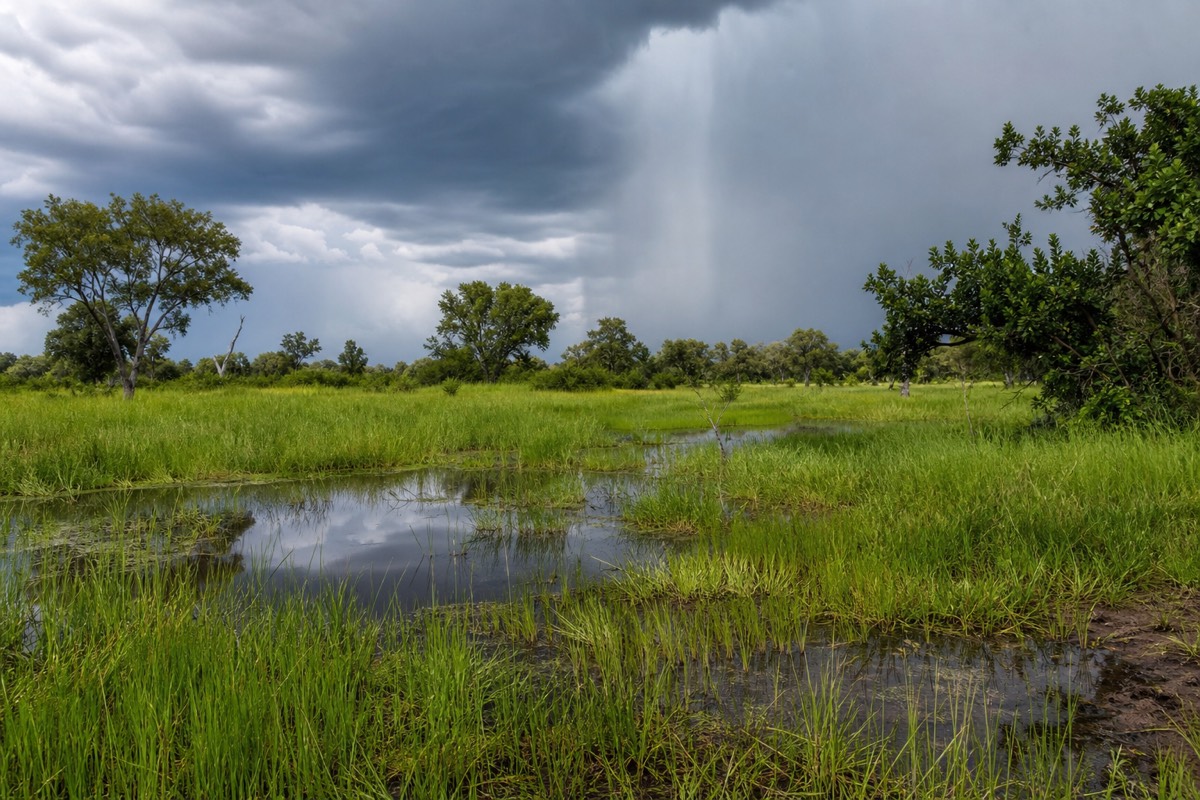
By July the channels are as full as they get, so a water camp is at its best exactly when land game viewing is also at its best, because animals across the wider Kalahari have concentrated on the only reliable water for hundreds of kilometres. It is a rare double peak and it is why July, August and September are the hardest months to get camp space in. From September the water starts pulling back, some shallow channels stop taking a mokoro, and land camps gain the advantage as tracks dry out. Between November and April the local rain arrives, the grass comes up, the birding gets spectacular and the crowds thin out. If you want the flood mechanic properly laid out month by month, our breakdown of when the Okavango Delta floods and peaks goes further than this section can.
One consequence catches people out. A camp described as a water camp in a brochure photographed in August may be surrounded by dry grass in November, and the mokoro session may move to a channel some distance away. Ask the operator what the activity looks like in your specific month rather than in the photograph.
What does a private concession give you that the game reserve does not?
Inside a private concession, vehicle numbers are capped by the concession agreement rather than by open park access, so your vehicle can stay with a sighting instead of cycling through. Off-road driving, night drives and guided walking safaris are generally possible in concessions and are restricted inside the game reserve. This is the mechanism behind the delta reputation for feeling empty.
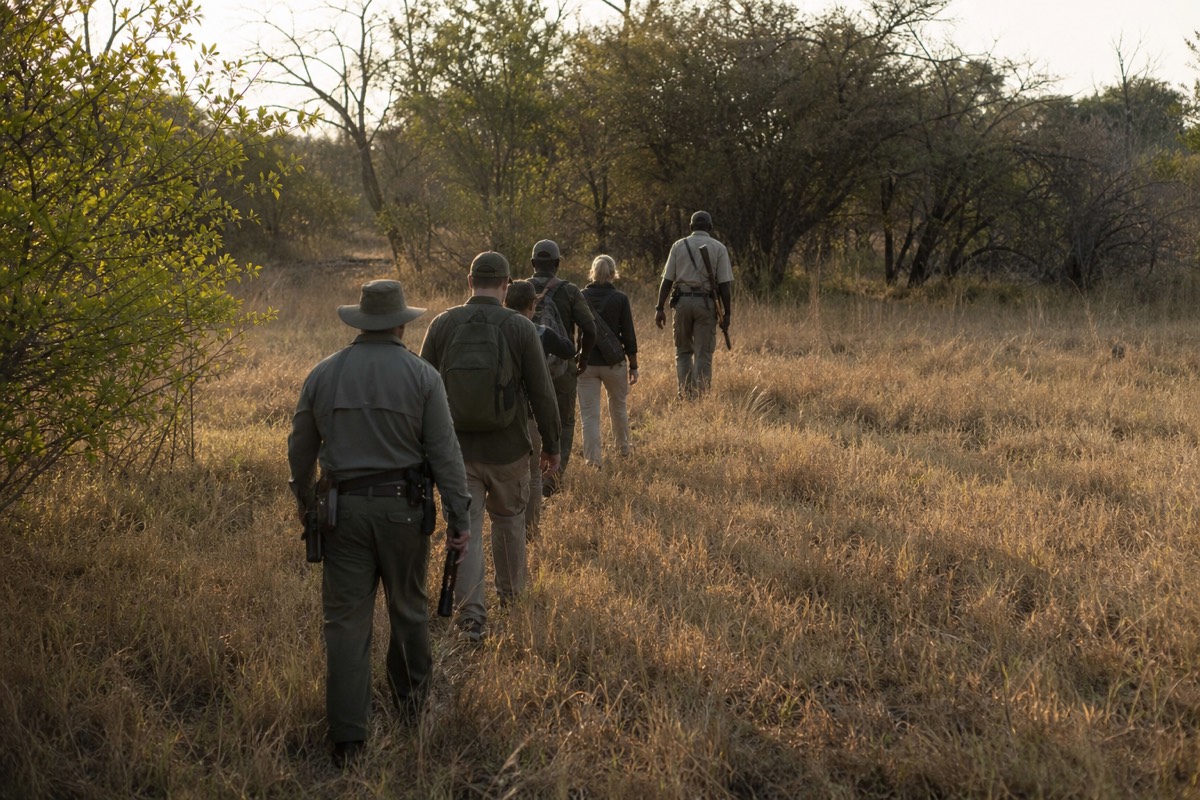
The practical difference shows up within the first two days. In a concession, when the guide locates a leopard at dusk, the decision about how long to stay is made by the guide and the guests. On reserve roads the same sighting can attract every vehicle in radio range, and the etiquette becomes about taking turns. Concession guides also tend to know individual animals and their ranges, because they work the same ground every day with a handful of other vehicles rather than a shared public network.
| What you want to do | Inside Moremi Game Reserve | Inside a private concession |
|---|---|---|
| Drive off the track to a sighting | Generally not permitted | Generally permitted at the guide discretion |
| Night drive after dark | Not permitted, gates and road rules apply | Usually part of the standard programme |
| Guided walking safari | Restricted | Usually offered, with an armed professional guide |
| Vehicles at one sighting | Open access, whatever arrives | Capped by the concession agreement |
| Self-drive access | Possible with a high-clearance 4WD and experience | No, access comes with a camp booking |
| Cost | Lower, park fees and campsites | Higher, the cap on numbers is what you are paying for |
Rules are set per concession and per reserve and do change, so confirm the specific activities with the camp before you count on a night drive. Our fuller treatment of Moremi Game Reserve and its concessions covers why so many itineraries deliberately pair the two.
What is a mobile tented safari, and how much of the work is yours?
A mobile safari carries the camp with the vehicle. The crew pitches it before you arrive, or you help pitch it, and the whole site is struck and removed when you leave. Nothing permanent stays behind. Participation levels run from fully serviced, where guests do nothing, to genuine participation, where you put up your own tent and take a turn on the washing up.
The appeal is movement. A mobile trip can spend two nights on the Khwai side, one at Mababe and two in the inner delta, which no fixed camp can do, and it costs less than stringing together the equivalent number of fly-in camps. The trade-off is packing and unpacking, longer transfer hours on sand, and a bathroom that is a bucket shower behind a canvas screen with a view of nothing but bush. Some people describe it as the best week of their lives. Others quietly wish they had booked a lodge.
| Service level | What guests do | Bathroom | Realistically suits |
|---|---|---|---|
| Fully serviced mobile | Nothing beyond your own daypack | Private en-suite bucket shower and chemical toilet per tent | Couples and older travellers who want mobility with comfort |
| Semi-participation | Pack your own tent bag, help load the vehicle | Shared shower and toilet tents | Fit travellers on a mid-range budget |
| Full participation | Pitch and strike your tent, help cook and wash up | Shared, sometimes basic | Sociable, budget-driven, physically comfortable travellers |
| Community bush camp on an island | Carry your own bag between mokoro and camp, otherwise catered | Bush arrangements, screened | Travellers who want the delta unfiltered |
Service levels vary between operators using the same words, so read the itinerary line about what guests are asked to do rather than the format name.
What is community bush camping on a delta island actually like?
It is two nights of tents on a permanent island, full catering over a fire, dawn mokoro sessions and afternoon walking safaris, run with the Okavango Mokoro Community Trust and its polers. On this site it is the three-day, two-night trip from $850 per person, with the current price on the live listing. Of everything the delta sells, it is the format closest to how the delta was actually travelled.
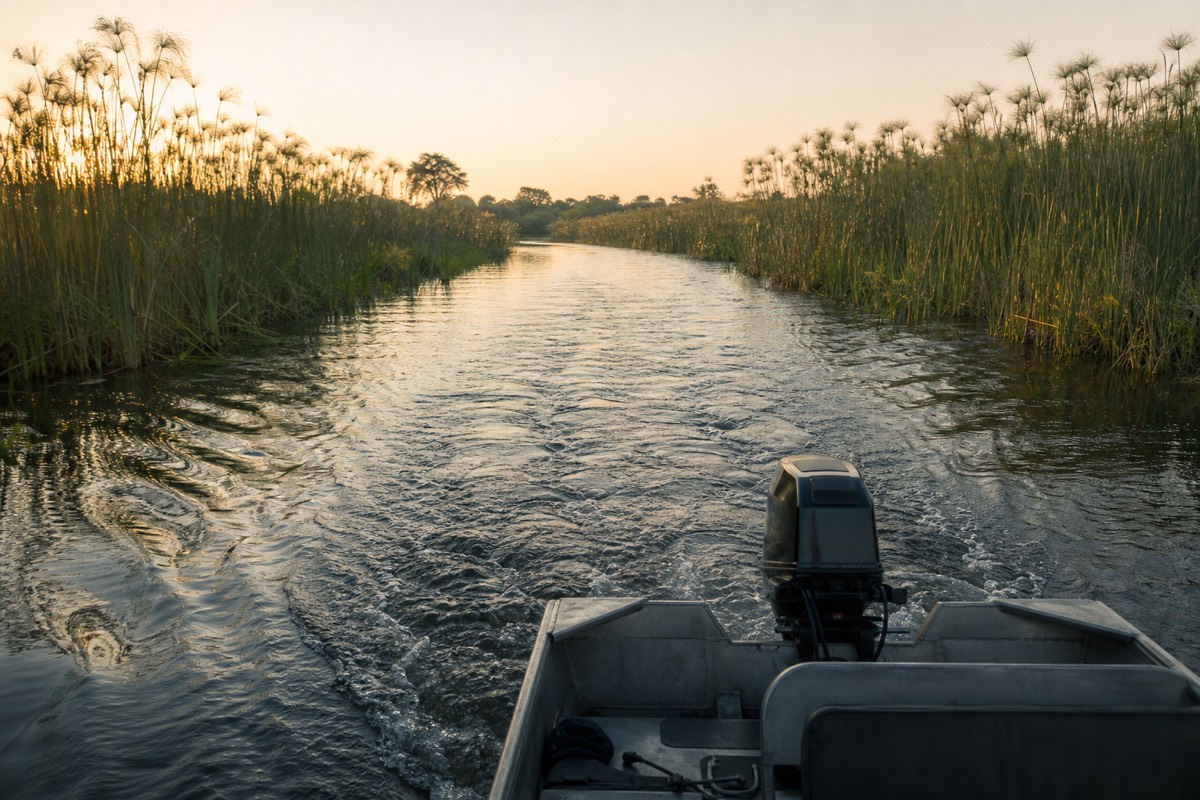
The Trust is a long-standing cooperative that employs polers from the villages that ring the delta, and the money goes into communities that have depended on this ecosystem for generations. That matters practically as well as ethically: your poler grew up reading these channels. He navigates by channel knowledge rather than landmarks, standing in the stern, and he knows which lagoon a particular hippo pod holds at four in the afternoon. If you want the mechanics of the boat itself, we have written separately on how a mokoro is carved and poled.
Be clear-eyed about the comfort. You are on the ground in a tent, the shower is a bush arrangement, and there is no generator hum, no plug socket and no locked door. What you get instead is silence, proximity and the specific quality of a fire in genuinely dark country. This is why the two-night mokoro wild camping safari sits on this site alongside the private-concession trips rather than being filed as the cheap option: it is the most authentic multi-day format in the portfolio, not the compromise.
What does a day look like inside these camps?
The rhythm is close to identical everywhere: wake-up around 5:30, out by 6:00 for the first activity, back for breakfast at 9:00, a walk or a boat late morning, lunch and a long midday rest, out again at 15:30, sundowner at 17:30, dinner around the fire at 19:00, asleep by 21:30. What changes between formats is which activity fills each slot.
At a land camp both bookend slots are usually game drives, with a walk added mid-morning. At a water camp the 6:00 slot is a mokoro or a boat, because dawn is when the channels are mirror-flat and the birds are loudest, and the drive gets whatever drivable ground exists. On a mobile safari one of those slots is regularly eaten by a transfer to the next camp, which is the real cost of movement and the thing to check on the day-by-day itinerary. On the community island camp the pattern is dawn mokoro, then a guided walk on dry land in the afternoon when the heat drops.
The midday rest is not filler. Between roughly 10am and 3pm the animals lie up in shade, the light goes flat and hard, and the temperature can climb past 30 degrees against a pre-dawn 8 degrees on the same day. Camps schedule around that reality, which is also why layers matter more than any single warm item, a point covered in our notes on what to wear and pack on safari.
What does a night out there sound like?
Hippos call from the channels, close enough that guests routinely assume the animal is beside the tent. Lions may be audible in the distance or much nearer. Frogs run continuously, something rustles the grass behind the canvas, and none of it stops until first light. None of it is a safety problem, and how an unfenced delta camp actually manages wildlife risk is worth reading if the idea unsettles you. The night is a large part of what people remember, and it is the thing accommodation choice changes most.
In a lodge with solid walls the soundtrack is muffled and you sleep through most of it. In a permanent tented camp on a raised deck you hear everything but you are off the ground, behind zips, with staff on call and a radio in the room. In a mobile or community camp you are at ground level with canvas between you and the bush, an escorted walk to the toilet after dark, and a fire that the guides keep high enough for light and warmth as much as for company.
Light sleepers should think hard about this rather than assume they will adapt. A traveller who wakes at every noise will spend three nights awake in a ground tent and remember the trip as exhausting. The same person in a lodge room with a channel view will describe the delta as the most restful place they have been. Both statements are true, and the only variable is which bed they booked.
What is included at each level, and what is not?
The multi-day trips this site lists are per person and all-inclusive of accommodation, meals, park fees, transfers and guiding unless a listing says otherwise. What varies between formats is drinks, laundry, the charter flight, night drives and walking activities, plus tips for guides and polers.
Because rate cards are not published as public per-night tiers, the honest place to anchor your budget is the trip price itself. On this site that is from $850 per person for the three-day community mokoro camping safari, from $1,270 per person for four days in private concession camps, and from $1,890 per person for the seven-day Moremi and inner-delta circuit, each with the current price on the live listing. If you want the full picture of where the money goes, our breakdown of what an Okavango Delta safari costs and why takes it apart line by line.
| Item | Community island camp | Mobile tented safari | Concession camp or lodge |
|---|---|---|---|
| Meals | Included, cooked in camp | Included, cooked by the crew | Included, usually three courses at dinner |
| Park and concession fees | Included in the listed trip | Included in the listed trip | Included in the listed trip |
| Transfers from Maun | Road plus mokoro, included | Road, included | Charter flight, often bundled into the package |
| Drinks | Basics, ask what is covered | Varies widely by operator | Often included, spirits and fine wine sometimes not |
| Laundry | No | Rarely | Usually daily or every second day |
| Night drive and walking safari | Walks yes, night drives no | Depends on where the route sits that night | Usually yes inside a concession |
| Tips | Extra, in small USD notes | Extra | Extra |
This matrix is a planning allowance for reading an itinerary, not an operator promise; the inclusions line on your own booking is the one that counts.
Inner delta or road-accessible outer floodplain: how much does it matter?
The inner delta, reached by light aircraft or by mokoro through several channels from the outer floodplain, holds the highest dry-season wildlife concentrations. The road-accessible outer areas are less pristine and less reliable for predators. The difference between them is determined almost entirely by advance booking.
That is the site own position and we state it plainly because the alternative is letting people believe distance is about money alone. It is not. A traveller who books eight months out at a moderate budget can be deep in the channels. A traveller who arrives in Maun in July hoping to arrange something will almost certainly end up on the accessible fringe, paying similar money for a thinner experience. Advance booking buys geography.
The outer floodplain is not a bad safari. Elephant herds of 50 or more cross it, the birding is excellent, and a day mokoro from the launch points is a genuinely good introduction. But the wild dogs that patrol Moremi and Khwai, the leopards that are more often heard than seen and the lion prides working the floodplain edges at dusk are concentrated where access is controlled. For the geography behind all of this, see our explanation of where the Okavango Delta actually sits, and the UNESCO World Heritage listing for the Okavango Delta for the inscribed property itself.
Who should book which type, and who should skip one?
Nervous first-timers and honeymooners belong in a permanent tented camp or lodge. Photographers want a private concession for off-road access and unhurried sightings. Budget travellers with legs and patience want the community island camp. Anyone with mobility limits, poor sleep or small children should avoid ground tents and mobile safaris.
The hardest conversations are about children and about mobility. Mokoro trips are genuinely family-friendly with child life jackets provided and no paddling asked of anyone, and camps commonly welcome all ages on the water. Walking safaris are a different matter: most camps set a floor around six to eight years, because the group has to be able to walk steadily for one to three hours, follow instructions and stay quiet with an armed guide leading. Getting in and out of a mokoro also asks something of hips and knees that a lodge deck does not.
| Traveller | Book this | Think twice about | Why |
|---|---|---|---|
| Nervous first-timer | Permanent tented camp, three nights minimum | Full participation mobile | Comfort and staff presence remove the anxiety that spoils the wildlife |
| Photographer | Private concession, land-leaning camp | Reserve-only itineraries | Off-road access and unhurried sightings are the whole job |
| Honeymooners | Lodge or water camp with a private deck | Shared-facility camps | Privacy and quiet are the point |
| Budget traveller | Community island camp | Fly-in luxury for one night | Two nights in the channels beats one night of thread count |
| Family with children under eight | Lodge base with mokoro sessions | Walking-heavy itineraries | Walking safaris carry age floors for real safety reasons |
| Light sleeper | Solid-walled lodge room | Ground tents | Hippos call all night and canvas does not muffle |
| Limited mobility | Lodge with boat cruises | Mobile safaris, long sand transfers | Vehicle hours and mokoro entry are the pinch points |
These are the patterns we see across enquiries rather than rules; a fit 75-year-old can out-walk a sedentary 30-year-old, so judge the person and not the birth year. The related question of trip length is covered in our note on how many nights the delta really needs.
How far ahead do you need to book each type?
July, August and September fill many months ahead across every format, and premium concession space goes first. The community mokoro camps are capped daily to protect the ecosystem, so they run out on merit rather than on price. April to May and November to December are the windows where a shorter lead time still works.
The reason is structural, not commercial. Botswana runs an explicit high-value, low-volume tourism policy: visitor numbers are deliberately held down in exchange for low-density concessions and intact wilderness, which you can read about through the Botswana Tourism Organisation. Small camps plus capped vehicles means the whole delta sells out at a scale that would be a slow week in most destinations.
| Format | Peak season lead time | Shoulder lead time | What sells out first |
|---|---|---|---|
| Private concession camp, July to September | Book many months ahead | Weeks to a couple of months | Predator-famous concessions and family rooms |
| Lodge with solid rooms | Several months | More flexible | Channel-facing rooms |
| Mobile tented safari | Months, because departures are scheduled | Often available closer in | Set departure dates, not beds |
| Community island camp | Months in the dry season, capacity is capped | Realistic closer in | Dry-season dates from July onwards |
| Day mokoro from Maun | Days to weeks | Same day or next day is realistic | Nothing much, this is the flexible one |
| Scenic flight over the delta | Fills ahead in July and August | Usually available | Early morning slots |
Lead times are the pattern the operators we work with report, not a published schedule, so treat them as planning allowances.
What we tell first-timers who cannot decide
Pick the water-or-land question first, the comfort level second and the price third. Then give the delta at least three nights. Nearly every regret we hear traces back to a single night in an expensive camp instead of two or three nights in a modest one.
If you have one clear priority, the choice makes itself. Want the mokoro and the silence above everything: community island camp, two nights, and accept the ground. Want cats and unhurried sightings: a private concession with drivable floodplain, minimum three nights, which is what the four-day private concession safari is built around. Want to see how different parts of this system connect, from reserve to community land to inner channels: a longer circuit like the seven-day Moremi, Khwai, Mababe and inner-delta itinerary, which moves you through four distinct areas by 4x4, boat and mokoro.
The logistics are the part that gets hard late. The trips we list bundle the transfer, the park fees, the guiding and the camp into one price, which is exactly the combination that becomes difficult to assemble from Maun on arrival in July, when the best concession space and the capped community camp dates are already allocated. Most visitors spend a night in Maun, the delta staging town, then travel in the next morning, and getting that sequence right is half of a good first trip. Read the general reference on the Okavango Delta for background, then decide on water or land, and the rest follows.