Okavango Delta Safari Cost: What to Really Budget (2026)
A day on the water in the Okavango starts at $181 per person. Fifteen days of guided lodge travel across three countries reaches $6,997. Here is the whole ladder between them, and what each rung actually buys.
Use current quotes for the same dates, group and inclusions. Compare your whole-party totals in the calculator at the end; historical article prices are planning examples. Explore Two Nights Of NG32 Mokoro Camping
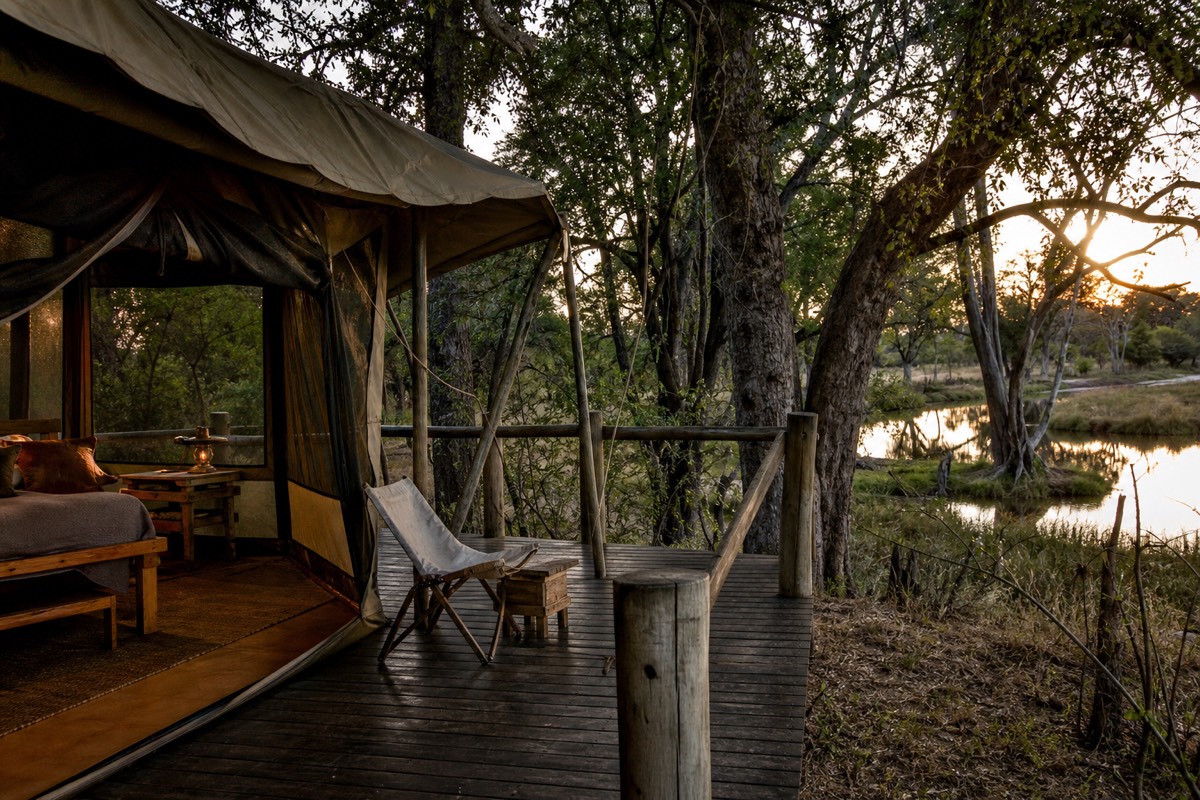
The cheapest honest way into the Okavango Delta on this site costs $181 per person for a full day on the water. The most expensive trip costs $6,997 for fifteen days across three countries. Between those two numbers sits everything people mean when they ask what a delta safari costs, and the spread is wide enough that a single average figure would be useless. So this guide does something different: it works only with the prices the operators we list actually publish, adds a cost-per-day column so the rungs can be compared honestly, and says plainly where a figure could not be verified rather than filling the gap with a plausible-looking number. The team at Okavango Delta Botswana Tours quotes these trips daily, and the live listing always carries the current price.
The real price ladder, from a day on the water to fifteen days on the road
Bars are the published from-price per person for the trips this site actually lists. The gold figure is cost per day, worked out from that price and the trip length, and the live listing carries the current price.
How much does an Okavango Delta safari cost?
Booked online in advance, single-day experiences run from $181 to $543 per person and multi-day packages from $850 to $6,997. A three-day community camping safari in the delta starts at $850. Four days in private concession camps starts at $1,270. Seven days across Moremi and the inner delta starts at $1,890.
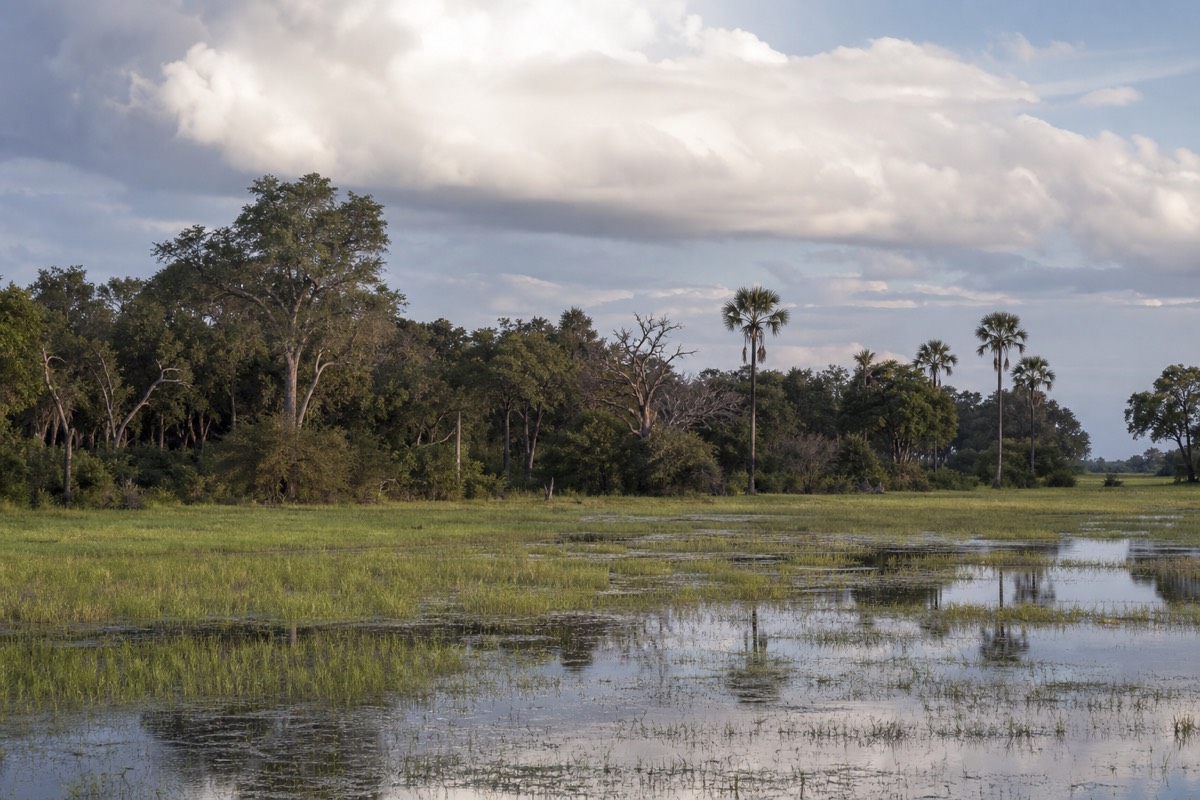
Those are from-prices per person, and the multi-day ones are all-inclusive of accommodation, meals, park fees, transfers and guiding. That last point does more work than it looks like it does. A safari price that includes the park fees, the water transfer and every meal is not comparable to a hotel room rate, and comparing the two is how people end up thinking Botswana is three times more expensive than it is.
What moves the number most, in order: how many nights you sleep in the delta, whether you sleep in a private concession camp or a community bush camp, whether you reach the camp by charter aircraft or by road and water, and which month you travel. Peak season carries the highest pressure on availability and on price, and the month-by-month picture sits in our guide to the best time to visit the delta.
What is the full price ladder, from a day trip to fifteen days?
Nine trips, from $181 to $6,997 per person. Reading the ladder by total price is misleading, because a fifteen-day tour should obviously cost more than a day trip. Reading it by cost per day is where the useful information sits, and the per-day figures do not line up in the order most people expect.
| Trip | Length | From-price per person | Cost per day |
|---|---|---|---|
| Full day mokoro with community polers, island walk and picnic | Full day | $181 | $181 |
| Full-day mokoro adventure from Maun, all-inclusive | 8 hours | $200 | $200 |
| Aerial scenic flight over the delta with hotel transfer | 45 minutes | $543 | About $12 per minute |
| Island bush camping with the community mokoro trust | 3 days, 2 nights | $850 | About $283 |
| Private concession camps | 4 days, 3 nights | $1,270 | About $318 |
| Central Kalahari bush safari from Maun | 3 days, 2 nights | $1,375 | About $458 |
| Moremi, Khwai, Mababe and the inner delta | 7 days, 6 nights | $1,890 | About $270 |
| Victoria Falls to the Okavango via Chobe | 11 days | $3,500 | About $318 |
| Guided lodge tour, Namibia, Botswana and Zimbabwe | 15 days | $6,997 | About $466 |
Prices are the published from-price per person and the cost-per-day column is arithmetic on those figures, not a quote. The live listing carries the current price for any date.
The concession model behind these numbers is the reason they look the way they do, and it is worth understanding before comparing them with anywhere else in Africa. Most of the delta is leased concession land rather than a park you can drive into, which is set out in our guide to where the delta sits and how it is protected.
Which trip gives you the most delta per dollar?
The seven-day Moremi and inner-delta safari, at about $270 per day, is the cheapest multi-day trip in the portfolio on a per-day basis, and it is also the most varied. The three-day Central Kalahari trip, at about $458 per day, is the most expensive per day. Longer is cheaper per day here, up to a point.
That inversion catches people out. The seven-day trip has the highest total price of any delta-only option at $1,890, and the lowest daily rate of any multi-night option, because the fixed costs of getting you into the wilderness and out again are spread across six nights instead of two. A three-day trip pays for two transfers, a full logistics chain and a guide team, then uses them for 48 hours.
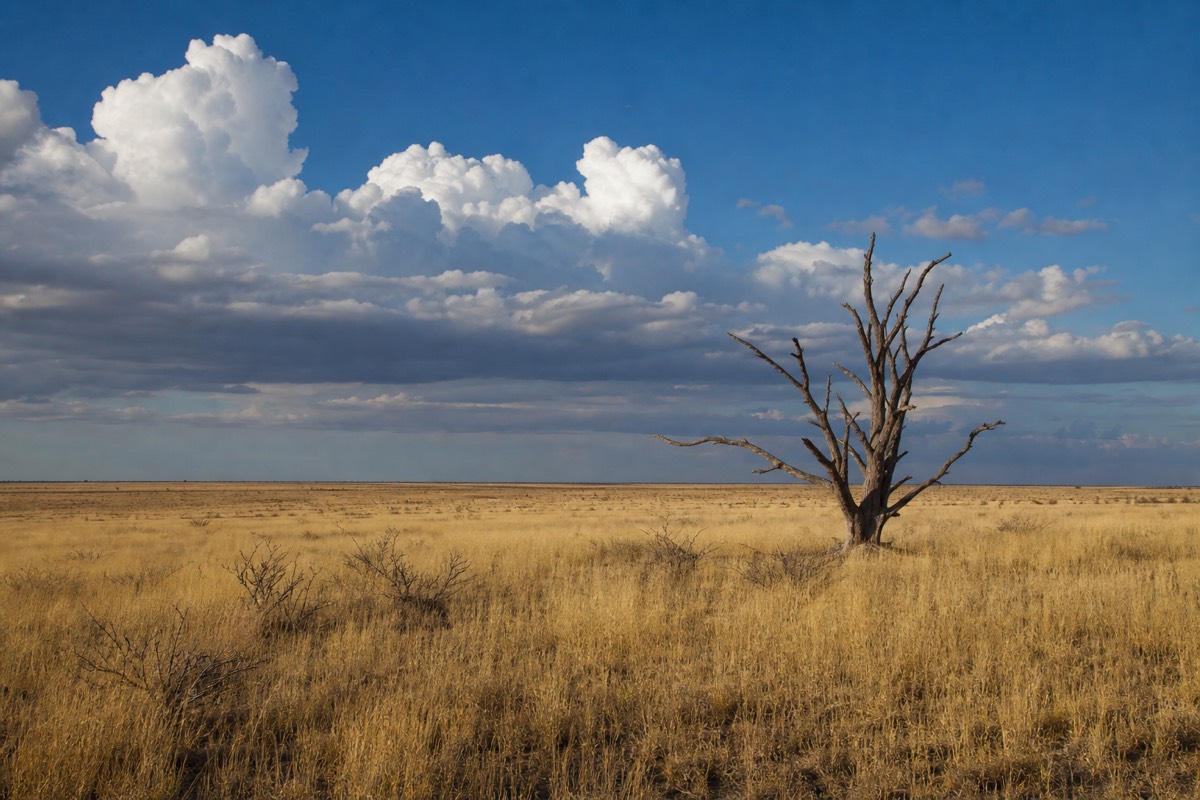
The Central Kalahari figure is not a markup, it is distance. Deception Valley is a long drive from Maun into a reserve of 52,800 square kilometres with no infrastructure to speak of, and everything including water goes in on the vehicle. The trip earns its price by putting you somewhere genuinely different from the wetland, on the opposite seasonal calendar, which is why a Central Kalahari leg pairs well with a delta trip rather than competing with one.
At the value end, the community camping safari at $850 for three days and two nights does something no day trip can: dawn canoe sessions when the light and the animal movement are at their best, afternoon walking safaris, and two nights of actual delta silence, with the income going to polers from the villages around the delta. Per day it costs about $283, only $65 more than the shortest concession-camp option, and the two-night island camping safari is the trip we point budget-conscious first-timers at more often than any other.
What does all-inclusive actually cover, and what does it not?
On this site's multi-day trips, all-inclusive means accommodation, all meals, park fees, transfers and professional guiding, plus camping equipment on the camping safaris. It does not mean international flights, travel insurance, alcohol, gratuities or professional camera equipment. Those five lines are where budgets get broken.
| Item | In the multi-day price? | Notes |
|---|---|---|
| Accommodation | Yes | Camp, lodge or fully catered bush camping depending on the trip |
| All meals | Yes | Full catering on the island camping safaris as well as the lodge trips |
| Park and reserve fees | Yes | The multi-day prices are published as inclusive of park fees |
| Transfers | Yes | Road and water legs. Charter flights are usually bundled into camp packages |
| Guiding, tracking and polers | Yes | Professional guides, trackers and community polers |
| Camping equipment | Yes on the camping trips | Tents and kit provided on the island bush camping safari |
| International flights | No | Varies too widely by origin and season to estimate here |
| Travel insurance | No | Strongly advised given remoteness, charter flights and evacuation distance |
| Alcohol | No | Normally charged at camp |
| Gratuities | No | Plan roughly $10 to $20 a day in total across guides, polers and camp staff |
| Professional camera equipment | No | Bring your own, and remember the soft-bag charter limit |
| The 45-minute scenic flight | No | A separate $543 add-on, not part of any package |
Inclusion lists differ trip by trip, so check the specific listing before you budget against this table.
Accommodation style is the single biggest lever inside that included column. A fully catered bush camp on an island, a permanent tented camp in a private concession and a lodge on the delta's edge are three different price brackets and three different experiences, and we compare them in the guide to camps, lodges and mobile tented camps.
Does the way you book change what you pay?
Yes, and by more than most people expect. Booking online in advance through a verified operator costs $181 to $543 for single days and $850 to $6,997 for multi-day trips. A specialist Southern Africa safari company typically charges 30 to 60 per cent above direct operator rates. Arranging on arrival in Maun can match online prices, but only in low season.
| Route | Typical price | What it buys | Risk |
|---|---|---|---|
| Book online in advance with a verified operator | $181 to $543 single day, $850 to $6,997 multi-day | Confirmed camp and concession slots, pre-booked transfers, meals and park fees managed | Low |
| Arrange on arrival in Maun | Comparable to online for day mokoro trips in low season | Flexibility, and the chance to look at an operator before committing | Medium to high in peak season. The best concessions and community camps are allocated months ahead, so late arrivals typically get the accessible outer delta rather than the inner channels, and the scenic flight fills ahead in July and August |
| Specialist Southern Africa safari operator | Typically 30 to 60 per cent above direct operator rates | Bespoke itinerary design, flight coordination, and allocations at lodges not sold on general platforms | Low, at a premium |
Ranges are the pattern across the market rather than a quote for your dates; any specific price sits on the live listing.
The specialist premium is not a rip-off, and it is worth saying so. If your priority is a particular famous lodge, a specialist may hold the only allocation that exists. If your priority is the mokoro, the channels and the silence rather than a specific brand of tent, the direct route delivers the same core experience for meaningfully less. That is the honest split, and it is the one the site has published from the start.
What do flights and transfers inside Botswana cost?
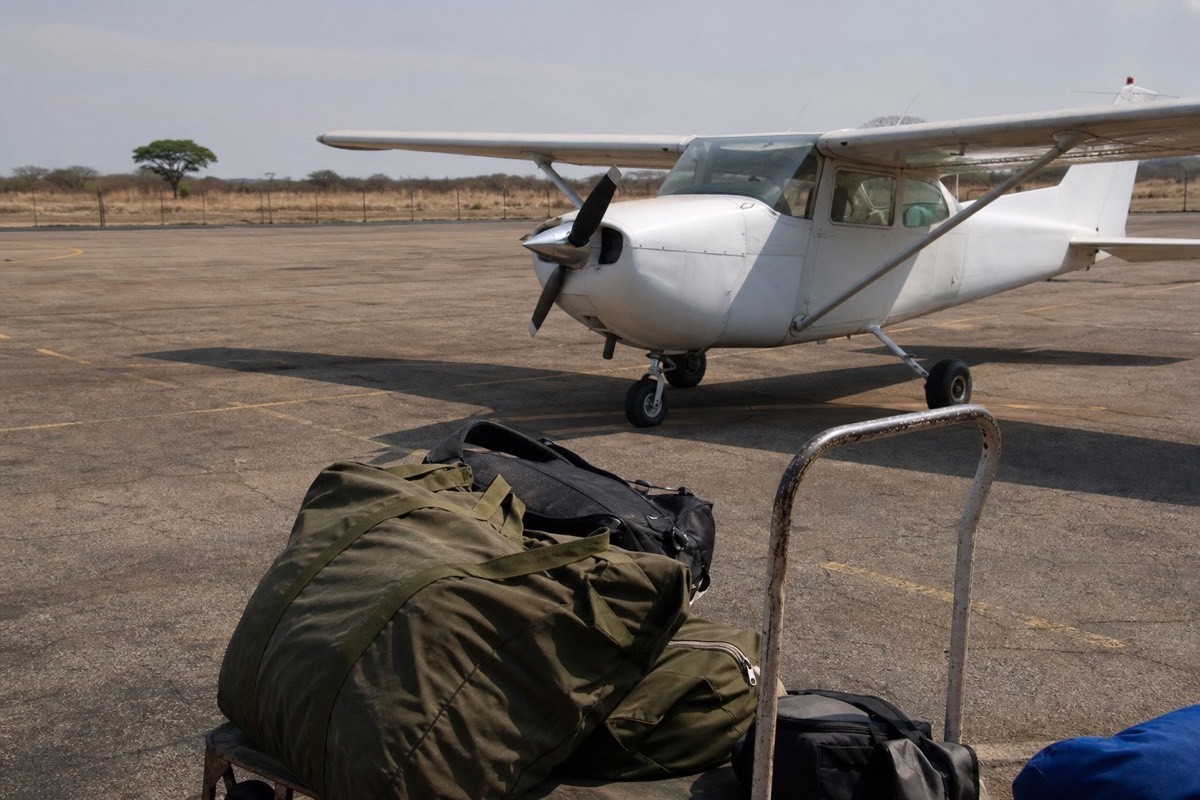
A charter flight from Maun to a delta airstrip runs USD 200 to 600 per person one way and takes 20 to 45 minutes, usually bundled into a camp package rather than bought separately. A guided road and water transfer costs about USD 150 to 400 per person round trip standalone. A self-arranged canoe with a poler is about USD 50 to 100 a day.
| Leg | Time | Cost guide | Notes |
|---|---|---|---|
| Charter flight, Maun to a delta airstrip | 20 to 45 minutes | USD 200 to 600 per person one way | Round trips are often cheaper, shared charters cheaper again, and camp packages normally include it |
| Road transfer plus boat or mokoro | 2 to 6 hours in total | About USD 150 to 400 per person round trip | Included in most camp packages. Road 1 to 4 hours, water 30 minutes to 2 hours |
| Self-drive plus public mokoro | 2 to 5 hours driving, then 1 to 3 hours on the water | Fuel, plus USD 50 to 100 a day for canoe and poler | Needs a high-clearance 4WD and river-crossing experience. Public launch points only |
| Johannesburg to Maun scheduled flight | About 1h30 to 2h | Not a price this site publishes | Airlink and CemAir fly it; Air Botswana connects Gaborone and Kasane |
| Light-aircraft baggage | No charge, but a hard limit | Typically 15 to 20 kg in a soft bag, set by the charter operator, so confirm the number on your own booking |
Transfer costs are the standalone ranges the operators we work with quote; on a packaged trip they are already inside the price.
The baggage line is not a cost, but it becomes one if you get it wrong and have to buy a duffel in Maun. One charter operator publishes its own allowance as 20 kg in a soft-sided bag with maximum dimensions of roughly 30 by 35 by 70 centimetres, which you can read on Mack Air's published luggage policy. The site's own guidance says typically 15 kilograms. Both are real, because the allowance is set per operator and per camp. Hard-sided cases do not fit the hold at any weight.
Is a $543 scenic flight for 45 minutes worth the money?
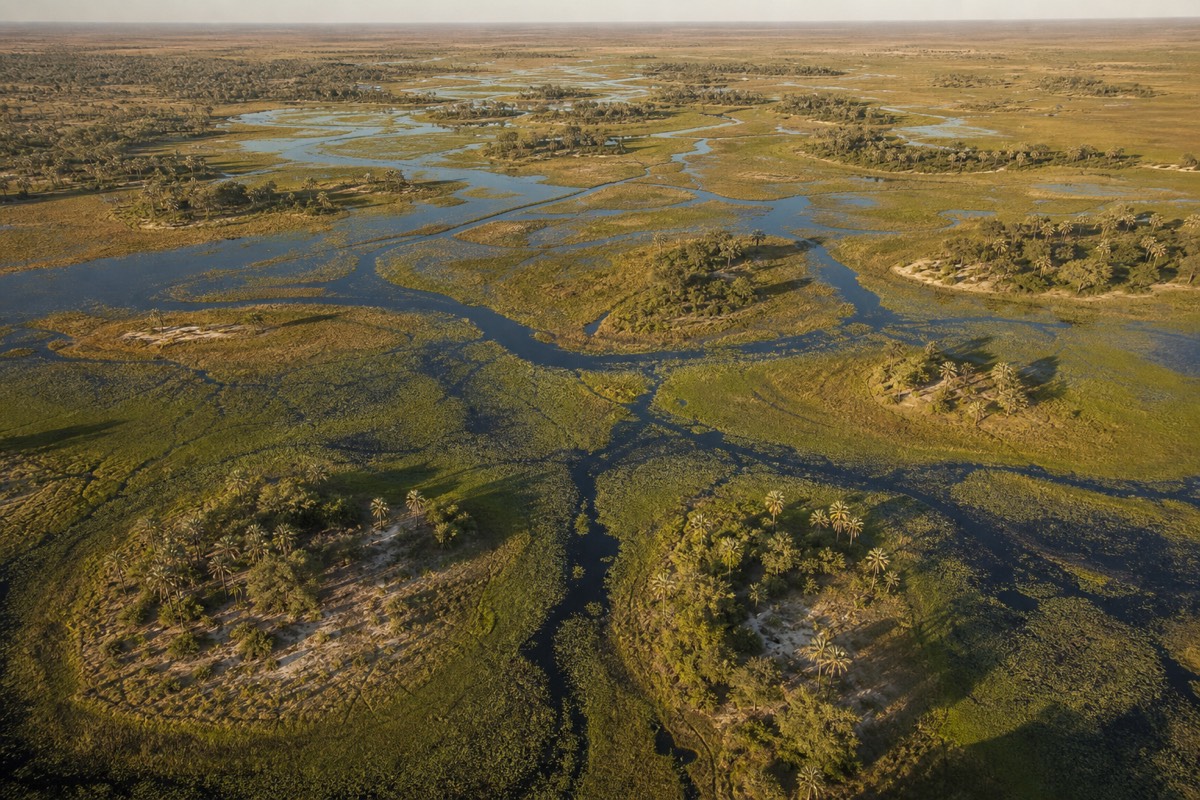
At about $12 a minute it is the most expensive thing on this site per unit of time, and there is no way to argue otherwise. What it buys is comprehension rather than access: the channel maze, the pattern of permanent and seasonal islands, elephant herds as grey shapes in shallow water, and the hard line where floodwater meets Kalahari sand.
It also lands you nowhere. The flight leaves Maun, circles the delta and returns, with hotel pickup and drop-off included. No ground activities, no landing in the delta. Anyone expecting to touch the water will be disappointed, and the listing is explicit about it.
Two groups get real value from it. The first is travellers with a single day in Maun who cannot commit to a camp: nothing else explains the scale and structure of the place in 45 minutes. The second is travellers who have already spent days at water level, where the flight adds the dimension they were missing, because the shape of the system is genuinely illegible from a canoe and immediately obvious from the air. Everyone else, particularly anyone already flying into an inner-delta camp on a charter with a window seat, can reasonably skip it. If you do want it, the 45-minute aerial flight from Maun fills ahead in July and August, so it is not a reliable walk-up purchase in peak season.
Why is the Okavango Delta so expensive in the first place?
Because Botswana chose it. The country runs an explicit high-value, low-volume tourism policy: visitor numbers are held down on purpose and prices are correspondingly high, in exchange for low-density concessions and intact wilderness. The whole delta carries roughly 1,000 to 1,500 beds. The price is the conservation model, not a markup.
Follow the chain and it stops feeling arbitrary. A concession lease caps beds and vehicles. Capped beds mean fixed costs spread across very few guests. No road access means everything arrives by light aircraft or 4WD, including fuel, food and staff. Vehicle limits at sightings mean fewer guests per guide. Every one of those decisions improves the experience and raises the price, and they are the same decision.
What you get for it is the thing people struggle to price until they have seen it: a three or four hour game drive in a private concession where you see one or two other vehicles or none, and a canoe channel with no other boat on it. That is not luck, it is licence conditions. We make the full argument, including how Botswana compares with cheaper safari countries, in why the Okavango Delta is so expensive. Botswana's official tourism body publishes the policy background at the Botswana Tourism Organisation.
What does a worked 3, 5 or 10 day budget look like?
Built only from prices this site publishes: three days in the delta from $850 per person, five days from $1,470, ten days combining the delta and the Kalahari from $3,265. Every figure below excludes your international flights to southern Africa, which vary too much by origin and season to estimate honestly.
| Trip shape | Built from | From-price per person | Cost per day | Still on you |
|---|---|---|---|---|
| 3 days, delta only, community camping | Island bush camping safari, $850 | $850 | About $283 | International flights, a Maun night either side, insurance, tips, drinks |
| 3 days, Maun base, no delta night | Full-day mokoro $181 plus the 45-minute scenic flight $543 | $724 | Two activities across three days | Maun accommodation and meals outside the tours, flights, insurance |
| 5 days, concession camps plus a day on the water | Private concession camps $1,270 plus full-day mokoro $200 | $1,470 | About $294 | Flights, a Maun night, insurance, tips, drinks |
| 5 days, concession camps plus the aerial view | Private concession camps $1,270 plus scenic flight $543 | $1,813 | About $363 | Flights, a Maun night, insurance, tips, drinks |
| 10 days, delta plus desert | Moremi and inner delta 7 days $1,890 plus Central Kalahari 3 days $1,375 | $3,265 | About $327 | Flights, insurance, tips, drinks |
| 11 days, region-wide | Victoria Falls to the Okavango via Chobe, $3,500 | $3,500 | About $318 | Flights, entry requirements for each country, insurance, tips |
These are worked examples using published from-prices, not quotes. Combining two trips also needs the dates to line up, which is a booking question rather than a budgeting one.
The ten-day combination is the one we would defend hardest. It puts six nights in the delta and two in the Kalahari, covers canoe, motorboat and open 4x4, works out to about $327 a day all-inclusive, and it does not waste days on transfers between distant countries. If you are still deciding how long to give the place, our note on how many days the delta actually needs covers where the returns flatten out.
What are the costs that do not appear on the price tag?
Five lines, in rough order of size: international flights, travel insurance, gratuities at roughly $10 to $20 a day in total, drinks at camp, and the gear you buy before you leave. On a packaged trip the park fees are already inside the price, which removes the single most confusing cost in African safari budgeting.
Insurance deserves its own sentence. This is a remote destination reached by light aircraft, where the nearest hospital can be a charter flight away, and medical evacuation cover is the reason to buy a policy rather than a nice-to-have. Nobody at any price point should skip it.
Gratuities work differently here than in a city. Small USD notes are the practical currency, the site's own guidance is roughly $10 to $20 a day in total across guides, polers and camp staff, and it is usually split rather than handed to one person. Bring the cash with you: Maun has ATMs, but a bush camp does not.
One cost we will not put a number on: park entry fees if you are self-driving rather than booking a package. The current non-resident schedule is genuinely ambiguous right now. A proposed increase was reported for 2026 and a separate wildlife department release indicated no new fees had been implemented, so any figure you read online may be either the old one, the proposed one, or wrong. Check the current schedule through the Government of Botswana portal rather than trusting a third-party number, including ours. The same applies to any tourism levy: the mechanism exists, the current per-visitor amount is not something we can verify, so we do not state one.
What is genuinely unavoidable, and what can you cut?
Unavoidable: getting to southern Africa, the Johannesburg to Maun leg, park fees, and travel insurance. Cuttable, without wrecking the trip: the charter flight, the private-concession camp, peak-season timing, the scenic flight, and alcohol. The two biggest savings are the season you travel and the kind of bed you sleep in.
| Cost | Can you cut it? | What happens if you do |
|---|---|---|
| International flights to southern Africa | No | Nothing to cut. Booking early and connecting through Johannesburg is the whole strategy |
| Johannesburg or Gaborone to Maun | Effectively no | Maun is the gateway. There is no practical alternative for most visitors |
| Park and reserve fees | No, and you should not want to | Already inside the packaged prices. They fund the protection that makes the place worth visiting |
| Travel insurance | No | Remote location, charter flights, evacuation distance. This is the wrong line to save on |
| Charter flight into an inner-delta camp | Yes | You reach the accessible delta by road and water instead, with lower wildlife density than the inner channels |
| Private concession accommodation | Yes | Community island bush camping delivers the water, the silence and the dawn canoe for less |
| Peak-season timing | Yes | Shoulder and green-season travel costs less and books more easily, at the price of lower water and heat |
| The 45-minute scenic flight | Yes | You lose the aerial overview. If you are flying into a camp anyway, you get some of it free |
| Alcohol and gratuities | Partly | Drinks are discretionary. Tips are not, in practice, so budget them properly |
A planning allowance rather than a rule; what is negotiable depends on the trip you have booked.
What is the cheapest honest way to see the Okavango Delta?
A full day on the water with community polers, from $181 per person, all-inclusive of transfers, meals and park fees. It gives you the channels, an island walk and a picnic, and it does not pretend to be a fly-in safari. For two nights actually inside the delta, the community island camping safari at $850 is the cheapest overnight option.
| Approach | From | What you get | What you give up |
|---|---|---|---|
| Full day on the water with community polers | $181 | Papyrus channels, island nature walk, picnic lunch, transfers, meals and park fees | No overnight. The accessible delta rather than the inner channels |
| Full-day mokoro adventure from Maun | $200 | Eight hours, all-inclusive, a longer day on the water | Same. A day trip is a taste, not an immersion |
| Island bush camping with the community trust | $850 | Two nights in the delta, dawn canoe sessions, walking safaris, full catering | Bush camping rather than a camp bed, and the accessible delta rather than a fly-in concession |
| Travel in the shoulder or green season | Lower across the board | The delta at its quietest, with the easiest availability | Low water, heat, humidity and afternoon storms |
| Arrange a day trip on arrival in Maun | Comparable to online in low season | Flexibility if your plans are loose | Little to nothing in peak season, when multi-day space is already allocated |
| Self-drive to a public launch point | Fuel plus $50 to $100 a day for canoe and poler | The cheapest access on paper | Deep sand, river crossings, and no access to the prime concessions |
Cheapest is not the same as best value. Compare the per-day figures in the ladder above before deciding.
Value at the bottom of the ladder is genuinely good, which is not always true of a premium destination. The full-day trip with community polers is the most booked experience on the site by a wide margin, and it is booked mostly by people who then say they wish they had stayed longer. If you are weighing the whole question of whether the spend is justified, our note on whether the Okavango Delta is worth it takes the sceptical side seriously before answering.
What we tell people building a delta budget
Decide the number of nights first, then the accommodation style, then the season, then book. Doing it in that order gets you the trip you wanted at a price you chose. Doing it in reverse, by starting with a budget figure, is how people end up with three days that cost as much per day as seven.
The specific advice we repeat most: if you are choosing between a shorter luxury trip and a longer simpler one, take the longer simpler one. Six nights of canoe, motorboat and open 4x4 across Moremi, Khwai and the inner delta at about $270 a day beats two nights of anything, and the delta only really opens up once you have stopped rushing. If comfort matters more than duration, four days in private concession camps is the shortest format that delivers the concession experience properly, with the vehicle caps and the low density that the price is actually paying for.
Two grounded points about timing, because they affect what you pay and whether you get in at all. Peak-season camp space in the premium concessions is allocated months ahead, and the community mokoro camping trip has limited daily capacity by design, to protect the ecosystem rather than to create urgency. Neither is a sales tactic and neither can be worked around late. What the trips we list bundle is the awkward middle of the budget, the transfers, the park fees, the camp and the guiding in one number, which is exactly the set of pieces that becomes hard to price and harder to assemble once the season is under way.